2
2
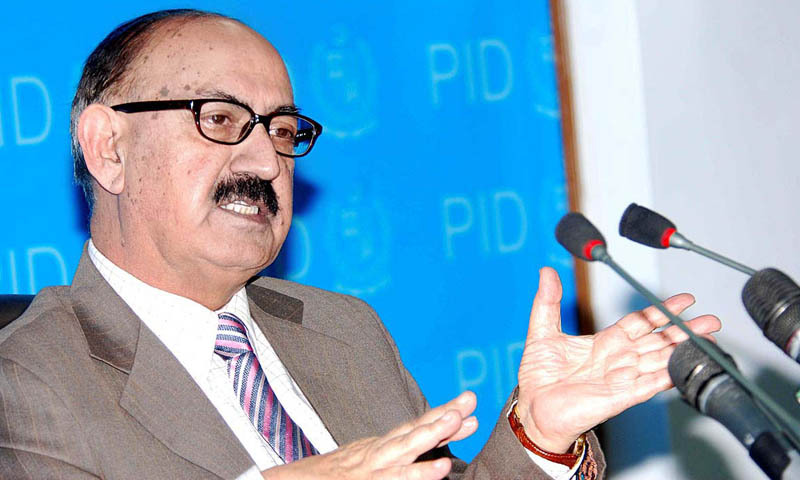

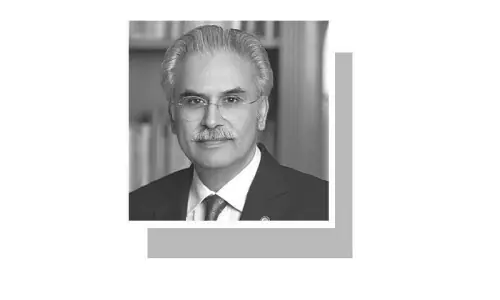
ISLAMABAD: Irfan Siddiqui, special assistant to the prime minister, has got another job in his hand. This time the columnist will spearhead a special committee which will work on “removing ambiguities in code of conduct for media”.
Mr Siddiqui was coordinator of the first government committee for talks with the Taliban and remained in the limelight throughout February and till the first week of March, when Prime Minister Nawaz Sharif formed the second committee to take the dialogue process forward.
On the directive of the prime minister, the Ministry of Information and Broadcasting has constituted a committee with the mandate to devise a mechanism with a revised composition of complaints commission, says an official statement issued by the office of the principal information officer.
Presidents of the All Pakistan Newspapers Society (APNS), Pakistan Broadcasters Association (PBA) and Council of Pakistan Newspaper Editors (CPNE), the law secretary and an additional secretary of the information ministry will be members of the committee.
Embroiled in a controversy in which the defence ministry had moved the Pakistan Electronic Media Regulatory Authority (Pemra) against Geo TV for what it called deliberately maligning the institution of Inter-Services Intelligence (ISI) and its chief, the information ministry has been holding consultative meetings with the office-bearers of APNS, PBA and CPNE over the past week.
A crucial meeting of Pemra will be held on Friday. It will take up the Geo versus ISI case in the light of arguments advanced by their lawyers and recommendations made by a three-member committee, headed by Parvaiz Rathore.
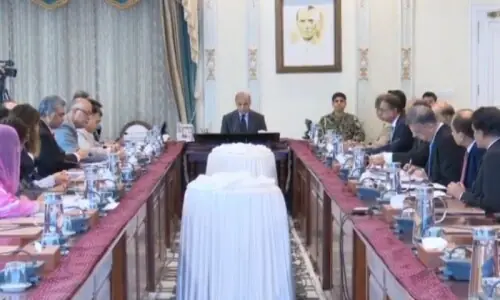
Information Minister Senator Pervez Rashid on Thursday discussed the matter with APNS President Hameed Haroon, CPNE President Mujeeb-ur-Rehman Shami and Mian Aamir, CEO Dunya News and executive member of PBA.
This was the second such meeting this week, the first held on Monday.
“The government wants these elected office-bearers to play a vital role in resolving the Geo controversy,” a government source privy to the meeting told Dawn. Turning this crisis into an opportunity, the government was also pushing these media representatives to work out a code of ethics which could be forcefully implemented, the source added.
“A unanimously agreed code of conduct for media should be adopted and enforced with full consensus of all stakeholders,” a spokesperson for the Press Information Department quoted the information minister as saying at the meeting.
Mr Rashid said the government believed in freedom of expression and considered media as its partner in development. He said he believed that non-compliance of the code of conduct and lacunas in the implementation mechanism had led to the current crisis.
Laws should be rational and take cognizance of all factors by keeping in view the considerations of all stakeholders. In view of the rapid growth in media industry, it is imperative that all representative bodies of media should sit together along with the regulator and make joint efforts to formulate a viable code of conduct along with an effective implementation mechanism, the minister said.
The participants of the meeting observed that the code of conduct for print and electronic media needed to be examined and brought in conformity with Article 19 of the Constitution.
The article reads: “Every citizen shall have the right to freedom of speech and expression, and there shall be freedom of the press, subject to any reasonable restrictions imposed by law in the interest of the glory of Islam or the integrity, security or defence of Pakistan or any part thereof, friendly relations with foreign states, public order, decency or morality, or in relation to contempt of court, commission of or incitement to an offence.”
There was a consensus that uniformity and synchronisation in all rules and code of conduct pertaining to print, electronic and social media should be established and discriminatory provisions must be eliminated.
The media bodies’ representatives agreed that editorial control in electronic media also needed to be strengthened and the office of ombudsman in TV channels should have more powers.
The information minister asked them to come up with their recommendations in 10 days.
The next meeting will be held on May 19.
It was decided that the proposed draft would then be shared with civil society and intelligentsia before finalisation.