ISLAMABAD: The army quashed on Friday the talk of its involvement in peace talks with militants as its top brass reportedly observed that holding the dialogue was a government initiative.
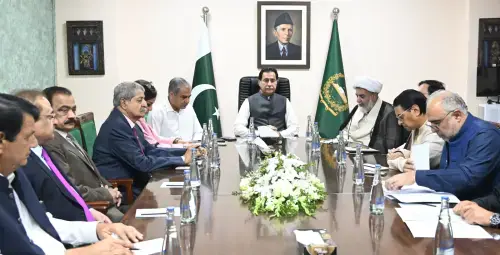
The 170th corps commanders’ conference — a monthly feature at the General Headquarters — took place as the government prepared for the second stage of the dialogue with militants in which it is planning to open a direct channel with the Taliban from next week. Media had speculated that the government wanted army representation in the team that would negotiate with leaders of outlawed TTP.
A source privy to the corps commanders’ meeting said that during the deliberations there was no direct reference to the reported desire of the government for including a military nominee in its team, because no such proposal had been conveyed by the political leadership to the military command.
But an observation by the generals who took stock of the planned phase-II of the government-military dialogue that “dialogue was a government strategy” served to convey that the army was not interested in any such role.
“Army’s job is to remain operationally prepared and the meeting expressed its satisfaction on that aspect,” the source said.
Furthermore, the commanders are said to have “expressed deep concern” over the continuation of attacks by various militant groups despite announcement of suspension of violence for a month by their umbrella organisation – TTP.
“The participants undertook a comprehensive review of prevalent internal and external security situation of the country,” an ISPR statement said.
Statements by ministers later in the day, however, kept the rumours of an impending role for the army in the talks swirling despite what looked like a categorical message from the khakis.
Defence Minister Khawaja Asif told a news channel that the next phase of the talks would be intelligence driven, and the army, being one of the state institutions, remained available.
Information Minister Pervaiz Rasheed, speaking in a TV talk show, said the army would play a role while remaining in the background.
Some observers think there is likelihood of both sides being correct — the reported army refusal to be part of talks and government’s claim of keeping the military involved. Their reading of the situation is that the army could have refused a direct role, but might have agreed to support the government team through its intelligence arm.
Others noted the underlying messages in statements from both sides. The army’s emphasis on dialogue being a “government strategy”, they believed, implied military’s disenchantment with the process.
Meanwhile, government contention that the army had a background role, it is thought, was designed to give the impression that the political leadership and army command were on the ‘same page’.
The corps commanders, according to the sources, looked into the possibility of a role for the army in implementing the newly announced National Internal Security Policy.