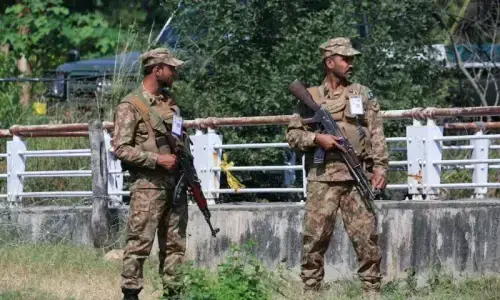
ISLAMABAD: The militant groups, including the Tehreek-i-Taliban Pakistan (TTP) and some other banned outfits, are operating with “virtual impunity” in Pakistan as the country’s civilian and military institutions are either “unable” or “unwilling” to prevent terrorist attacks, says report of an international human rights organisation.
“The militant groups such as the ostensibly banned Lashkar-e-Jhangvi (LeJ), a Taliban affiliate, operate with virtual impunity across Pakistan as law enforcement officials either turn a blind eye or appear helpless to prevent attacks,” says Human Rights Watch (HRW) in its World Report 2014 released on Tuesday.
Talking to Dawn, HRW’s country director for Pakistan Ali Dayan Hasan said that in the 667-page report, its 24th annual review of human rights practices around the world, the HRW had summarised major issues in more than 90 countries. He said HRW with its head office in New York had released report about each country in their respective capitals.
“Taliban attacks, amounting to war crimes, have increased in scope and magnitude even as Prime Minister Nawaz Sharif’s government has renewed offer for peace talks in the aftermath of atrocities,” said Mr Hasan.
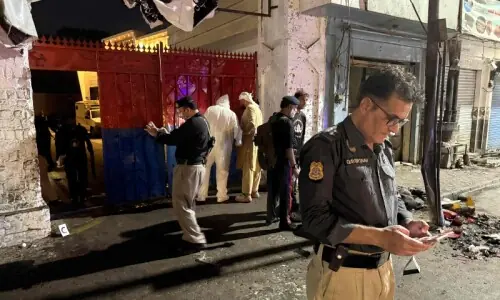
The HRW report has come at a time when the militants have stepped up their attacks across the country and the media has reported that the militants have already carried out 25 major terrorist attacks in the first 20 days of 2014.
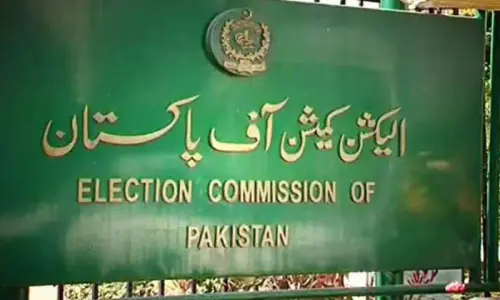
The report says that during the election campaign in April and May, at least 130 people were killed and over 500 were injured allegedly by the TTP and its affiliates, who had declared elections “un-Islamic” and warned voters to stay away from the rallies of the formerly ruling coalition parties.
Numerous government installations and law enforcement personnel have been targeted by the Taliban. At least 22 polio vaccination workers were killed, and 14 wounded in 2012 and 2013 in attacks for which the Taliban claimed responsibility, says the HRW.
The human rights organisation says “a climate of fear impedes media coverage of militant groups and the Taliban and other armed groups regularly threaten media outlets over their coverage”. The report alleges that “security forces routinely violate basic rights” in the course of counter-terrorism operations with suspects frequently detained without charge or convicted without a fair trial. “Thousands of suspected members of Al Qaeda, the Taliban, and other armed groups — who were rounded up in a crackdown in 2009 in Swat valley and tribal areas — remained in illegal military detention at time of writing; few had been prosecuted or produced before the courts”, alleges the report.
The HRW report also mentions the security situation in the troubled Balochistan province, stating that “enforced disappearances and killings of suspected Baloch militants and opposition activists” continues in the province. “Violence against women and girls — including rape, honour killings, acid attacks, domestic violence and forced marriage — remains a serious problem in Pakistan,” says the report.
JUDICIAL ACTIVISM: According to the report, “Pakistan’s judiciary remains an independent but controversial actor”. Despite the adoption of a National Judicial Policy in 2009, access to justice remains poor, as case backlogs mount throughout the country.
“The courts are rife with corruption. Judges often use suo motu proceedings to help people gain access to justice. In other cases, the judiciary has used such proceedings to interfere with legislative or executive powers, part of a longstanding power struggle between former chief justice Iftikhar Chaudhry, the government, and the army.”