0
0

PESHAWAR: Rapa Khan is a Shamankhel Mehsud by tribe and like many of his fellow tribesmen with two houses — one in the Mehsud hinterland and the other in neighbouring Dera Ismail Khan or Tank district — every summer, he would make a trip to his native Sararogha in South Waziristan.
“Things have changed,” Rapa Khan muses. The Mehsuds, no matter where they lived, have tried to bury their dead in their native land. But with the military now in control of parts of their territory and militants still holding out in the countryside, the 73-year-old Rapa Khan, like thousands of Mehsuds, is reluctant to go back, not even to bury his dead.
The launch of a full-scale military operation Rah-i-Najat (the path of salvation) against what used to be the Tehreek-i-Taliban Pakistan (TTP) headquarters in October 2009, led to the displacement of nearly 90,000 Mehsud families from their native land. Three years later, only 5,615 families have returned, while some 83,000 families continue to live in despair, away from their hearths and homes.
As it is, the process of return of the IDPs has been slow. Authorities say they are undertaking the process in a phased manner to carry out rehabilitation in a way that is acceptable to all. But both return and rehabilitation have hit snags, not for want of will or determination on the part of the authorities but because of lack of funds and, most importantly, a still uncertain security environment in the tribal land.
“We are short of funds for rehabilitation purposes,” says Ghulam Habib, director operations, Fata Disaster Management Authority. “We need $170 million.”
To begin with, the one major factor restraining the Mehsuds from returning home was the TTP threat warning tribesmen to avoid getting caught in the crossfire between the warring sides.
With Hakeemullah Mehsud’s death in a drone strike on Nov 1 and a less assertive militant commander ruling over the Mehsud hinterland that threat no longer remains a major concern.
But the Mehsuds are still not comfortable with the idea of returning. “The situation there is still far from satisfactory,” Rapa Khan argues. “We are not convinced. The military is there and so are the militants. What if war breaks out again?” he reflects. “Unless there is 1,000 per cent guarantee of peace, few people would think of undertaking the journey back home.”
The fear of the Mehsuds is not entirely misplaced. Authorities recently de-notified Chaghmalai as a combat-free zone to allow the process of return to begin, but discovered their mistake soon afterwards.
“Not all of Chaghmalai is clear,” confides a government official.
Security officials acknowledge that while the number of roadside bombings and attacks on security posts in the Mehsud heartland has dropped, these continue to be a headache.
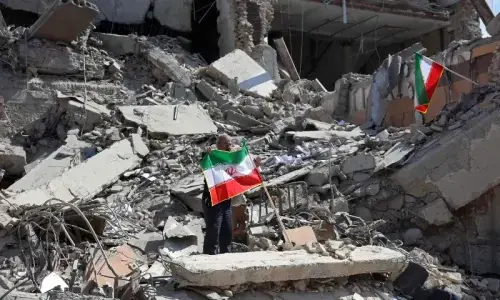
In fact, there is hardly anything left of their home for the Mehsuds to return to. Large swathes of the tribal hinterland now present the look of a wasteland — nearly flattened as they have been in a devastating conflict. Tedious as the screening process for the returning Mehsuds may be, another major discouraging factor has been the loss of all that they had.
“Nothing is left there,” Rapa Khan laments.
And this, coupled with a less than certain future in their homeland, has compelled a large number of Mehsuds, to relocate to other places. Many have settled down in Karachi, others have moved to Lahore, or settled down in places like Abbottabad, Mansehra, Peshawar, or in the districts of Dera Ismail Khan and Tank, to stay closer to their native land. Breaking with their centuries-old tradition of burying their dead in their own soil, Mehsud diasporas that have sprung up in parts of the country, are now acquiring land for graveyards.
“Rehmatullah Master died recently and we buried him in Dera Ismail Khan,” Rapa Khan says of his long-time friend. “He was a schoolteacher from Ahmad Wam. We could have buried him in his village but there is no-one of his family there, so what was the point?”