ISLAMABAD, Dec 21: Minister for Planning, Development and Reforms Ahsan Iqbal has emphasised the need for cooperation between Pakistan and India in energy sector, saying that “we have wind on the coastal areas and abundance of sun but still unable to produce solar and wind energy.”
Speaking at the concluding session of annual general conference of Pakistan Institute of Development Economics (PIDE) here on Saturday, Ahsan Iqbal highlighted the importance of South Asian cooperation, and said regional countries will be driver of growth and energy is imperative to boost economic growth.
Chairing the Quaid-i-Azam lecture on ‘energy, environment and sustainable development in South Asia, the minister said that South Asian countries will be the biggest consumer of energy and clean energy is important to protect climate.
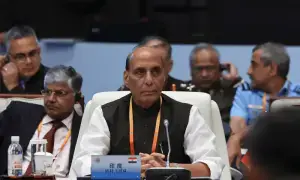
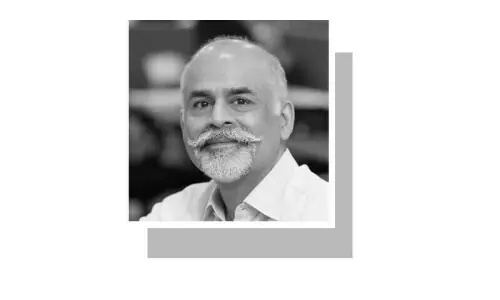
Chairperson of Intergovernmental Panel on Climate Change (IPCC) Dr R. K. Pachauri, who is also director of the Energy Resource Institute of New Delhi, forecast that the share of energy usage out of total usage in China and India will decline by 2025, and on the other hand, the share of energy usage in South Asia will increase.
Explaining the problems associated with global warming, Dr Pachauri said that the global ocean will continue to warm during the 21st century, and it is very likely that the Arctic sea ice-cover will continue to shrink as global mean surface temperature would rise, and global glacier volume will further decrease.
Leading the discussion on ‘economy of tomorrow’, former finance minister Dr Hafiz A. Pasha stated that Pakistan’s economic performance has not been determined by economic factors as much as by non-economic factors.
In the last decade or so, war on terror, worsening law and order situation, insurgency in Balochistan and rise in sectarian violence in all the four provinces put us in a challenging position, he said.
Sakib Shirani, a former economic adviser of the finance ministry, was of the view that very few people realise that for Pakistan, economy of tomorrow will be economy of scarcity of fiscal resources, scarcity of institutional framework and governance, human resources and available land.
Among these scarcities, the biggest scarcity is of governance and institutions and we have to build strong institutional and governance framework to hand it, he said.
While other speakers dealt with economic worries in their speeches, Deputy Executive Director of PIDE Dr Vaqar Ahmed said there is good news for Pakistan too, such as awarding of GSP plus to Pakistan and the production of quarterly national income accounts.
Dr Saba Gul Khattak, a former member of Planning Commission, while commenting on the gender dimension of economy for tomorrow, said that people feel that inclusion of women will result in growth in economy.