6
6


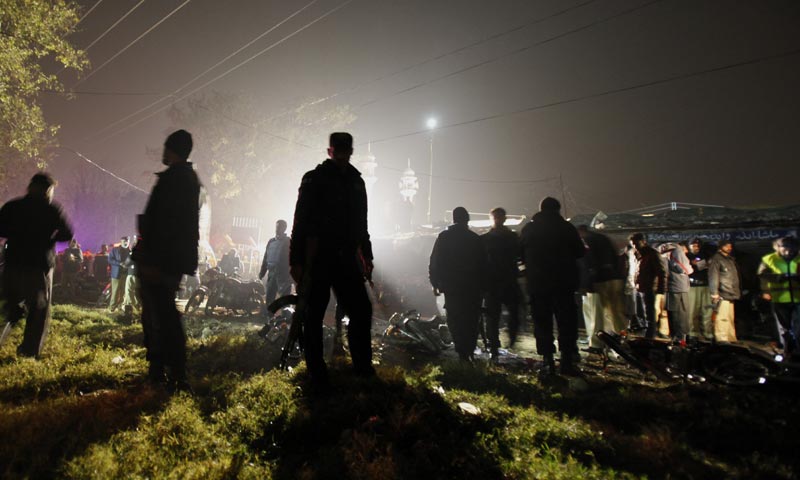
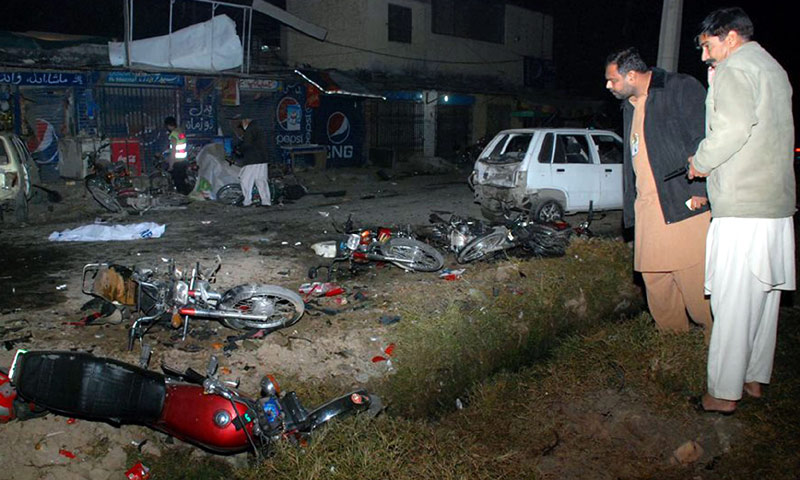

RAWALPINDI: A powerful blast outside an Imambargah situated in the heavily guarded Gracey Lines area killed three people, including two policemen and left 14 injured.
According to DawnNews, policemen spotted a suspicious looking individual on a motorcycle in the parking lot of the Imambargah near the Nur Khan Air Base. The attacker blew himself up when the policemen tried to tackle him.
About 700 people were attending a majlis at the time of the attack. As a result three people, including a SHO lost their lives.
The dead and the injured were taken to the Benazir Bhutto Hospital and District Headquarters Hospital.
“We have three bodies and 14 wounded people at our hospital,” Asif Qadir Mir, chief of the local government hospital, told AFP.
The blast was heard far away. Police and military personnel cordoned off the area and all roads leading to Gracy Lane were closed to traffic.
Khalid Mehmood, the driver of a police van who was on duty at the Imambagah, said a man parked his motorcycle by the roadside and started walking towards the Imambargah. When Sub-Inspector Amanat Ali and other policemen asked him to stop for search, he detonated the bomb.
City Police Officer Akhtar Umar Lalika told Dawn that it was a suicide attack. The bomber blew himself up when he was intercepted by policemen outside the Imambargah.
Several bikes and cars parked outside the Imambargah were damaged.
According to bomb disposal experts, four to five pounds of high explosives, laced with ball-bearings, were used in the attack.
The head and legs were believed to be of the bomber. Black clothes and a green jacket were retrieved from the scene.
A damaged pistol, wooden butt of a rifle and four spent bullet casings were also found. However, it could not be ascertained whether the pistol belonged to the suicide bomber or police.
Majlis-i-Wahadat-Muslameen (MWM), Tehrik-i-Nifaz-i-Fiqh-i-Jafaria condemned the attack and said that the government has failed to curb sectarian violence in the country.
There has been a rise in sectarian violence in Pakistan after several deadly clashes between Sunni and Shia Muslim groups near Islamabad in November.
Allama Nasir Abbas, a Shia cleric, was killed late Sunday in Lahore, the capital of Punjab province, after addressing a religious gathering.
On November 19, gunmen killed a senior Shia university director along with his driver in Lahore, while another Shia leader and his guard were killed in Karachi in early December.
Three days later, Shamsur Rehman Muawiya, chief of the Sunni organisation Ahl-e-Sunnat Wal Jammat for Punjab province, was killed in Lahore.
Pakistan is rife with sectarian clashes, with Sunni militant groups linked to Al Qaeda and the Taliban often attacking gatherings by Shias, who constitute some 20 per cent of the country's population.