Lal Masjid: what next?
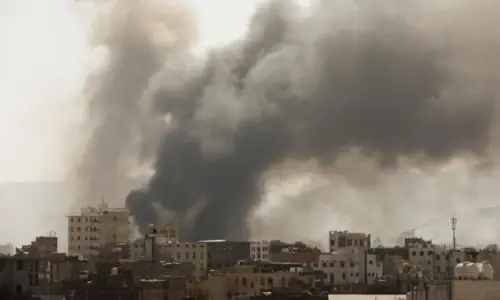
AND so it has come to pass. The Lal Masjid complex, or as much of it that survived the military onslaught, is now in the hands of the government. The death count is said to be 102, of whom 11 are soldiers and other members of the security forces. Were these deaths avoidable? Could the government have achieved the ‘liberation’ of the mosque complex through a longer siege and through a continuation of the use of stun grenades and other non-lethal devices designed to intimidate and harass the inmates? Could they have been starved out?
Pending a fuller investigation, it would seem that the government was right in believing that all those who were in the mosque at the time of the assault were either being held hostage or were intent on martyrdom. They had, according to Maulana Ghazi, enough food and other supplies to continue fighting for a month. No figures have been released on how much food was found in the complex, but the formidable array of weapons put on display suggests that Ghazi was not exaggerating when he claimed that the militants could have fought on for thirty days.
Every life lost is a tragedy. But was there ever any doubt that some loss of life would occur either when there was a direct assault or when a prolonged siege caused starving and half-deranged hostages to turn on their captors in a bid to win their freedom? Most recent incidents of this nature suggest that a considerable loss of life is to be expected.
In 1993, the American FBI and other federal agencies lay siege to the centre established by the Branch Dravidian sect under the leadership of David Koresh near Waco in Texas. The siege ended 51 days later when the FBI fired CS (tear gas) shells into the building and then claimed that the residents had set fire to the compound, causing 79 people, including 21 children, to perish in the blaze. (There have since been stories that the fire was set not by the residents but by the pyrotechnic devices employed by the FBI.)Similarly, the 126-day siege of the Japanese embassy in Lima, Peru, from December 1996 to April 1997 ended with a raid in which all the hostage-takers were killed along with one hostage and two commandos. The denouement in 2002 at the Moscow theatre where Chechens had held the audience hostage was even more horrendous.
Perhaps some more lives would have been saved if those trapped inside the Lal Masjid complex had been given additional time to find ways to escape their captors. Perhaps the will of the militants could have been further undermined by a prolongation of the siege. However, it has to be remembered that the mosque siege entailed putting the hundreds of thousands of people living in the G-6 sector of Islamabad through acute privation.
Whether this was owed to the peculiar location of the masjid or the inefficiency of the local administration is not clear. But the fact remains that a long siege was an untenable proposition if it meant paralysing a large part of the country’s capital.
Two other things need to be noted in this context. First, the media virtually set aside coverage of the floods that had hit Balochistan and parts of Sindh and the NWFP. According to official figures, which may be an underestimate, more than 340 people had been killed by July 13 while another 186 were missing. Fourteen hundred villages in Sindh and 5,000 in Balochistan had been affected.
There is no doubt that the media’s handling by the authorities near the mosque complex left a great deal to be desired. Much of the media’s coverage reflected its frustration with what it believed were unnecessarily harsh limitations on live coverage of events around the mosque. But was it correct to devote hours to interviews with G-6 sector residents suffering the effects of the curfew and the suspension of utilities, and give virtually no time to the flood-stricken people of Balochistan and Sindh?
Second, in the question-and-answer session with President Musharraf at the National Defence University, many stalwarts of the electronic media demanded action against the Lal Masjid while turning down his plea that the media should not provide live coverage of the bloodshed that was bound to occur in the event of such action. The creation of a “state within a state” could not be tolerated; the “writ of the state” must be established; the “infection” of the Lal Masjid must not be allowed to spread; why had the matter been allowed to fester for so long? These were among the arguments so eloquently made by the media representatives.
In the coverage of the incident and during the subsequent post-mortem, a very different mood prevailed. Suddenly, those who had been asking for action were saying that the Ghazi brothers were right in demanding the reconstruction of at least the mosque that predated the creation of Islamabad. Suddenly, they were claiming that giving the Ghazis a pardon would have been no different from allowing Nawaz Sharif to go into exile.
Is this change of heart owed to what one analyst calls the anti-Musharraf, anti-army mindset of the middle-class journalists who are prepared, on this score, to defy the wishes of their more compliant channel owners? Or is it something more? Traditionally the press, and particularly the visual media, are supposed to reflect the views of the masses. Is this what is happening now? Perhaps.
There is no doubt that the credibility of the government is at a low point. There is no doubt that the anti-government sentiment reflected in the large crowds that gather around the chief justice will look for and find every opportunity to express itself. The Lal Masjid tragedy has provided another convenient stick with which the government can be beaten. But this does not mean that there is a turn towards greater militancy. The important point is that this is anti-government, not pro-militant, sentiment.
A backlash was to be expected and it has occurred. The suicide bombings in Swat, Dera Ismail Khan and outside Miramshah have been gory in the extreme. Perhaps as many as 100 lives have been lost and many more have been injured. There is no doubt that in the next few days there will be more of such incidents. But it seems that these are not, and will not become, countrywide occurrences.
The mushroom growth of well-financed madressahs and equally prosperous religious parties has not yet made fanatics or even fundamentalists out of the average Pakistani. Nor has the growth of anti-American sentiment — fuelled by what are seen as the US-driven sectarian, ethnic and other killings in Iraq, Afghanistan, Palestine and Lebanon — so far made as much of a difference as some observers would have us believe. The paltry number of people who participated in the demonstrations on Friday in response to the MMA’s call must have been disappointing for the organisers.
The problems in the tribal areas and in some of the settled districts are of our own creation. As part of the ‘jihad’ against the Soviets in Afghanistan, and subsequently our support for the Taliban in Afghanistan, we created the mindset that has now seemingly taken firm root in the areas bordering on Afghanistan. Handing over virtual control of the Afghan refugee camps to extremist Afghans and their Pakistani supporters was part of the same scheme.
We sowed the wind and are now reaping the whirlwind. The Frankenstein has grown way beyond our ability to control or manipulate.
Are the tribal-area Taliban indigenously controlled in their entirety? It seems clear that the employment of suicide bombers — which started in Palestine, moved on to Iraq, then to Afghanistan and is now a feature of the scarred tribal landscape — is something Al Qaeda has helped bring about.
The Americans are convinced that Al Qaeda has secured safe haven along the Afghan-Pakistan border and is now stronger than it has ever been since 9/11. The head of the CIA’s analysis directorate, testifying before Congress, stated that “They [Al-Qaeda] seem to be fairly well settled into the safe haven and the ungoverned spaces of Pakistan … We see more training. We see more money. We see more communications. We see that activity rising.”
Ayman al-Zawahiri’s call for the Pakistani people to rise against Musharraf and to avenge the Lal Masjid operation could be dismissed as part of the skilful propaganda battle that Al Qaeda has successfully waged in recent years. But it could also reflect his belief that it will strike a responsive chord in some parts of Pakistan.
Such efforts at maintaining the ‘Islamic’ fervour in the tribal areas and promoting its spread to the settled districts is only to be expected. International developments are not going to be helpful as we seek to combat this propaganda onslaught. The sectarian and ethnic carnage in Iraq will continue, and will probably increase, as the Americans withdraw the bulk of their troops as they are almost surely bound to do in the next six to nine months. In Afghanistan, peace is not even a distant prospect. Developments in Palestine and Lebanon will continue to generate bloody headlines.
We have to contain the problem to the tribal areas and then work for its resolution. A military solution to the problem of the tribal areas is not possible. The military can only provide the backing for a full-fledged political effort to change the mindset we ourselves helped to create. How can this be done?
It is difficult to disagree with the view that only a genuine political government can work effectively in this direction, and that even a political government can be effective only if it has the full backing of the armed forces and the intelligence agencies. This is not going to be easy. It will require a dedicated team of civil administrators. It will require the commitment of considerable resources and, above all, it will require patience.
Alongside such political work in the tribal areas — or indeed as an essential supplement — we must persuade the Karzai government to hold jirgas in which the two presidents can address the notables of the tribes that straddle the border and persuade them, through the promise of developmental projects and other blandishments, to deny the use of their lands to the Taliban. Such local jirgas, rather than the presently planned national jirga, can potentially revitalise the influence of the tribal elders and possibly undercut the Taliban who have rendered the elders impotent for the most part and made the area a safe haven for Al Qaeda.
The writer is a former foreign secretary.
The past is always present
THE past has this habit of turning up again. I saw a cute little bit of paper some time ago. It was one of the innumerable labels that are tagged on to government files and note-sheets and which, put together, go to make up the mystical and mystifying institution of Red Tape. It was a relic of President Ayub’s great decade of development.
This bit of paper was given to me by a young government officer working in Punjab. The thing seems to have been printed in millions in 1958 and apparently continues to be doled out to some offices even after more than half a century by the federal government’s department of printing & stationery. Who says the administration wastes its stationery? And who says the past is dead and gone?
President Ayub, or the Field Marshal as he would have liked to be called, must be happy in his grave if he could see this symbol of his roaring decade being used even now. It is unfortunate that the celebration of his ten-year rule also marked its rather pathetic end. In a sort of anti-climax it concluded in a whimper. It was just as General Ziaul Haq’s decade (plus one) closed with the air crash that took him away. Which proves that dictators too can die without a shot being fired.
Well, everything ends, no matter how glorious and magnificent it may have been. What does not end, and will perhaps never end, is man’s ego, his obsession with the present, his hankering for power and wealth, his inability to see the future and his refusal to learn from the past.
In the early seventies I used to fill up the pension payment order for my late father every month. At that time, 25 years after the British had gone, the form still carried the direction, “personal presence is not necessary for Indian princes and European ladies.”
My father was neither an Indian prince nor a European lady, but somehow I managed to get him his pension without his having to make a personal appearance. Obviously, like the great decade paper flag, sufficient copies of the form had been printed to last through the 20th century. I wrote a couple of letters about it to the newspapers but the form continued to be made available to all and sundry.
I do not know in what year of the seventies, or maybe the eighties, the stock of pre-independence pension forms exhausted, but since I too am now a pensioner, I find that those words are no longer there. I wonder what Indian princes and European ladies do now without the exemption that the words granted them.
It is very difficult to get rid of the past. The more you try to escape its disagreeable aspects the more it sticks to you and shows up embarrassingly at all sorts of places. If you were clever enough to be converted from Sheikh to Syed way back in the forties, some one or the other from the old village will turn up as a witness to the transformation and spoil the show.
You get a 17-bedroom house allotted as a refugee on the strength of the property left behind by your “millionaire” father in East Punjab, and some spoilsport from nowhere will appeal against it and let it be known that in Jullundhur your family of 17 lived in two rooms. Or they will narrate some other unsavoury story about what your father used to do with the bones that he gathered at the butcher’s. People have no use for decency nowadays and always want to rake up the past.
President Ayub is already a legend but the past has not been able to erase his memory. Admittedly his face is now seen only in anniversary editions of newspapers or on the rear-boards of trucks owned by Hazarawals. But there is no shortage of educated people also who insist he was the best ruler the country ever had. Somehow they never realised this fact – if it is a fact – when he was around.
General Zia did his best, or rather his worst, to get rid of the ghost of Zulfikar Ali Bhutto, the man he had killed. I think it continued to haunt him till he was killed himself. Initially it was the sheer fact that he was Bhutto’s executioner that must have weighed on his conscience, but later the dead man’s daughter became a veritable plague for him.
Though I must grant that as Prime Minister, the late Mohammed Khan Junejo himself no friend of her father and the PPP, took her presence more sensibly. But those who claim to know insist that the general was terribly worried when Benazir came home to a rapturous welcome in 1986. Such is the burden of the past.
Apart from the bad habit of the past to show up in everything, whether it is welcome or not, we ourselves as a nation possess the trait of living in the past. Take politics in Pakistan. When the PPP was in power some years ago, the PML opposition used to insist that its behaviour was no different from that of BB’s first regime or even that of her father’s government more than 28 years ago.
All the wrongs and ills that it associated with the two earlier regimes were automatically ascribed to the dispensation that demised in November 1996. And then the PPP did the same, describing Mian Nawaz Sharif’s two stints as even more evil and crooked and an exact replica of General Ziaul Haq’s dictatorial days. And so it goes on.
Whether we cling to the past or not the past is somehow unwilling to leave us alone. As a wise man has said, our connection with the past should be to forget the grief that it gave us, remember its happy moments with thankfulness, and in thinking of the present and planning for the future keep its lessons in mind. But who cares for wise men’s talk; we are all more than wise, every one of us.
Using religion as a tool of power
ONE positive result of the Lal Masjid operation is that it has brought into the open the ambiguities and contradictions in our social values and political attitudes. Hopefully, the tragic events of last week will shock people into confronting the truth.
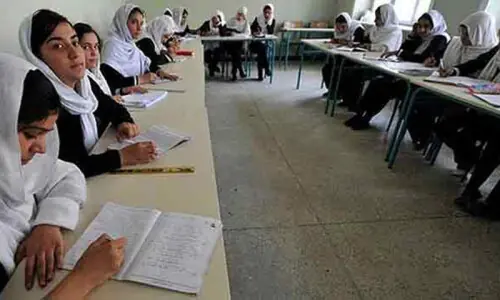
The crisis began in January when the radicals of the Lal Masjid took matters into their own hands by getting the female students of Jamia Hafsa to occupy a government-owned children’s library. The action was in retaliation to the demolition of the illegally built mosques on encroached land in the capital city.
At that time, public opinion was, by and large, against the extremists and in favour of firm action by the authorities to get the library vacated. But the government in its wisdom dillydallied, pretending that it was negotiating with the Ghazi brothers. The intermediaries, Chaudhry Shujaat Hussain and Ejazul Haq, however, lacked the credentials of playing the role of honest brokers. Nevertheless, they were allowed to drag on the negotiations giving the militants the opportunity to fortify their stronghold, entrench themselves in the mosque while escalating their demands.
Initially, they had demanded the restoration of the demolished mosques. At the time of the showdown, they wanted Sharia to be imposed in Pakistan. To demonstrate their strength, the clerics got their students to kidnap people and attack video shops.
Obviously, the abduction of the Chinese proved to be the last straw, as was confirmed by President Musharraf in his speech last Thursday. It was then that the government decided to act. When it did, it bungled and those very people who were demanding action have now become the harshest critics of the government.
What does all this prove? Many things. Notwithstanding its loudly proclaimed commitment to wage the war on terror, the Musharraf government failed to set a clear-cut anti-terrorist agenda for itself. If that had been so there is no reason why the Lal Masjid issue should have been allowed to hang fire for six months with all its political implications.
The president’s resolve expressed so firmly not to allow the militants to challenge his writ rings hollow because it does not explain why action was not taken earlier to nip the problem in the bud.
When the end came, it was bloody. The casualty figures released by the government are 103, but unofficial estimates run into the hundreds. Who is to be believed? The government which should know best is at a disadvantage. Its credibility is low and its strategy is now suspected of being a ruse.
The role of the political parties in the country has not been above board either. They appeared to be condemning the clerics in the days of the stand-off. Even the All Parties Conference held in London on July 7 and 8 took no stand on the Lal Masjid in its declaration, although the operation against the militants was in full swing at the time. Once it was over the opposition parties changed tack and held the government responsible for the killings.
The MMA was the most vocal in its criticism and declared three days of mourning for the so-called ‘shaheed’ of Lal Masjid. The PPP leader, Benazir Bhutto, was the only politician from the opposition who categorically supported Musharraf’s move on the Lal Masjid operation although she held him responsible for fuelling extremism rather than containing it.
The question that is being evaded is: once matters reached a head what was to be done? The blame game that has begun takes us nowhere. One may endlessly debate the strategy employed by the president which was ruthless once negotiations broke down, resulting in the large number of casualties, especially of women and children. But how long will our leaders continue to dwell on the original sin? Is it not time to move on?
In this noise over the Lal Masjid operation, one could not fail to be struck by the muted reaction of the public to events in Islamabad. In the TV programmes that provided for viewers to call in with their comments most of them were heavily weighted against the Islamic militants who were invariably held responsible for holding women and children hostage to use them as human shields.
At this stage, we also need to ask ourselves a few pertinent questions. Why is it that religion has emerged as the yardstick against which every issue is measured? Those who are in a position to raise their voices and who claim to be the leaders of opinion (that includes the government) drum on Islamic Sharia to drive home their point of view and mobilise support for themselves. Every shade of opinion is doing that.
There are those who are religious by temperament. They cite Islam — of course, their own version — to prove themselves to be correct. There are others who challenge their doctrine. There are still some others who really do not care for either of these but seek refuge behind the plea that they have to be sensitive to the religiosity and sensitivity of the public. But generally, it is not customary to seek the advancement of a cause simply because it is good and appeals to our innate humanism and sense of fair play.
The Lal Masjid crisis has exploded the myth that religion is the only prism through which an ordinary Pakistani perceives politics. Most people prefer to be left alone to practise their faith in the time-honoured tradition of ‘live and let live’. In practical life, they are quite secular (though not in the sense of being godless) in their approach. Had that not been the case, the public reaction to the events in Islamabad would have been quite different. There would have been an outcry of ‘Islam is in danger’.
On the contrary, public concern has centred on the sanctity of human life — especially in the case of children. The parents who gathered at the scene of action to take their sons and daughters away displayed a characteristically human response — parental love. If there has been any reaction it has come from the political leaders and the militants in the tribal areas.
It is time that those who rule Pakistan, be they soldiers, politicians, bureaucrats or whatever, stop using Islam as a crutch to perpetuate themselves in office.
If they have got away with this, it is not because the people believe what they say about religion and the state. It is because the people of Pakistan are powerless. They have been kept in a state of ignorance to deprive them of their potential to organise and wield control over their own life. Hence, by default, the leaders can obfuscate issues and flaunt religion as a tool of their own power to silence the people.
Rating the nations
“GOVERNANCE” is the hot concept in international development. Not surprisingly, research shows that countries with honest, effective and democratic governments tend to have faster economic growth than those with corrupt dictatorships. To maximise the results of their aid, development agencies, including the World Bank, want to steer the aid toward countries with good governance.
But how to measure governmental quality? A new World Bank Institute report, “Governance Matters,” supplies governance scores for 212 countries, from Afghanistan to Zimbabwe.
Countries that don’t come off well in the report have complained about it. Last week World Bank President Robert B. Zoellick got a letter signed by executive directors from China, Russia and Argentina, among others, questioning whether the bank ought to be involved in such an exercise, even if it does not directly affect the flow of dollars. The report is basically a survey of surveys — its authors summed up public opinion polls and expert reports on various countries, covering everything from the costs of regulation to the frequency of terrorist attacks.
As the authors candidly concede, this introduces an element of subjectivity. But, in the broadest sense, the report plainly measures something real. It seems right to us that China should rank near the bottom for “voice and accountability.” Can anyone dispute that 99 percent of the world’s countries are better on “the rule of law” than Zimbabwe, and that Robert Mugabe’s realm has regressed substantially in this respect since 1998? Venezuela under Hugo Chávez has plunged on most indicators. At the other end of the spectrum, the study is surely correct to say that no country is tougher on corruption than Finland.
If anyone has a right to complain, it’s the United States, which ranks in the 57th percentile for “political stability,” the report’s measure of a government’s perceived vulnerability to forcible overthrow. This puts the world’s oldest democracy about on a par with Italy and Bulgaria and slightly below Vietnam. Israel, meanwhile, ranks in the bottom 15 percent for political stability, behind every other country in the Middle East except Lebanon, Iran, Iraq (which got a zero) and Yemen.
The authors have an explanation: The scores reflect the impact of Sept. 11, 2001, on the United States and of the constant terrorist attacks on Israel. But doesn’t the survival of both political systems under fire suggest their durability? All the more reason to take note of these findings, while heeding the authors’ caveat that their work “cannot substitute for in-depth, country-specific governance diagnostics.” Some things you just can’t measure.
––The Washington Post
| © DAWN Group of Newspapers, 2007 |