Hamas in power
HAMAS’s victory in Wednesday’s parliamentary election seems set to alter the relationship not only among Palestinian groups and factions but also between the Palestinian Authority and Israel. For the first time since its founding, Yasser Arafat’s Fatah faction of the Palestine Liberation Organization will take a back seat, while it is the extremist right-wing Hamas that will now be in the saddle to govern and lead the Palestinian people’s struggle for a state of their own. The factors that made Fatah lose are many, the foremost being the absence of Arafat whose charismatic leadership was the reason behind Fatah’s long hold on power. Other causes include widespread corruption in the aftermath of the Oslo accords when aid poured in for the reconstruction of the occupied territories. Hamas not only exploited the corruption in Fatah’s ranks, it won votes by claiming that it was Hamas’s resistance that had forced Israel to withdraw from the Gaza strip in August last. Its philanthropic work and the support it gave to the martyrs’ families also had an effect on the voters’ choice. But the Hamas win also owes much to the backlash created by aggressive US policies in Iraq and elsewhere in the region that have driven people in droves to support religious politics.
The post-election scenario is pregnant with possibilities, just as it is full of hazards if all parties to the Arab-Israeli conflict do not adopt a realistic approach. Immediately after Hamas’s victory became clear — 76 out of 132 seats going to the Islamic movement — President Mahmoud Abbas said he would respect the people’s verdict and called upon all others to do so. Fatah also conceded Hamas’s victory with Prime Minister Ahmad Qorei resigning. More welcome has been the victorious side’s attitude, for Hamas said it would like to take others — meaning Fatah — in the government that it will form. Whether Hamas forms a government of its own or chooses to have a coalition, the real test of its wisdom will lie in tackling Israel — the Palestinian people’s sworn enemy which has never really reconciled itself to the idea of a Palestinian state.
The initial reactions from Israel, the US and Europe are negative, even hostile. Europe has asked Hamas to give up violence or face isolation, and President George Bush, in keeping with America’s pro-Israeli line, said the US would not deal with a party that did not recognize Israel’s existence. For Israel, however, the Hamas victory will be another pretext for abandoning the peace process altogether. Barring some sterile contacts between the Palestinian Authority and Israel after Arafat’s death, the peace process has remained moribund since 2001. The chances of its revival look bleak, because Israel has already termed the new PA government — even though it is yet to be formed — a terrorist government. This is a bad start.
Israel should at least have waited to see how the new PA government behaves, whether it is a coalition or an all-Hamas affair, and what policy it adopts towards Israel. The assumption of power by Hamas can also bring responsibility. Hamas can occupy the moral high ground by renouncing violence and adhering to the roadmap, which visualizes a two-state solution. At the same time, the Bush administration should show some realism and give Hamas time to settle down and craft a new negotiating policy.
Why bring in the Interpol?
The Musharraf government has not acted very wisely in approaching Interpol. No government is known to report erstwhile rulers of the country to the international police as “fugitives wanted for prosecution” for corruption charges which are not comparable with international crimes such as drug smuggling, arms and human trafficking — charges for which Interpol is mandated to arrest people. While nothing will come out of this move internationally, it is bound to have serious political repercussions in Pakistan. It will provoke the opposition parties and convey the impression that the government will not allow a level playing field to all parties in the elections in 2007. With General Musharraf having backtracked on his promise to doff his military uniform in 2005, his government will find it extremely difficult to establish its good faith in organizing fair and free elections. If its actions give the message that the government will resort to hamhanded methods to keep the opposition out in the cold, the credibility of the electoral process will be widely questioned. This is something the government must avoid at all cost. It is already burdened with numerous problems on its hands such as the conflict in Balochistan, the war against terror in Waziristan and the resistance to the dams on the Indus. This is not the time for the government to open new fronts of discord and dissidence. It should be working towards national reconciliation and solidarity.
Students kept in chains
THE heart-wrenching photograph carried in this paper on Friday of the two young boys who escaped from a madressah in Karachi still wearing their chains is a grim reminder of the brutalities children are exposed to at such institutions. Marks on the bodies of the two boys, aged eight and 10, reveal that they were regularly beaten — a common mode of punishment used in schools all over the country. However, the two boys say that not only were they beaten, they were also given little food to eat and, worse, kept in chains like animals. This form of cruelty must not be tolerated and the principal who the police are now searching for must be taken to task for this criminality. While disciplining children should be the parents’ prime responsibility, there are other forms of punishment a teacher can exercise — a mode that is not unduly harsh or physically disabling. Those who cross the line — for example, slapping a child — should be admonished for irresponsible conduct. Many parents believe that physical punishment is necessary to discipline a child and make him do his academic work — this attitude too needs to change. Once the school administration is made to realize that such tactics will not be tolerated by parents, change is likely to come about.
Over the years studies have shown that corporal punishment is one of the reasons that the country has such a high drop-out rate at the primary level. This strengthens the case for banning it on the federal level as provincial bans on corporal punishment have not produced the desired results. The madressahs are known to adopt the cruellest forms of punishment but despite frequent news reports of the barbaric treatment meted out to children there, no effective action has been taken to discourage the practice. Their teaching methods need to be monitored so that children can pursue their education in a healthy and congenial environment.
Reshaping the Muslim world’s destiny
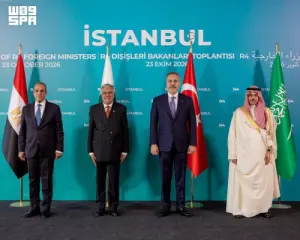
MUCH has appeared in these columns, including some very thought-provoking pieces, on the outcome of the OIC’s extraordinary summit at Makkah last December. No one can dispute that there was nothing extraordinary in the profusely-worded Makkah Declaration and the ambitious plan of action adopted at the summit. I had no intention of adding anything to what has already been written on this subject until I noticed two interesting revelations “hidden” in the Makkah Declaration.
One was the claim of the OIC leaders that their “conscience throbs in deep synchronicity with the hearts and minds of the ummah” and that a “strategic” vision was needed to plan for the future of the ummah and to tackle the challenges of the 21st century “by leveraging the collective will and joint Islamic action.” The other was a conspicuous omission of two universally acclaimed words, “peace” and “democracy” from the text altogether. It may not have been intentional but the omission was glaring enough to provoke curiosity about the “instinctive” preferences of the leaders of the Muslim world in whose hands rests the destiny of the Muslim people.
It is good to know that the absolutist rulers of the Muslim world with their unlimited authority have a “conscience” that can throb with the “hearts and minds” of their people. If that is really so, they would have by now discovered many surprises of the “nouveau siecle”. The groundswell of plebeian resentment should be only too visible to them. Abounding grievances and complaints against authoritarian regimes and rulers in Muslim countries have come to epitomize the people’s frustration regarding the denial of their fundamental freedoms and rights.
Despite material affluence in oil-rich countries, there is a widespread sense of political and economic deprivation in the Muslim world. This is another staggering reality that Muslim rulers will be dismayed to discover in the form of deep-rooted and pervasive disaffection and disillusionment among their subjects. The disappearance of Muslim empires, the steady erosion of Islamic polity and power, the Muslim world’s stumbling lurch into western colonialism, and now, total political, economic and military subservience to the West epitomizes the historical as well as the global magnitude of the failures of Muslim leadership.
Today, the Muslim world is in a crisis. This was admitted by the heads of state at the OIC summit. In their declaration, they acknowledged that we were today “at an age of muddled concepts, misguided values, and pervasive ignorance,” and that, as President Musharraf pointed out, literacy levels were “shamefully low” and the level of our socio-economic development “dismal and distressing.”
Poor and dispossessed nations emerging from long colonial rule may have become sovereign states but still lack genuine political and economic independence. Their lands and resources are still being exploited by the West. However, the Muslim states’ main vulnerability lies in their own worldview that is circumscribed by their self-limiting notions and their inability to reshape their destiny as independent and progressive societies. Some of them have even allowed themselves to become hotbeds of religious extremism and militancy and are paying a heavy price in terms of violence and social disarray.
Conflict and violence are pervasive in the Muslim world. Some states are also engaged in proxy wars on behalf of others. Their territories are home to foreign military bases and their borders are “soft” with foreign forces moving in and out freely and carrying out their “operations” at will. Recent decades have seen tragedies being enacted on Muslim lands. The events in Palestine, Kashmir, Bosnia, Chechnya, Iraq, Afghanistan and now Pakistan represent the ever-growing helplessness of the world’s Muslims.
The new unipolar world has denied them any meaningful role in global issues of peace and security. Since 9/11, the detractors of Islam have found an opportunity to target Islam and to mobilize an attitudinal climate of antipathy against its adherents by focusing obsessively on the religion of individuals and on organizations accused of complicity or involvement in terrorist activities. Muslims are concerned over the growing phenomenon of Islamophobia around the world and view it as a form of racism and discrimination.
Global terrorism is also being used to justify military occupations and to curb the legitimate freedom struggles of Muslim peoples. There is no prospect of long-festering Muslim issues coming to their just and final end. Iraq is still burning. Afghanistan has yet to breathe peace. Palestine is tired. Kashmir is devastated and disillusioned. The world had never been so chaotic or so complacent. One is aghast at the inadequacy of the political and strategic responses of the Islamic leadership to all these challenges.
What has aggravated matters is the inability of the Muslim world to take care of its problems or to overcome its weaknesses. There is no unity of purpose in its responses to global challenges. Its leaders are too self-centred to adopt people-centred policies and priorities and remain averse to establishing accountable governance based on pluralism and democracy.
The problem is that visions alone will not bring change to societies that are among the most illiterate and most backward. Societal mindsets change only with the political, economic and social advancement of the people. This requires the rationalization of national priorities and the re-allocation of resources with education becoming a strategic agenda. Only systems rooted in the will of the people and sustained by stable and accountable institutions that are not propped up by force or from the outside can lead the way into the new century.
Some leaders have also been dwelling nostalgically on Islam’s past and “lost” glory and reflecting on the historic accomplishments of Muslims. President Musharraf also reminisced in his statement at the summit of the times when according to him “we were the fountainhead of knowledge, civilization and moderation while most of the world was groping in the dark ages.”
Muslim nations cannot rest on their past laurels alone. They must have a robust present and a socio-economic as well as political wellness to build a better future and chart a place and a role for themselves in the comity of nations. This requires them to put their house in order and to own and fulfil their responsibility to create a domestic socio-political environment that helps, not impedes, a healthy transformation of their societies.
One also wonders how in the absence of a culture of “peace and democracy,” our leaders can expect their subjects to develop a “fresh” and “strategic vision” and mobilize the “collective will and joint Islamic action” needed to move from what the Makkah Declaration describes as the “darkness of ignorance, oppression and tyranny” into the “light of truth, justice, science, knowledge and peaceful co-existence.”
In recent years, there has been growing anxiety and frustration within the Muslim world over the OIC’s “passive and insulated approach” and on its marginalized role in global decision-making processes. During the 36 years of its existence, the organization has failed to live up to expectations and its member-states are now convinced of the need for appropriate structural and operational changes in the organization to make it more effective and credible as a common voice and the collective forum of the Muslim world.
At the Makkah summit, most heads of state and government called for “reshaping” of the OIC with a new mandate, a new structure and a new name. Surely this would give the OIC a new look as an international organization and might make it a little more efficient. But to project the OIC’s “reform and restructuring” as the “make-it or mar-it” issue for the Muslim world is merely a diversionary tactic to shift attention away from the failures of its member-states.
The OIC is merely an inter-governmental organization and cannot be expected to do things that only governments of sovereign states can do. It has neither the credentials nor any operational capacity to be the panacea for the ills of its member-states. Like other international organizations, it can only represent the Muslim world’s collective interests and position in multilateral forums. Though its ideological basis gives it a unique character, it is seriously handicapped by the absence of “regionality” and “complementarity” in its geo-strategic, political and economic interests.
The salvation of the Muslim world does not lie with any inter-governmental organization nor with a group of “eminent persons” or “scholars and intellectuals” nominated by their respective governments. The key to reshaping the destiny of the ummah and to securing for it a “brighter and promising future” lies with governments and their policies for political, economic and social stability and for the strength of individual Muslim nations.
Each one of them at the national level will have to revamp its existing mindset and priorities to opt for peace and democracy, and for “good and accountable” governance rooted in the will of the people. Ultimately, governments alone bear the responsibility for a turnaround and for recovering from its political, institutional and intellectual bankruptcy.
In a country like Pakistan which throughout its independent statehood has remained captive to its “security obsessions”, it is all the more necessary now to allocate the largest share of its GDP to human development and intellectual reinforcement through good quality education and the promotion of scientific and technical knowledge rather than continuing with its security agendas and escalating military budgets.