0
0
The captive consumer
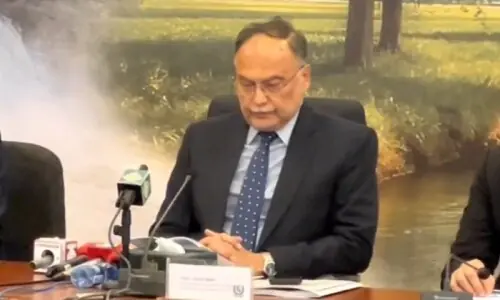
The Economic Adviser to the government Dr Ashfaq Hassan Khan argues that if the prices of POL had not been raised in the manner done by the government, the development budget would have been cut and the allocations for education and public health reduced. So the government decided to make the people sacrifice for the present to build a better future.
The declared objective of raising the POL prices apart, should that have been done in the heavy-handed manner that it has been resorted to and the levies come in such quick succession after six months of restraint? And now how many more increases in the POL are proposed until June when the current fiscal year ends?
Secondly, if any budget cut is to be made why should the axe always fall on the development budget and that too on education and public health sectors which have always suffered from vastly inadequate budgetary allocations? There are certainly other sectors which can endure financial pruning or large economy measures, such as the money spent on the hordes of VIPs always on the move.
He says the government took a hit of Rs 40 billion by not increasing the POL prices as they began rising abroad and then peaked in October last, crossing 50 dollars a barrel in the US. The government was hoping oil prices abroad would come down to 30 dollars a barrel. Instead they eventually touched the peak of 50 dollars. So the government lost Rs 40 billion and the oil companies Rs 12 billion.
How could the government expect world oil prices to come down to 30 dollars a barrel when the Middle East is convulsed, Iraq is in turmoil, Saudi Arabia, the largest oil producer is exposed to violence by Al Qaeda elements, the Russian oil industry is troubled and Nigeria is afflicted by a series of strikes? That was a serious miscalculation.
It is also unrealistic to assume that world oil prices would be around 50 dollars a barrel until June and the government has to provide a subsidy of Rs 20 billion out of the development surcharge.
The government had set the target of Rs 48 billion in the budget for the development surcharge for the current year and collected Rs 24 billion of which Rs 20 billion was spent on providing oil subsidy, says Dr Ashfaq Hassan. In addition, the government had to pay Rs 12 billion to the oil companies to make up for their losses for selling oil at less than the cost price.
Subsidy on the scale at which it was provided in the first six months does not arise now as the large oil stocks of western countries built up for fear of a bitter cold winter particularly in the US are to be released. Even otherwise the demand for oil in the second quarter of the year with its balmy weather is far less.
The western countries led by the US will also reduce their strategic reserves in this season with no winter to fear. For these reasons world oil prices will come down in the second quarter. The OPEC council of ministers who met in Vienna, Austria, last week, candidly admitted that, and will meet before that season informally to ensure that oil prices do not come down too low.
It is also a fact that while the oil prices went up the dollar went down in relation to other strong currencies to the extent of 30 per cent in the last three years. To that extent even in Pak rupees oil becomes relatively less expensive, while it is cheaper for India which pays Rs 43 for a dollar unlike nearly Rs 60 for a dollar which Pakistan pays.
The government says oil is cheaper in Pakistan by Rs 10 a litre compared to other countries in South Asia. That was true when India and other Asian countries pushed up the prices and Pakistan did not. In fact, after India made large increases in POL prices, it reduced them following public protest. And the Sri Lankan dollar which is far cheaper in terms of US dollars than the Pakistan rupee, does cost more money for a litre of petrol. But Pakistanis always compare their lot with that of the Indians and see whether they are far better or worse. Anyway India has a far better public transport system than Pakistan, but here everybody wants his own car, a small one if he cannot afford a large one.
The big question now is: will the domestic prices of POL come down sharply in the second quarter of the year when the world prices are expected to tumble, and stay low as long as the world prices remain low. Or will the government again talk of the development budget of Rs 200 billion and the need for larger development surcharge and heavier oil prices to make up for the loss of the first six months of the financial year? Or as it did when the world prices hit the 10 dollar a barrel mark and lower.
The present budget picture according to the CBR officials is pretty comfortable. During the first half of this fiscal year ending December, the government not only reached the budget target of Rs 297.2 billion in taxes but also exceeded the target by 4.7 per cent. That reflected a growth in revenues of 8.4 per cent over the same period last year.
The CBR is confident it will be able to achieve the annual tax revenue target of Rs 580 billion unlike in the earlier years of current military rule. General sales tax revenues of Rs 126 billion lead the collection in the first six months of the current fiscal year, with direct tax contributing Rs 85 billion.
The flourishing parts of the corporate sector are adding to the tax revenues of the state, and the giddy turnover in the stock exchange is increasing the tax revenues further. The high sales pitch, particularly for cars to promote consumer banking, is adding to the 15 per cent sales tax income.
The UBL for example, made a pre-tax profit of Rs 5 billion in 2004 compared to Rs 2.8 billion in the pre-privatization period of 2003. The tax yield rate from banking profits is almost double the income tax rate on corporate sector, but that rate is declining steadily. With more banks doing better business than before and earning large intermediation rates the government's income from the banking sector is truly large.
The fact is that a rise in POL prices has a multiplier effect on prices. They affect many sectors of the economy, and a rise in the cost of production or trading in many sectors of the economy has a multiplier effect on prices and rates in their own sectors. A rise in furnace oil price increases the cost of power production, while gas is in short supply and that increases the cost of exports.
Meanwhile, the State Bank has raised the rate of interest on refinancing of exports by half a per cent to 4 per cent and has asked the banks not to charge more than 1.5 per cent. A rise in POL rates leads to a rise in cost of transportation of goods which ultimately increases consumer goods prices and also the cost of movement for people as bus and taxi fares are pushed up.
Air fares, including that of foreign travel, then go up. Shopkeepers paying high electricity tariff for airconditioning and cold storage raise the prices of their goods. Private hospitals, too, push up their rates which are already high.
Industrial investors, including foreign investors, have been complaining of high electricity rates, which discourages investment. Hence the government has to be cautious when raising POL prices, power rates and gas charges.
This is all the more imperative when inflation is on the rise and experts talk of a 9 per cent rise in inflation this year. The IMF talks of the fiscal year ending with near-double digit inflation, and with double digit inflation for sure as the new financial year is beginning in July without any policy changes now.
Following the rise in POL rates the gas rates have been raised by 8.25 per cent. The prices of both the energy sources are inter-linked in Pakistan according to the official assurances to those who are looking for oil and gas. Nepra has raised power rates of Wapda for those using below 1000 units.
The Minister for Privatization Dr. Abdul Hafeez Shaikh says KESC would not increase its tariff for 7 years after privatization. Will there be an upward push in tariff rates before the privatization, on the lines of rates permitted for Wapda?
In an effort to check inflation and eliminate shortage of wheat the government imported 1.5 million tonnes of wheat this year and is ready to import more if necessary. Following the winter rains shortage of water is estimated by Irsa for the rabi crop at 38 per cent instead of the 44 per cent estimated earlier. And when the heavy snows melt up in the north we may get more water in our rivers. So the wheat production may be more than the earlier estimated 18 million tonnes, though not close to 22 million tonnes needed by the country next year.
Cotton production is estimated at an all-time high of 15 million bales as 14 million bales have already reached the ginneries. Following the shortage of sugar as a result of wild manipulation and price-pushing Prime Minister Shaukat Aziz has asked for the import of a million tonnes of sugar. Is that a part of the psychological warfare to teach a good lesson to the sugar manufacturers and hoarders? Anyway there is no justification for the sugar price to rise from Rs 24-25 to Rs 27-28. So the back of the boarders and pride-manipulators have to be broken convincingly.
The IMF has objected to subsidies for sugar, fertilizers and wheat. But shortages of these commodities soon becomes a political issue and so the government wants them to be made easily available by importing enough of them and showing the government's resolve not to permit such mischief.
The IMF does not want the TCP or any other public sector mechanism to be used for importing such items. But if the private sector will import and hoard them and push up the prices the import is better done through TCP, but very transparently. We have too many hoarders, and price manipulators who are ready to move from one commodity in short supply to another quick and make large sums. They create artificial shortages.
While the government talks of anti-inflationary measures. The State Bank has agreed to increase the money supply from 11.20 per cent to 14.48 per cent or Rs 360 billion to promote economic growth so that the prospects of too much money chasing too little goods could be avoided. That is what the State Bank too had suggested to add to its monetary measures to check inflation.
A dispute more out of mistrust
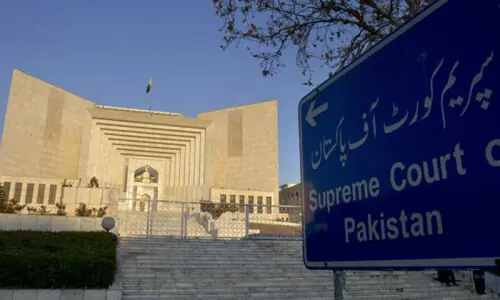
Having exhausted diplomatic route of bilateral discussion, Pakistan has finally decided to refer the question of Baglihar to the World Bank for appointment of a neutral expert. Indus Water Treaty 1960 provides for the settlement of differences and disputes under Article IX for questions arising between the parties concerning the existence of any fact which if established, might constitute a breach of this treaty.
It may be noted that "questions" remain questions so long as they are under discussion. When they defy resolution, they become differences, which are then to be referred to the neutral expert. The neutral expert when appointed in any of the three manners defined in the treaty, helps both the parties reach an agreement and if he fails wholly or partly, the differences remaining unresolved are designated as "disputes", which then finds their way to the Arbitration Court.
The treaty has an excellent record of full compliance by both the parties for the last 44 years. But we may have entered a phase where water has acquired a new sense of urgency in felt shortages. That is why another dispute seems to have emerged in public view, Kishen Ganga hydroelectric project on Neelam Riveer, which is a tributary to Jhelum, is reported to have been taken up as well.
Under Indus Water Treaty 1960, Article I, the term 'Western Rivers' means the Indus, the Jhelum and the Chenab taken together. Article III provides for unrestricted use by Pakistan of "all those waters of the western rivers which India is under obligation to let flow under the provisions" of the following paragraph, which lays down that India shall not permit any interference with these waters except for the specified uses like domestic use, non-consumptive use, agricultural use and generation of hydroelectric power as set out in Annex D.
Baglihar Project envisages constructions of 308 meters high dam on River Chenab near the place known as Baglihar with storage of 321,000 acre feet of which 291,000 acre feet is dead storage capacity. Live storage is 30,400 acre feet live storage termed as Pondage (Operational Pool). This Bandage is required to supplement the discharge during low flow period. This is what Pakistan is against.
The project is Annex D to Indus water Treaty 1960 applies with respect to the use by India of the waters of western rivers for the generation of the hydroelectric powers under the provisions of Article iii (2) (d) of the treaty. The design, construction and operation of the plants shall be governed by provision of Annex E (ibid).
The design shall conform to the criteria laid down in para 8, part iii to Annex D and includes the requirement that the works shall not be capable of raising artificially the water level in the operating pool above the Full Pondage Level specified in the design. There shall be no outlets below Dead Storage Level.
The project is divided into two phases and each phase is designed to produce 450 MW power. The first phase is likely to be completed before this year is out. Under the treaty India can make only "non-consumptive uses", which means any control or use of water for navigation, floating of timber or other property, flood protection or flood control, fishing or fish culture, and other like beneficial purposes so that the water undiminished in volume within the practical range of measurement remains dormant in or is returned to the same river or its tributaries. Such use does not include agricultural use or use in the channels of hydroelectric power.
The basic dispute between the two governments arises more out of mistrust by Pakistan of India's intention, because sometimes in the future once it acquires the capacity to store water. India can easily withhold it during shortage and release it during excess, the precise opposite of what the lower riparian would want. Similar mistrust exists in the minds of Sindhis with regard to Punjab when the latter plans to construct water reservoir on Indus River at the upper reaches like Kalabagh and Basha.
Elaborate Dispute Resolution Organization has been laid down in the treaty. So far during the past 44 years, no difference between the two commissioners has graduated to a dispute and not even to the amount of reference to neutral expert - before it gets referred to arbitration.
Under the treaty, the commission shall first examine any issues arising. The two commissioners, of India and Pakistan, shall together form the commission. This commission, if it fails to reach an agreement, a difference will be deemed to have arisen. Annex F to the treaty prescribes the procedure to be followed.
If any difference, which in the opinion of either commissioner falls within the scope Article IX read with Annex F to the treaty, then at the request of either commissioner, in this case Pakistan's, a neutral expert will be appointed in accordance with the provisions mentioned in annex F.
The two governments may make appointment jointly and failing which by such person as may be agreed upon between the two governments. In the absence of such agreement the World Bank will appoint the neutral expert. The decision to appoint neutral expert had been taken earlier but was deferred on personal intervention of the Indian prime minister with his counterpart.
The two governments may ultimately agree to finalize the services of one or more mediators. The provisions contained in paragraphs 3,4, and 5 of Article IX relating to the 'dispute' shall not apply to any difference while it is being dealt with by a neutral expert.
In case the neutral expert determines that in his opinion the difference or a part thereof should be treated as dispute, then dispute will be deemed to have arisen, which will be settled in accordance with paragraphs 3, 4 and 5 of Article IX.
Annex G deals with the establishment of a court of arbitration. A court of arbitration shall consist of 7 arbitrators including two appointed by each party, and 3 called the umpires, one from each of the following categories: -
(1) Persons qualified by status of reputation to be chairman of the court of arbitration who may, but need not be Engineers or Lawyers. (2) Highly qualified engineers and (3) Persons well conversant in international law.
The Baglihar dispute dates back to 1992. But it came to the notice of the government of Pakistan in the year 2000. It must have been on the drawing boards of Indian government for a long time but the fact escaped the attention of our government. Since then a number of meetings have taken place, mostly at the level of the commissioners and only lately at the secretaries' level. The last talks were held in New Delhi and without being diplomatic they were admitted to have failed.
Soon, thereafter, Pakistan referred the matter to the World Bank for appointment of a neutral expert. It appears that initial process like notification by one commissioner to another, and waiting two weeks for the two commissioners to endeavour to prepare a joint statement of point or points of difference has been gone through. If the two fail to prepare a joint statement, then either of them may send a separate statement to the appointing authority.
The appointment of a neutral expert is not going to be easy. Once the World Bank is seized of the problem, after the two governments fail to jointly appoint one, the Bank, within one month after the date of request shall appoint him. This provision is subject to an important caveat, which stipulates, "Every appointment shall be made after consultation with each of the Parties."
There are three differences between India and Pakistan. The former is a larger country and upper riparian and functioning largest democracy with GHQ firmly under civilian control. India has a functioning democracy and is therefore, more cohesive in thought and action as against its counterpart, Pakistan, which is a rickety hotchpotch of various interests primarily intended to perpetuate the hold of the military on political and economic levers.
E-mail: sshusain@hotmail.com
Ignoring the smoke
Watching President Bush's speech last week, I thought of Irwin Allen, Hollywood's master of disaster, the man who gave us "The Towering Inferno," "The Poseidon Adventure" and a host of other films in which calamity follows catastrophe until everybody dies, except the extremely good-looking. And I thought of the beaches of Rio de Janeiro.
In the disaster-flick genre, there are always two crucial moments when characters must commit acts of breathtaking stupidity, or else there would be no imminent danger and thus no movie. One, of course, is when somebody we're meant to care about decides to run toward the erupting volcano, rather than away from it.
The other comes earlier in the movie, when some Benighted Authority Figure (BAF) looks out the window at the columns of smoke and brimstone belching from nearby Mount Sinister and snaps, "Problem? I don't see any problem, and I'll tell you one thing: There's not gonna be any evacuation, not on my watch. Now everybody back to work."
Bush is playing the B.A.F. in a movie titled "Heat Wave," and Irwin Allen - long ago gone to that Lost World in the sky - would be proud. Humankind is changing, or at least helping change, Earth's climate by pumping carbon dioxide and other "greenhouse" gases into the atmosphere, mostly by burning fossil fuels. The United States is doing more of this than any other nation. The consequences aren't coming; they're already here: Some scientists believe thousands have already died because of man-made atmospheric warming.
And how many words of his State of the Union speech did Bush devote to global climate change? How many to the steps he's taking to reverse it? How many to dealing with the all-but-irreversible warming that's already taken place? The answer, by my count, would be zero, zero and zero. Not on my watch. Everybody back to work.
"The rest of the world is going forward on global warming," said David Doniger, a former Environmental Protection Agency official who now serves as climate centre policy director for the Natural Resources Defence Council, an environmental group with offices in Washington. "Even some of the states are going forward on their own - Schwarzenegger in California, Pataki in New York. The black hole on global warming is here inside the Beltway."
This is one of those issues that cause a lot of eyes to glaze over, understandably. For one thing, if you follow press reports, scientists can't seem to agree on just what we should be so worried about. Eminent British researchers, writing in December in the science journal Nature, demonstrated to peer-reviewed satisfaction that the 2003 heat wave in Europe, which killed around 15,000 people, was probably caused by human-induced global warming.
At the same time, some equally eminent oceanologists are worried that warming will shut down the Gulf Stream ocean current in the Atlantic, eventually turning green and temperate Europe into another Siberia.
We're told that the ice cap is melting in the Arctic and the ice shelf is crumbling in the Antarctic; that extreme weather events such as hurricanes will become more frequent and unpredictable, or already have; that the tropics-loving mosquitoes that carry malaria are already buzzing their way north.
Yes, it's confusing. It's also true that a few qualified scientists don't believe global warming is real and that a few-and-a-half believe that even if it is getting warm in here, humanity isn't to blame. But those are minority views. The consensus is that global warming is real, that it's happening and that we humans - with our cars, and especially our power plants, burning coal, oil and gas, and releasing carbon dioxide into the atmosphere - are partly or mostly or entirely responsible.
In 12 days the Kyoto Protocol - the international treaty designed to cap and reduce carbon emissions - goes into effect.-Dawn/Washington Post Service
Spreading the stain of 'democracy'
Purple-Stained digits appear to be the fashion statement of the season. They surfaced in occupied Iraq at the beginning of last week - and western cameramen snapped as many as they could find.
Many of the Iraqis who voted on January 30 may well have been under the impression that they were playing a crucial role in ushering in a new democratic era. It's an easy mistake to make. And, in fact, only time will tell whether this exercise will eventually merit more than a footnote in the history of Iraq's struggle for liberation.
By and large, much of the international press acquiesced in spreading the impression of a grand success in which brave, freedom-loving Iraqis risked their lives to exercise their right to franchise - a gift from the coalition of the willing.
Many Iraqis are indeed brave, and most of them love freedom. Most of them also appear to believe their freedom and safety are compromised by the US-British occupation. In a free and democratic election, at least a few of the participating parties would unequivocally have articulated the demand that the occupying forces must leave forthwith.
That, evidently, is not an option. We have that on the authority of George W. Bush as well as Ghazi Al Yawer, neither of whom has shown any inclination to consult the Iraqi people on this not unimportant matter.
It would indeed be wonderful if the elections could constitute the basis of a pluralistic and peaceful Iraq. But the true nature of the polls goes some way towards explaining why that is an unrealistic prospect.
For one, they were held under unprecedentedly tight security. In different circumstances, comparable electoral conditions would have elicited nothing but contempt from Washington.
At the same time, it was deemed necessary to exaggerate or obfuscate the level of popular participation. Western media representatives were remarkably reluctant to ask the most obvious question, upon being told much too soon that the turnout was 60 per cent: 60 per cent of what? All eligible voters? Or all registered voters? And in the latter case, what is the proportion of eligible Iraqis who are registered to vote? And since 60 per cent matched the Iraqi election commission's pre-poll prediction, why was it treated as a cause for euphoria?
Chances are that the turnout level was predetermined, and that even 10 per cent participation would have prompted the same claim. The less unrealistic figure of 40 per cent cited by some unembedded sources doesn't seem particularly embarrassing in the circumstances.
But admitting as much would involve conceding more of the truth about the plight of Iraq, and that again is a no-go area. Besides, 60 per cent enabled Bush to strike another "mission accomplished" pose during last week's state of the union address, and increasing talk of "Iraqization" suggests that gradually handing over "security arrangements" to local proxies is a crucial part of the next phase of occupation.
The Americans have no answers to what will happen if the Kurds insist on independence, a predominantly Shia administration in Baghdad seeks closer ties with Tehran, and the level of violence remains proportionate to mounting Sunni alienation.
Hence the significance of the purple-stained thumbs, which looked particularly crass on Republican members of Congress. The choreography involving the mother of an American soldier killed in Iraq and an Iraqi woman whose family had been persecuted by Saddam Hussein was no less transparent - and not particularly democratic either.
After all, most mothers whose sons have been sent to their deaths on behalf of corporate America would be inclined to curse, rather than acclaim, the Bush administration. And it would have been all too easy to find an Iraqi woman infuriated by the disappearance of her husband or brother into the US-operated gulag. Doesn't democracy by definition involve accommodating different points of view ?
Bush's state of the union speech was, befittingly, devoted mainly to his regime's domestic priorities, and reportedly elicited a few Democratic groans when it dwelt on plans to progressively privatize social security. But there were plenty of standing ovations too, particularly when Bush moved on to a slightly more sedate and marginally less triumphalist version of the "expanding liberty and freedom" theme he had expounded in his inaugural harangue.
Implicitly taking credit not just for the dubious achievements in Afghanistan and Iraq but also the recent elections in Ukraine and the Palestinian territories, Bush reiterated the by now customary warnings to Syria and Iran. More remarkably, Saudi Arabia and Egypt also rated a mention, albeit at a far gentler level.
In effect, the message to Hosni Mubarak and the House of Saud was: Dear friends, your authoritarianism suits us fine, but for the sake of appearances could you please try to create a facade of popular participation?
Pakistan didn't rate a mention even in that context - which is probably just the way General Musharraf likes it. Unfortunately for him, A.Q. Khan is again consuming column inches in the American press in the context of Iran's supposed nuclear programme.
There has apparently been a price to pay for denying the Americans direct access to Dr Khan. The quid pro quo is Pakistani assistance - in an advisory rather than operational capacity - in reconnaissance missions into Iranian territory. That's what the widely esteemed investigative reporter Seymour Hersh wrote in The New Yorker last month. Official sources mocked his supposed inaccuracies but stopped short of an outright denial.
In recent days Condoleezza Rice, in her first foray abroad as secretary of state, has made it more than clear that Iran had better watch out. For the time being, the US will continue to support European diplomatic efforts, but will not join them - even though this sharply diminishes their chances of success.
Rice has been remarkably undiplomatic in her references to the clerical regime in Tehran, while a carrot has been held out to the citizens of Iran. This approach tends to confirm the suspicion that neo-conservative policymakers in Washington view the situation in Iran as "pre-revolutionary".
The question is whether, despite the Iraqi experience, they are bent upon repeating their blunder by interpreting widespread disenchantment with the mullahs and their morals as tacit support for foreign aggression. If so, it could turn out to be an even costlier miscalculation than before. But then, the Bush administration has thus far offered little evidence of any ability to learn from its follies. Perhaps the most striking evidence of this tendency came this week from outgoing attorney-general John Ashcroft, who informed journalists that all the limitations imposed on civil liberties in the past few years added up to an "expansion of freedom".
George Orwell himself could hardly have put it more succinctly.
Meanwhile, in what's been an unusually eventful week in international affairs, the charge of adamantly refusing to heed history's lessons could also be flung at Nepal's King Gyanendra. Back in October 2002, he sacked prime minister Sher Bahadur Deuba and assumed executive power. Last week, he repeated that action.
It is difficult to see how greater authoritarianism can help to defeat a Maoist insurgency that draws sustenance primarily from poverty and despair. On the other hand, the king's uncompromising relegation of democracy may help to unite most political parties behind a republican agenda.
Other international developments included the demise of Africa's longest serving head of state, Gnassingbe Eyadema, who had assumed power in Togo back in 1967. At the time his son Faure couldn't have been much more than a year old; now he has been catapulted into power by the military, as if by divine right, eliciting a protest of sorts from the African Union.
There's be no sign yet of divine intervention in the Vatican, however, where a debilitatingly sick Pope John Paul II caused a bit of a stir over the weekend by waving to well-wishers from a window and invoking the holy trinity.
In contrast, Georgia's prime minister Zurab Zhvania made a swift and silent exit. Apparently no foul play was involved, although there may have been a foul stench: the 41-year-old succumbed to carbon monoxide poisoning.
His Thai counterpart, Thaksin Shinawatra, on the other hand, made history by scoring an unprecedented electoral landslide at the head of his Thai Rak Thai party. That translates as Thais Love Thais.
However, in a week that included the prospect of a truce between Israelis and Palestinians, the 60th anniversaries of both the "spheres of influence" tripartite conference in Yalta and the birth of rastafarian icon Bob Marley, and the suspension of senior UN officials on corruption charges relating to Iraq's oil-for-food programme, the last word must go to a representative of the Americans Love Americans (and Israelis) faction.
US Marine Corps Lieutenant-General James Mattis attracted "counselling" but no reprimand for saying that "Actually, it's quite a lot of fun to fight ... it's fun to shoot some people."
That summed up American foreign policy better than any of George W.'s scripted pronouncements. And it bore out the perception that when the US sets out to spread it, the stain of "democracy" is often red before it turns purple.
Email: mahirali2@netscape.net