0
0

A roadmap for Kashmir
THIS refers to the letter by Khawaja Muhammad Bashir Butt (July 6) commenting on an article headlined “A Kashmir roadmap” by Mr M. P. Bhandara (June 1).
Mr Butt has highlighted the “resistance movement of the Kashmiris”. Does it mean that the resistance movement is based on Kashmiri nationalism, ethnicity, geographical contiguity, language and culture irrespective of the religious beliefs of the Kashmiris? And if so, then what is the justification for dividing Kashmir on religious lines slicing apart Ladakh and Jammu for absorption in India, as suggested by Mr Bhandara?
In fact, this is not the ground reality as the uprising is confined to the Kashmiri Muslims. I agree with Mr Khawaja on this point. On this premise Mr Khawaja goes further to suggest sub-dividing the Hindu and Buddhist dominated areas of Jammu and Ladakh by carving out of these the predominantly Muslim districts/tehsils of Poonch, Doda and Rajauri of Jammu and Kargil and Drass of the Ladakh area. This sort of hatchet work is a continuation and replication of the historic follies and political ineptitude applied to the subcontinent which engendered communal hatred, mass uprooting, massacre and geographical and demographic distortions. The peoples of Pakistan and India have been paying the price of that divisive politics for the last half a century.
Going by the proposition of Mr Khawaja, if Poonch, Doda, Rajauri, Kargil and Drass, being Muslims areas, opt for an independent Muslim Kashmir, then what status are we supposed to give to the predominantly Hindu districts/tehsils (like Mithi, for example) of rural Sindh and Tharparkar? Does being Muslims the only and exclusive factor of political and social distinctiveness and cohesiveness? I presume it is not. How can we explain the outgrowth of Bangladesh out of Pakistan?
Leave the past buried in the blood-soaked sands of time. Face the monstrous moments of the present day Pakistan. Blood dripping sectarian spectre, mindless killings, bloodshed in mosques/imambargahs, armed guard to protect fellow Muslims from the other fellow Muslims. Honest to God, I find myself baffled and bewildered. For God’s sake stop human killings in the name of God. Stop pontification of politics.
I can only hope that the rulers of India and Pakistan along with the leaders of Kashmir would find a solution of the Kashmir problem on a humanitarian and unifying basis and not on the divisive, narrow and rigid basis. Whipped up religious split is the prime cause of the problem and not the cure of it. All humans are creatures of the Almighty and the Beneficent. Who among us wishes to see self- inflicted destruction of his/her beloved ones?
ABAID UR REHMAN
Faisalabad
Anti-corruption strategy
APROPOS of a letter (June 27) in these columns, I endorse the suggestion put forward by Mr Alim Khan for sending corrupt persons to some educational institutions for reformation. Or they may be required to perform menial jobs in schools and other social institutions.
The defaulters with ordinary crimes falling in the age-group of 60 plus may be required by the courts to perform Umra/Haj at their own expense and seek forgiveness for their wrongdoings. Putting them behind bars at an advanced age increases the burden of the government. Besides, the elderly people are prone to multiple diseases like diabetic, blood pressure and heart ailments.
There are only two federal anti-corruption courts in Sindh located at Hyderabad and Karachi. The accused persons from Sindh’ interior have to attend the hearing at Hyderabad which is located at a distance of 400km.
Being posted at Hyderabad, I often attend/accompany a friend from the interior who is a victim of inter-office rivalries and implicated in a corruption case of Rs2000. He has been facing the trial for the last five years. He has so far attended the court 58 times. One can well assess the bail expenses, advocates‘ fees, blessings of the FIA and the other expenses involved in 58 hearings. Still there is no light at the end of the tunnel and no clear indication where the fate will take him.
The accused attending the courts mostly belong to grades 5 to 16. Are the employees above these pay-scales corruption- free or have they the power to break the net like the bigger fish, or have we compromised on the principle?
The accused are generally from Wapda, railways, PTCL, utility stores and National Savings centres. I have never seen any accused person from income-tax, customs, excise, PIA or FIA. This is a mind-boggling situation.
Some persons who have retired from service owing to superannuation and are accused of corruption ranging from Rs500 to Rs5000 have been facing trial for the past three to four years. They deserve special consideration because attending the courts is a social stigma for their families. They are in constant mental agony and persistent apprehension of losing pension due to any penal action by the courts.
Lastly, I would suggest that a national contribution fund may be established for corruption cases like the ‘bargain plea‘ in the NAB Ordinance in which an accused may be required to deposit 10 to 20 times of the alleged illegally acquired money as a bargain to settle and close the cases. I am confident that many accused persons would prefer to deposit the amount even by selling their property, or whatever their possessions, rather than waiting for delayed justice. This will generate huge amount of money for the national exchequer, reduce the burden of the court and also help the accused in planning their lives.
KHADIM HUSSAIN
Karachi
Government’s economic policies
WE would like to draw the attention of the authorities concerned to the following points:
Customs duty: We appreciate the exemption of a few items from the customs duty. Since TV sets, washing machines, refrigerators, video recorders and receivers, etc. are very common items and are being used in a large number in Pakistan, how have these been excluded from the list of items in personal use and, hence an overseas Pakistani is to pay customs duty on them although he may have been using them for 5-10 years?
Investment and currency effects: We welcome the government’s efforts to strengthen the currency value and congratulate it on having successfully achieved its goal. Undoubtedly, the increase in remittances enthusiastically made by the overseas Pakistanis has also played a considerable role in increasing the earning of foreign currency. So, the government should also take serious notice of the difficulties of the overseas Pakistanis who expect the end of their sufferings since they endure the hardship to earn for their future, and for the future of their children. The following are the main problems regarding remittances/ investments:
The most pinching problem of the overseas Pakistanis is that they have no future in Pakistan after permanently returning to their country as there is no scheme for investment ensuring a reasonable monthly income to them to meet their family’s requirements.
Moreover, the increase in the value of the Pakistani rupee means that the dependents of an overseas Pakistani receive less money at this end. On the other hand, most of the finally returning overseas Pakistanis are just like pensioners because they have already been retired from service and are no more able to undergo more hardship in Pakistan. The only way left for them is to invest their earning in some government schemes. But the profit rates on the savings schemes have also been reduced to a very disappointing point.
Hence, keeping in view the services rendered by the overseas Pakistanis for a long time, the government should make some very positive plans for investment. This should be taken as a challenge.
MOHAMMAD SIDDIQUE
Via email
In memory of Nida and Hira
THE tragic demise of Siamese Iranian twin sisters has been very elaborately covered by the Pakistani media. But this wide coverage does not even mention the conjoint Siamese twin Pakistani sisters, Nida and Hira, who met the same fate eight years ago in a Montreal hospital. I think it would be unjust if I do not share my memories of these two sisters at this juncture of the history of Siamese twins with Dawn’s readers.
The unfortunate twin sisters were born in the house of Anwar Jamal, the father, a poor urban dweller of Karachi, in 1993. Nida and Hira were joined at the head not merely by a bridge of skin and bone but were also sharing common brain tissue. The brain coverings, the arteries and the veins were also interconnected. Kidneys which perform the function of cleansing the blood were not present in Nida’s body. The kidneys of Hira were performing this function for her twin sister as well.
They were kept for about two years in the National Institute of Child Health, Karachi, before being sent to Montreal by the then government in collaboration with the expatriate Pakistani community in Canada.
Surgery was carried out in the Hospital for Sick Children, Montreal, on Jan 24, 1995. Dr Harold Hoffman was leading a team of 30 doctors and nurses. It was a challenging procedure and lasted 15 hours. The anaesthesiologists needed 27 bags of blood to make up for the loss against an anticipated eight bags.
Hira recovered well in time but despite best efforts Nida just could not make it and died of cardiac arrest on Feb 22, failing to regain consciousness after the surgery. Hira remained well for a few days after surgery but later she also died of some post-operative complication.
DR ARIF D. BAWANY
Karachi
Cricket team’s poor show in UK
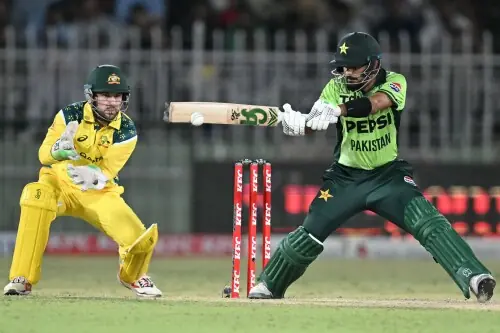
JUST a few days back the Pakistan cricket team ended the Natwest challenge series against England, which was lost by 2-1. Pakistan won the first and the only match of the series at Manchester but not in a great passion. A small target of 204 runs was achieved by Pakistan in 49.2 over with four balls to spare.
The national team always come into bat with one planning only, i.e. to keep the initial wickets in hands and score as many runs as they can in the last 10-12 overs. Everybody knows the strategy of Pakistan because it is always the same, whatever the conditions are. That is why they are not able to chase big totals like other teams. So the opponents to Pakistan always try to get initial wickets because they know that whole team will be under pressure and the Pakistanis lack the ability to rebuild their innings.
When the team ball, they are always hungry to get wickets at any cost, irrespective of average of runs per over. Whether Pakistan is defending a big or a small total, their strategy is the same: to go for wickets. This policy exists since the time of Imran khan.
Strategies should be changed in different conditions. Sometimes conditions are favourable to bowlers but sometimes they are not. Pakistanis in all kind of conditions and against all teams adopt the same policies whether they are playing against Australia, Zimbabwe, England or any other team.
CHOUDHRY SULEMAN MAHBOOB
Lahore
MMA’s priorities
MANY people now criticize the maulvis/mullahs for doing little things such as smearing billboards and imposing shalwar-kameez as school uniform while major problems like health and education remain unattended. But, sir, it is the mullahs’ government in the NWFP which first announced it will provide free education up to matric.
Again, it is they who first presented a surplus budget in which education, economics and social sectors got major chunks, such as the government would provide 10,000 new posts to contain unemployment, and a health endowment would be established to provide free medical facilities to the patients suffering from fatal diseases.
The most remarkable thing is the announcement of reduction of Rs1,000 in the salaries of all provincial ministers and the reduction of Rs2,000 in the salaries of the provincial finance minister and chief minister.
Should we not regard all these as a significant step taken by NWFP to improve the condition of the common man?
ROMAISA SIDDIQUEE
Karachi
Woman’s status in Islam
THIS refers to Afzal Mahmood’s article ‘Status of women in modern Islam’ (July 5).
While the denial of certain privileges to women during Haj and Umra as pointed out by the writer should receive due consideration, the subject-matter deserves to be discussed in the broader perspective instead of the narrow confines of rituals.
It is only in the closing paras that he comes to the crux of the question by stating that ‘Islam is today at the defining moment of history. We live in an interdependent world of accelerating change and an obscurantist view of Islam cannot cope with the challenges of the 21st century’. It is here that the orthodox school is at odds with the modernist thinking. Nevertheless, Islam should not be prefixed with the words modern because Islam in its dynamics remains one and the same.
Allama Iqbal rightly points out that ‘Islam is always an aspiration and never an achievement.
A. RAZEE SIDDIQUI
Karachi
Sectarian violence
IN the article titled “Sectarianism: part of a wider malaise” (July 10) on the reasons for the rise of religious extremism, there is one notable omission: Dr Iffat Idris has said nothing about the Wahabi projection of Islam, backed by huge funding from Saudi Arabia over the past 25 years, which has played a major role in creating this mindset.
M. S. Ali
Karachi
Lend a hand
TO guide the Rotarians on the path of service, Jonathan B. Majiyagbe, President, Rotary International, gave the theme to all Rotarians to ‘lend a hand’. This is a simple theme, but one that eloquently captures the essence of Rotary service.
As Rotarians, we routinely lend a hand in our club, community, in our vocation, and in the world. We lend a hand to our fellow Rotarians, at home and abroad, who need help in tackling problems in their community. Sometimes this simple gesture is all that is needed to transform a person’s life. In other cases, one hand can become many, as Rotarians work together to eradicate polio, raise literacy levels, provide low-cost shelters, resolve conflicts and alleviate suffering for thousands of people. It is in the Rotarian nature to offer help wherever it is needed.
“Let us begin the 2003-04 Rotary year with our hands outstretched, ready to help our brothers and sisters in need. Working together, there is no limit to what the helping hands of Rotary can accomplish,” said Jonathan Majiyagbe.
He further advised the Rotarians to make the organization strong if they were to succeed in alleviating poverty and its many ill-effects and guaranteeing a higher level of literacy to the next generation.
CHAGHTAI MIRZA EIJAZUDDIN
Karachi
Nadra’s announcement
THE chairman of Nadra announced on July 4 that old NICs would stand cancelled on Jan 1, 2004, but he did not say anything about the old cases pending with his department for a long time.
My son applied for the new registration card in July, 2001, receipt #784072, but the card has not yet been issued. All other family members received their cards after two years.
The chairman is requested to look into the matter.
SYED KHURSHID HUSSAIN
Scarborough, ON, USA
Disposal of hospital wastes
HOSPITALS have an important place in society as these are the places where one gets cured of pain and suffering. From a minor ailment to serious problems, hospitals are the places to look up to. They are ever ready to serve us, no matter whatever the situation.
But as the important role of the hospitals in society cannot be ignored, some critical and hazardous menaces, which are speedily raising their head owing to the neglect and inattention on the part of hospital authorities as well as of the public, demand consideration even more than that of the original diseases. Hospital waste mismanagement is such a dark and horrific side of the picture.
According to a rough estimate, in Pakistan around 250,000 tons of medical waste is produced annually from all health care facilities. This waste usually comprises disposable syringes, needles, used cotton, bed linen, body parts, organs, tissues, blood, body fluids, blades, drugs, chemicals, etc. But hardly any attention is paid to the proper disposal of any of these wastes which are posing a major threat to human lives. In other words, every human is being cured of disease in Pakistan at the cost of some other’s health.
Infectious waste can spread diseases like hepatitis A and B, AIDS, typhoid, diarrhoea. Moreover, it is a common practice in our country to reuse disposable syringes. People pick up these syringes from heaps of garbage, as no care is being taken for their proper disposal, and sell them in the market.
While passing by any of the hospitals, one catches sight of heaps of stained cotton, bandages, blades, etc., carelessly thrown there instead of being properly disposed of. Even body parts which are kept for a certain period in the mortuary and then dissected and sold, mostly to the students of medical colleges, are not being buried once they are used but thrown on the roofs of the hospital. Disposable syringes are also being reused by drug addicts who later encounter diseases like AIDS and hepatitis due to this practice.
Some hospitals are using incinerators for the disposal of waste but incinerators themselves play havoc with the public health. They have been linked to severe public health threats and pollution. Researchers have found that dioxin, as well as mercury and other toxic substances, are emitted when the waste is burnt in incinerator.
This is a grim picture of whatever is happening in and outside the hospitals of Pakistan owing to the mismanagement of the waste. The negligence can take greater toll if immediate attention is not paid to it. Throwing or mixing of this waste in the municipal waste is not an answer. This problem can be controlled by proper training and education in this field.
Workshops and seminars can be useful. The stress should be laid on reducing the quantity of such waste. Guidelines given in the code of EPA, Pakistan, should also be followed. The proper segregation of waste is another solution. Methods like steam autoclaving, thermal system, chemical treatments and others need to be implemented, no matter how expensive they are.
RAFIA SALEEM
Multan