0
0

RIYADH, Nov 14: Garbage is piling up on streets. Grocery stores have shut their doors and almost half of Saudi Arabia’s small construction firms have stopped working on projects.
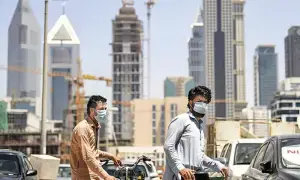
The mess is because foreign workers have gone into hiding or are under arrest amid a crackdown launched on Nov 4 targeting the kingdom’s nine million migrant labourers.
Decades of lax immigration enforcement allowed migrants to take low-wage menial, clerical and service jobs that the kingdom’s own citizens shunned for better paying and more comfortable work.
Authorities say booting out migrant workers will open more jobs for citizens, at a time when unemployment among Saudis is running at about 12 per cent, according to the International Monetary Fund.
But the nationalist fervour driving the crackdown risks making migrant workers vulnerable to vigilante attacks by Saudis fed up with the seemingly endless stream of foreigners in their country.
The majority of workers hail from India, Pakistan, Bangladesh, Indonesia and the Philippines, as well as Egypt and Yemen. Others, mostly from east Africa, have never acquired visas, often taking perilous boat journeys across the Gulf of Aden to Yemen from where they cross illegally into the kingdom with the help of smugglers.
Since the Saudi government began issuing warnings earlier this year, hundreds of thousands of foreign workers have been deported, though some were able to avoid arrest by getting proper visas under an amnesty programme.
That amnesty ended last week, and some 33,000 people have since been placed behind bars. Others have gone into hiding.
With fewer people to do the job, the state-backed ‘Saudi Gazette’ reported that 20,000 schools were without janitors. Others were without school bus drivers. Garbage became so noticeable that a top city official in Medina helped sweep the streets, the state-backed ‘Arab News’ website reported.
About 40 per cent of small construction firms in the kingdom also have stopped work because their foreign workers couldn’t get proper visas in time, Khalaf al-Otaibi, president of the World Federation of Trade, Industry and Economics in the Middle East, told ‘Arab News’.
Saudis say dozens of businesses like bakeries, supermarkets, gas stations and cafes are now closed. They say prices have also soared for services from mechanics, plumbers and electricians.
Adam Coogle, a Middle East researcher for Human Rights Watch, said that if the kingdom wanted to be serious about the problem, authorities should look at the labour laws and not at the workers.
Saudi Arabia’s sponsorship system, under which foreign labourers work in the kingdom, gives employers say over whether or not a foreigner can leave the country or change jobs, forcing many into illegal employment. “The entire system by which Saudi Arabia regulates foreign labour is failing,” he said.
The owner of a multi-million-dollar construction company in Riyadh said he had to halt all his projects. He said he was not the legal sponsor of most of his labourers but that they made more money working as freelance hires.
“These people have worked in this country and their blood is in the stones and buildings,” he said. “You cannot just, like that, force them out.”
Despite feeling the loss of the everyday work the foreign labourers provided, Saudis largely have cheered on the police. Residents have taken matters into their own hands on several occasions, despite police calling on the public not to make citizen arrests.
Over the weekend, Saudi residents of Riyadh’s poor Manfouha neighbourhood fought with Ethiopians, detaining some, until police arrived more than two hours later. A Saudi and a migrant were killed and dozens wounded in the clashes. The violence began when east Africans protesting the crackdown barricaded themselves in the narrow streets of Manfouha, throwing stones, threatening people with knives and damaging cars.
Days earlier, an Ethiopian man was killed by police chasing down migrants.
Violence broke out again days later in the same neighbourhood, and a Sudanese man was killed in clashes on Wednesday.
In the poor Al-Azaziya neighbourhood of Jeddah, clashes broke out when police combed the area for migrants.
“This is not racism or a lack of respect for diversity, but you cannot imagine how much negative comes from these groups instead of positive. These people, every day, cause problems,” said resident Abdulaziz al-Qahtani.
Since the weekend clashes, Saudi officials say 23,000 Ethiopians, including women and children, have turned themselves in to the police. Authorities say most had no documentation of ever entering the kingdom and are being held in temporary housing ahead of deportation.—AP