1
1

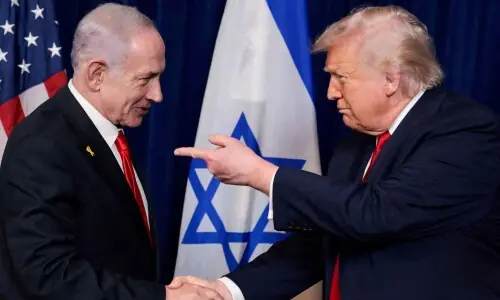
JOINT statements issued after a meeting between heads of government are often dull, turgid affairs with plenty of official-speak and a regurgitation of official talking points. The joint statement released after President Barack Obama met Prime Minister Nawaz Sharif stuck to the conventional formula: first, a paragraph on shared democratic values; next two short ones – in substance too – on the so-called enduring partnership between the two countries; after that, the purported meat – six paragraphs on the theme of economic growth and aid for the energy and social sectors; then the subject everyone else believes is the crux of the relationship: defence cooperation, counterterrorism, non-proliferation and nuclear security, and regional cooperation. To the credit of both the White House and the Pakistani prime ministerial delegation, the emphasis on trade, the economy and uplift of the social sector rang genuine – this was not just an attempt to talk a good talk in public, while keeping the tough, more acrimonious talk for meetings away from the cameras and microphones.
But then The Washington Post story on what Pakistani officials have known until very recently about the drone programme in Fata landed with a thud and instantly changed the subject – and has raised all manner of very uncomfortable questions. Quite who – or even which side – is behind the leak is far from clear as yet. The Post report refers to both “top-secret CIA documents and Pakistani diplomatic cables”, meaning the leak could have emanated from either of those two circles, and so possibly has nothing to do directly with the Obama White House. Even so, Mr Obama himself did not exactly shirk from giving a matter-of-fact assessment of the difficulties in going from the mutually expressed desire to build more sustainable ties to actually achieving that kind of relationship between the US and Pakistan. But then, neither did Mr Sharif really try to downplay the terrorism threat inside Pakistan nor did he look to overly blame the outside world for Pakistan’s internal troubles.
Perhaps the raw reality of the Pakistan-US relationship is that while the two countries continue to cooperate because they need each other, neither has any illusions anymore that the two sides can be close friends. Mr Obama is willing to engage Pakistan on the economic and aid fronts, but the terrorism and militancy issues are as urgent and real as they have ever been. Which is why Mr Sharif’s real job awaits him on his return from D.C.: getting to grips with the internal security challenges.