He was a truly liberal thinker, a rarity in our times, which is more pertinent in particular reference to Pakistan. He was right to go abroad for the kind of studies he wanted to pursue. The conditions here were not very congenial for acquiring knowledge in the fields he was interested in. Once equipped with his study of religions and allied cultures, he joined Boston University in 1968 where he taught comparative religion for 23 years.
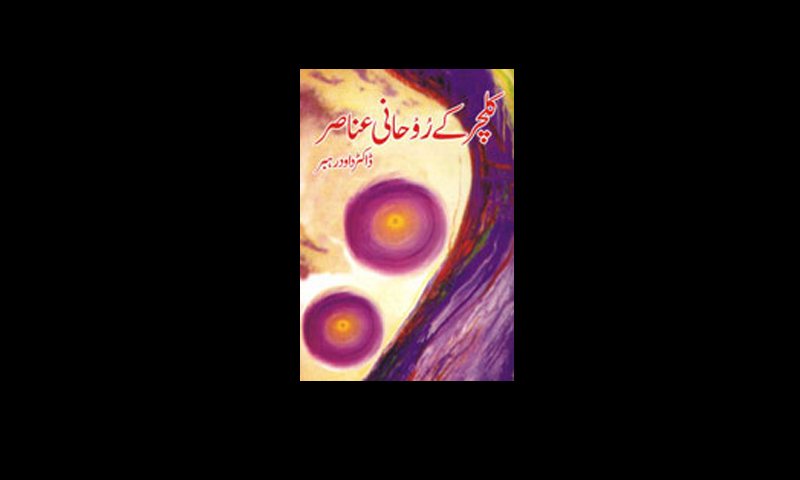
The subject of religions and cultures allied to them was close to Rahbar’s heart. In his book Culture Kai Roohani Anasar, he has discussed this subject at length with particular reference to four cultures: Hindu, Chinese, Christian and Islamic. Each has been discussed in a separate chapter. The fifth chapter has been reserved for a discussion on Buddha’s place in India and China. In the concluding chapter, Rahbar discusses cultures in general, comparing one with the other. How aptly he distinguishes Chinese culture from Hindu culture. The sacred folktales of Hindus are dominated, according to Rahbar, by the element of entertainment. The distinctive feature of Hindu culture, as he explains, is noise: dhol, tamasha and baja, with their loud sounds, form part of their festivals. In comparison, the Chinese behave in a serene and serious manner. “In China,” Rahbar says, “silence stands as a symbol of wisdom. And so taciturnity and brevity are virtues in their eyes.”
Differentiating between Semitic culture and Aryan cultures, he says that the prophets made their appearance in the Middle East. Indian culture, on the other hand, is known for its rishis and munis, who believe in tapasiya and contemplation.
The distinctive quality of this study is Rahbar’s unbiased attitude. In the discussions of religious cultures, more particularly in cases of Islam, Christianity and Hinduism, scholars in general, in spite of their claim of impartiality, betray at some stage their prejudice for or against the religions and cultures they are discussing. Rahbar approaches each religion and culture with an open mind and delves deep into it to explore what lies in its innermost recesses. Keeping in view the prejudices against a given religion he takes care to explain the symbolic meaning of what might appear ridiculous to outsiders in its rituals or belief.
The other subject close to Rahbar’s heart was music. He was steeped deep in the culture and tradition of classical music of the subcontinent. He was also a practitioner and composed a number of verses called boal. As a scholar, he chose to study this art in depth. However, when he started writing about this art he wrote in an unscholarly way. Apart from a few articles, he wrote about music in detail in the book Batain Kuch Surili Si. He chose to survey music in its historical perspective with the help of the great masters belonging to different periods. So we have a long array of musicians, Hindu gurus, Muslim ustads, male as well as female, discussing their styles of singing. Rahbar further explains the intricacies and artistic subtleties of this art. Music has borrowed a lot from mythology, which is now a part and parcel of this art. So Rahbar has also explained references, mostly of Krishna, in its manifold forms. It makes for pleasant reading and captures the imagination of the reader.
Rahbar was a versatile talent. His subjects of interest were many and varied. He wrote extensively in Urdu as well as in English. What a charming prose style he had developed in Urdu. In fact, apart from his ghazal-goi, Rahbar had come to be recognised as a prose writer with a style of his own. We have lost in him a versatile genius who was a scholar, an authority on classical music, a unique thinker and a charming writer.