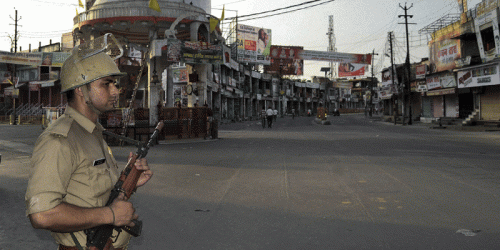
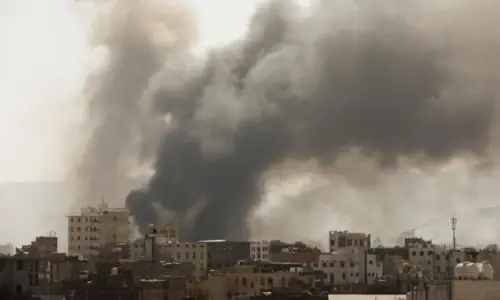
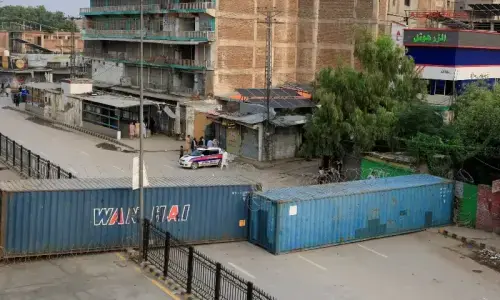
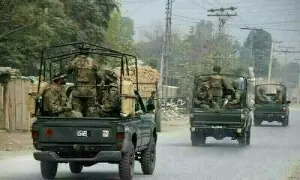
MUZAFFARNAGAR, India: Communal violence was spreading into new areas of northern India on Monday, despite an army-enforced curfew put in place after deadly weekend clashes broke out between Hindus and Muslims.
Gunfire and street battles that erupted Saturday in villages around Muzaffarnagar in Uttar Pradesh state have killed at least 28 people and left many more missing, police said.
Soldiers deployed to the region have been given orders to shoot rioters on sight, state government official Kamal Saxena said.
By Monday morning police had arrested 90 people. Still, the violence spread to the neighbouring districts of Shamli and Meerut overnight.
Dozens of rioters attacked a group of soldiers who were evacuating people Sunday night from the riot-torn village of Wazidpur, Saxena said.
The soldiers responded by opening fire on the rioters, but no one was hit, he said.
The violence began Saturday night after a meeting of thousands of Hindu farmers called for justice in the killing of three young men from Kawal village who had objected when a woman was being verbally harassed.
Officials said some of the farmers had given hate-filled speeches against Muslims at the meeting.
Clashes with Muslims broke out after the meeting, with many participants carrying guns, swords and knives, senior police officer Arun Kumar said.
Incendiary rumours being spread by mobile phones and social media were fuelling the spread of violence and making it difficult for soldiers to restore calm, state police inspector Ashish Gupta said.
Shops and schools were closed Monday in Muzaffarnagar, about 125 kilometres north of New Delhi. Soldiers are searching homes for weapons.
A state of alert has been declared for Uttar Pradesh, a state of 200 million people where the 1992 razing of a 16th century mosque by a Hindu mob in Ayodhya sparked India's worst communal clashes.
The central government warned that communal violence was on the rise, with 451 incidents reported already this year, compared with 410 for all of 2012.
Home Minister Sushilkumar Shinde said tensions were expected to escalate further in the run-up to next year's national elections, and urged India's 28 states to remain on high alert.