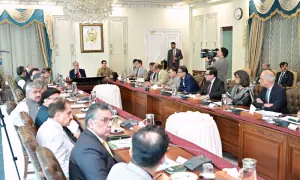
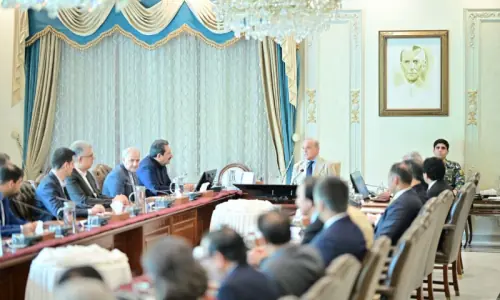
THE federal cabinet’s decision on Thursday to once again extend the provincial quota system in federal services is not surprising. It is germane to conditions in Pakistan and has to be of necessity perpetuated. Meant to safeguard the interests of the people of ‘backward areas’, the quota system has acquired an obscene permanence because there is hardly any improvement in the lot of the people the scheme was to benefit. In the late 1940s, the decision made eminent sense. There was hardly any middle class in two of (West) Pakistan’s four provinces, the literacy rate was shockingly low, and the ‘central’ bureaucracy reflected an ethnic pattern that was a legacy of the British Indian civil service. The partition holocaust also brought with it an overwhelming number of bureaucrats who belonged to what was called the steel frame of British rule in India. Mostly from Punjab and the Urdu-speaking community, they acquitted themselves well during the country’s formative phase when a new political and bureaucratic structure was being created. Recruitment through competitive examinations would have merely reflected the same ethnic pattern. So a quota system was introduced as a temporary measure to have more people from the ‘backward areas’ in federal jobs.
Regrettably, we are stuck with it because it has not achieved its aim. A pitiable 7.5pc merit quota is still there, but people from Fata, Khyber Pakhtunkhwa and Balochistan are still not in government jobs in the numbers they should be. In Sindh, there are urban and rural quotas, and that anomaly continues to be extended. The issue has to be examined from two points of view: one, have the Constitution’s quota provisions enabled the bureaucracy to deliver? Two, has it served the interests of the backward regions? Independent of the quotas, the real challenge before the state is to ensure Pakistan’s uniform development to give the people a better life. It is only a well-developed state which can dispense with the aberration that is the quota system.