THERE are five major elements that western intelligence analysts will immediately notice as they work their way through the 300-plus pages of the Abbottabad report — and several still unanswered questions.
The first comprises some new details about the early days of Osama bin Laden’s life as a fugitive following the December 2001 fall of the Taliban regime that had sheltered him in Afghanistan since 1996.
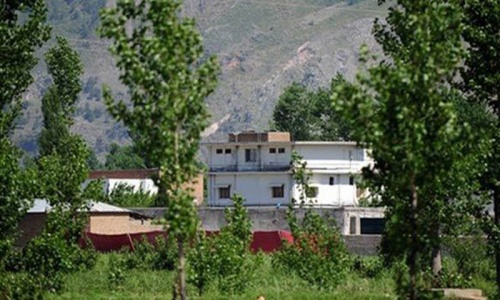
The Al Qaeda leader is reported to have entered Pakistan in mid-2002, spending time, possibly, in Peshawar and in the restive tribal agencies. Then he moved to the Swat Valley. He moved a month later to Haripur, and finally in 2005, with wives, children and grandchildren in tow, to Abbottabad.
But did any Pakistani officials - military or civilian - know he was there? This is the second crucial element, and one of the key questions the report’s authors sought to answer.
Their conclusion is that complacency, inefficiency and negligence at all levels allowed Osama’s presence to pass undetected. This is predictable, critics will say, from a commission appointed by the government. But it is very close to the consensus of western intelligence officials since the raid.
The report’s authors — and western spooks — do not rule out some kind of plausibly deniable assistance from rogue elements. This theory — cockup, not conspiracy — is a marginally more heartening conclusion than the idea that the military or someone else consciously harboured the Al Qaeda leader.
However, element three will cause alarm. Officials in London, Washington and elsewhere will be concerned to read the views of retired Lt Gen Shuja Pasha, the former head of the ISI, that the police and civilian intelligence services are neither trustworthy nor competent partners in fighting terrorism.
There is further discouragement in the general’s admission that the ISI is aware of the location of “foreign miscreants” in major cities, but that the targets are safe in what have become no-go areas for law enforcement authorities. This makes the sheer weakness of much of the government machinery in Pakistan very evident.
Then there are Pakistan’s relations with the CIA and the West — element four. There are few surprises here, except perhaps the depth of Pakistani animosity. “American arrogance knows no limit,” Pasha told the authors. Their own views appear much the same, if expressed in marginally more measured tones.
Overall the report gives every indication that, when it comes to the “rollercoaster of US-Pakistan relations”, the current heart-stopping descent will not bottom out for some time.
Finally — element five — there is the existence of the report at all. It appears, against most expectations, to be a serious, sober piece of work. It is no whitewash but a savage piece of self-analysis.
Even the ISI is explicitly criticised for overstepping its remit, for its mindset and for failing to properly monitor four phone numbers of suspected militants given by the CIA in 2010. These, it turned out, belonged to the crucial courier who later led the CIA to Osama bin Laden.
No Pakistani agency or institution comes out unscathed. The civilian and military leadership showed “breathtaking incompetence and irresponsibility”, the report says. In one section, repeated military interventions are criticised for creating a vicious circle that undermines the capacity of civilian institutions.
Given the sensitivity of the issue and the political pressures on the authors, this is remarkable. It suggests that those optimists who, in the aftermath of a successful election and transition of power, believe that in some areas at least there is progress in Pakistan might just be right.
By arrangement with The Guardian