0
0

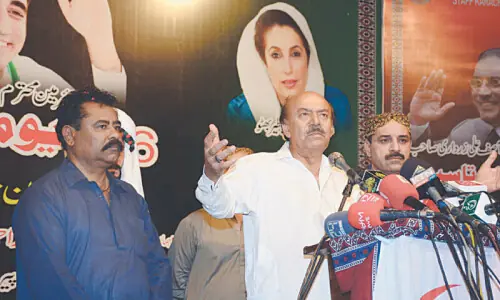
KARACHI, Nov 3: Apprehensions of discrimination, favouritism and political bribery has overshadowed the gigantic youth development programme initiated by the Pakistan People’s Party-led Sindh government.
Entitled, “Benazir Bhutto Shaheed Youth Development Programme”, the initiative is aimed at recruiting 100,000 jobless youths who will be imparted training in different trades according to the job market demand so that they can develop their skills and earn a livelihood.
Basically, the projected aim of the programme is to address the issues of poverty and unemployment. The main attraction in the training programme is that the youths selected for training and skill development are being paid Rs4,000 to Rs7,000 per month as monthly stipend.
In the first phase, launched in seven public departments, some 35,000 youths have been selected on a “first come, first served basis” while in the next phase, 10,000 more youths would be imparted training through some private sector concerns.
Although the programme has been generally welcomed as a step forward in improving the selected youths’ chances of getting an employment, the PPP’s political opponent and some independent observers sniff some “motive” behind the provincial government’s generosity.
Critics even term the initiative “political bribe” to induct the young blood in the party.
Since the selection of the youths for the training programme is with the party leadership and there is no transparent system to screen the candidates’ eligibility, the political opponents of the PPP allege discrimination on the part of the selectors. They believe that candidates’ leaning towards the PPP, and not the merit, is the selection criteria.
The past PPP governments, according to them, had recruited party supporters in every government, semi-government and autonomous organisation. However, with the removal of the party’s government, these people were either sacked or forced to resign. Many others were placed in suspension and have to endure years-long litigation processes.
No job guarantee
The seven departments for which candidates have been selected in the first phase are: labour, health, education, information technology, agriculture, works & services, women development and fisheries.
However, the programme offers no job guarantee to those imparted training in different trades. Nor does the departments which has arranged for the training offers any opportunity to the youths.
There are some vacancies in certain departments but the jobs are of administrative nature for which the youths trained in different trades may not find themselves fit. In view of the persisting economic crisis, there is no possibility of fresh investments or setting up of new industries in the country in the near future. This makes it abundantly clear that after completing the training, the selected youths may not find plenty of job opportunities within the country. And if they failed to get themselves employed, all funds spent on their training may be described as total loss.
Better options?
Some analysts say that instead of spending huge amounts on such youth development programmes, the government should have provided subsidy on flour and electricity. This would have been a great relief to the poverty-stricken majority of the population, they argue, maintaining that the benefits of all welfare programmes must trickle down to the common man without any discrimination. This may not only have helped alleviate poverty but also reduced pressure on the government itself.
However, the contention has been contested by PPP leaders, including Sindh Chief Minister Syed Qaim Ali Shah.
Dispelling the impression of favouritism in the selection process of the trainees, the chief minister said that in each department where youths were inducted for training, boards comprising representatives of the trade and the department concerned had been constituted to ensure transparency in the selection process.
Sindh Labour Minister Amir Nawab, who belongs to the Awami National Party, said that an eight-member board, comprising four representatives of industries and four from workers’ organisations had been constituted. And a leader of an industrialists’ body, Mr Majid Aziz, was heading the board. He said the board had selected youths for the training.
Another minister, Agriculture Minister Syed Ali Nawaz Shah, said that not only the selection of candidates was based on merit, but during the training they would also take tests every month to evaluate their progress and to ensure that the stipends being paid to them was not being wasted.
The chief minister said that in the first batch, a total of 50,000 youths were being trained instead of 100,000.
“Youths are our asset and the purpose of initiating a skill-development programme is to make concerted efforts to make the youth useful citizens of the country so that they can play their due role in the progress of the province and prosperity of the country”.
He said that demand in job market clearly showed a shift from unskilled and semi-skilled labour to the skilled categories in various fields. However, he did not agree with the suggestion to pass on the allocated funds of Rs4 billion of the youth development programme for giving subsidy on flour or power rates. He argued that the subsidy would only provide a relief for a month or so while spending the amount on development of skills of our youth would make them not only productive for all times to come, but would also contribute a lot to make them a useful citizen.