0
0

OSLO, Oct 17: As wealthy countries fall victim to the global financial crisis they must resist pressure to cut their desperately needed international aid, UN humanitarian aid chief John Holmes said.
“Our very strong plea is: ‘please, try to insulate your development budgets from those pressures’,” Holmes said on the sidelines of a conference in Oslo this week on internally displaced people.
“We fear that for the developed countries the financial crisis will put pressure on budgets because they will have to spend money not only on financial bailouts but also maybe on higher unemployment” benefit payments, he said.
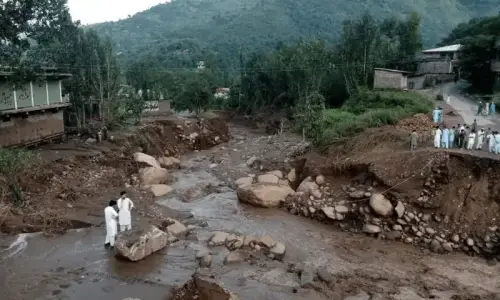
At a time when the world is facing a growing food crisis, a multitude of armed conflicts, and an increasing number of natural disasters sparked by climate change, larger swaths of the global population will be in need of international assistance, Holmes said in an interview with AFP.
“Whatever the (financial) pressures might be ... developed countries should make sure that these (aid) budgets are maintained and, if possible, increased,” he said.
While the global financial turmoil has yet to take a clear negative toll on international aid budgets, Holmes said he feared the impact of the crisis would soon become apparent.
“There have been no effects yet on aid flows or aid budgets, or indeed, much effect yet on the poorest countries themselves,” he said, but added that “rising needs matched by reducing budgets is a combination I really don’t want to contemplate.”
“What we fear is that as we go into next year ... the poorest countries can suffer more,” Holmes said, pointing out that in addition to a possible cut in aid, the developing world would likely be hard-hit by decreased international trade, shrinking investments and lower commodity prices.
“They may finish off in a worse economic situation than they are in now and the most vulnerable people will suffer the most,” he said, adding: “Probably Africa will suffer the most, as usual.”
Citing recent research figures, the UN’s emergency relief chief said climate change and other factors could push the number of internally displaced people to quadruple from 50 million today to 200 million by 2050. This poses huge new challenges for the international community, he said.
“There is no doubt that the trend of increasing disasters is already visible now. Whatever happens now in terms of reducing greenhouse gases, the effects of existing climate change will be with us for 20-30 years and probably longer,” Holmes said. Going forward, we will need to gain a better understanding of how the situation is changing.—AFP