



 0
0

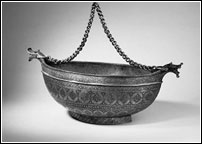 Since the restoration of the democratic government, and all the economic indicators, except inflation heading south from the beginning of 2008, a question on everybody’s mind is: does this major milestone in our political history also mean the return of the ‘begging bowl”.
Its’ full-fledged second debut from government’s kitchen in front of the philanthropic governments, development partners and multilateral agencies has already broken the perceived myth of ‘sustainable’ growth and ‘resilient’ economy created by the previous government. One also hopes that there is no ominous link and just a coincidence between the advent of democracy and the re-appearance of begging bowl.
Some may argue that in the current scenario, we just require temporary balance of payment support and it should not be likened to the debut of ‘begging bowl. The economy will be up and running in six months time. But request for large grants indicates that government is in unsustainable debt and future liabilities and cannot assume more loans and its repayments.
Although a declining share of total foreign aid over the decades, grants have been a constant feature of the BoP support since independence. But, they cannot be strictly associated with ‘begging’ when they were and are realised as transactions more dependent on the largess of the donors and gestures of philanthropic governments, sometimes in case of natural emergencies.
Similarly, deferred oil payments worth $5 billion a year that we are expecting from Saudi Arabia any day and food aid plus $15 billion over the next 10 years from USA are soft loans, but the urgency and purpose under/for which they were requested along with the magnitude is tantamount to begging. The ‘democracy bonus’ of $500 million from China in response to our SOS for BoP support is nothing more than ‘begging’. Insistent private foreign direct investment at the highest international economic and non-economic forums as ‘pseudo’ begging. In this globalised world and almost free flow of capital, investment would automatically flow where the return to it are the highest and where cost of doing business is the lowest. Who else would know better about these profitable niches than the investors’ themselves?
By drumming up the case for private foreign direct investment, we implicitly admit, we are ready to give concessions and tilt the level playing ground in favour of foreign investors in order to bolster our foreign reserves.
The begging bowl implies a loss, to an extent, of sovereignty; and type of implicit and/or explicit conditionalities attached to ‘begging’ is more a function of the economic/political power of the benefactor and objectives the philanthropist wants to achieve through the grant.
Moreover conditionalities come in various forms and sizes. The speed at which the foreign reserves and Pakistani currency value is declining, some see IMF/World Bank rescue lending in a few months as a writing on the wall.
As bankers, they would require explicit conditionalities on quick stabilisation of the economy, but the implicit conditionalities of the members of the governing board of these institutions behind these innocuous (and usually half-heartedly implemented) economic conditionalities will be of political nature and may directly affect the sovereignty and security of the country.
In the light of the past experience with the commitment of long-term and stable flow of US aid, the recent announcements are means to front load the political/security conditionalities by dangling the long-term carrot in our hour of need. If the deferred oil facility by Saudi Arabia is restricted to just one year, it would be quite innocuous to our national interests, but if we keep requesting for extensions, one may have to comply occasionally with brotherly ‘favours.’
One hopes that the political and economic managers will not embarrass us going around with the bowl for long. However even the back of the envelope exercise suggests that we will be needing substantial amount of BOP support (or need to beg) in the near future.
Lets’ start with the medium term prospects of narrowing the trade balance. With commodity exports at $20 billion and imports touching $40 billion, the prospects of narrowing this gap by 50 per cent in a matter of one or two years are remote (unless the oil price again falls in the range of $60-70).
Historical trends in exports suggest periodic jumps accompanied by fluctuations around a plateau, i.e., jump from $10 to $15 billion and variations around that number for a few years and another quick jump from $15 to $20 billion and then again volatility around that number for the next few years.
However, historically imports have continued to securely climb by smaller or larger rate every year. Thus we are likely to experience a widening trade gap unless the exports quickly jump to $25 billion mark in the next year. Moving to current account gap, the saving grace is remittances, which fill the trade gap by 25 per cent.
They have reached over six billion mark and expected to grow 10-15 per cent a year thanks to booming economies of the Middle East and aging of western societies. That leaves a current account gap of about $8 billion.
At the fag end of the previous government’ rule and the last financial year, foreign direct investment of $5-6 billion more or less considerably bridged the gap. The simmering political uncertainties, law and order situation and macroeconomic instability has burst the FDI balloon.
Thus in a very optimistic scenario for the next two years, the country would need $5-6 billion or import compression of similar magnitude annually to square the BoP account. It seems the return of begging bowl is inevitable, unless we put our economic house in order on a war footing.
sajam2000@yahoo.com





























