Aid and accountability
GOING by the latest moves in Congress, Pakistan’s domestic developments have not altogether given a wrong signal to the world. The fact that a democratic government is at the helm in Islamabad seems to prod the aid-givers, especially America, into developing new assistance priorities, with an emphasis on non-security assistance. On Wednesday, the Senate Foreign Relations Committee held a hearing on a new law that seeks to triple non-military assistance to Pakistan to $15bn over the next 10 years. Defending the new aid package, Senator Joseph Biden, the committee’s chairman, said $1.5bn annual aid would go towards building more schools, roads and hospitals, especially in Fata. He said the new aid package would signal America’s long-term commitment to Pakistan.
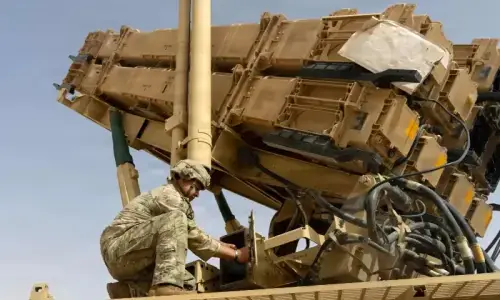
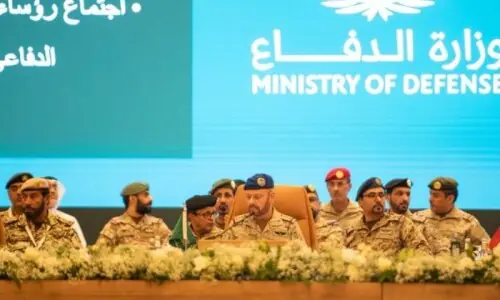
Even though Pakistan and America are allies in the war on terror, serious misunderstandings exist between them. The chorus about Pakistan ‘doing more’ has now given way to serious complaints by American civilian and military leaders that the peace deals between Islamabad and the militants have not only failed to work, they have enabled the militants to regroup in Fata and attack Afghanistan across the Durand Line. In fact, American leaders, including President Bush and presidential hopeful Barack Obama, threatened to attack the Taliban bases in Fata if there was ‘actionable intelligence’. Hamid Karzai has added his bit to the pressure on Islamabad by threatening to invade Pakistan if his grievances were not addressed. Pakistan’s viewpoint about the Nato-led forces’ operational caveats has gone unheard. However, the most serious American complaint against Pakistan concerns the use of aid. On Tuesday, America’s Government Accountability Office came up with a report that there was no proof that the aid meant for fighting terrorism had been used for this purpose. For instance, it claimed that $200m for air defence radars and another $45m for bunker construction had not been used for that particular purpose. This prompted a Congressman to wonder why Pakistan was being reimbursed for its expenses on air defence because Al Qaeda had no air force.
With a democratic government in power, it is time Islamabad drew up its priorities right. What is involved is more than the question of satisfying Washington about aid use; the real issue is developing long-tern economic policies that will make Pakistan stand on its own feet and do away with its dependence on foreign aid. As the people’s representatives, the parliamentarians should be the ultimate arbiter of Pakistan’s destiny. Upon them rests the responsibility of providing guidelines to the government to draft economic policies that will respond to the people’s urges and ensure even development. There is also the need to ensure that corruption does not divert funds from the real needs for which they are earmarked.
Slithering Talibanisation
THE tentacles are spreading and the ideology of the Taliban is claiming new ground across the country. Fanning out post-9/11 from their strongholds in the more remote tribal areas, the local Taliban ultimately made their presence felt in major Fata towns, emboldened no doubt by the state’s failure to establish its writ in South and North Waziristan. Soon forays were being made into the frontier regions (FRs) that border the tribal agencies, and then beyond into the provincial districts. The extent to which the rot had spread was brought home in early 2007 when the Lal Masjid brigade occupied a children’s library in Islamabad, patrolled the streets of the federal capital to suppress ‘vice’, abducted local women, policemen and Chinese nationals, and also set up a Sharia court in the mosque. The subsequent bloody showdown in July was proof that the Lal Masjid compound housed not just radical madressah students but ‘jihadis’ armed to the teeth with all manner of weapons. Their links with militants in the tribal areas also came to the fore.
The militants’ network must necessarily be covert but exist it does across the land. Although a stand-off as vicious as the one in Islamabad is yet to be seen in a major urban centre, the Taliban have their supporters and areas of influence in almost every large city. Where Talibanisation once crept, it now slithers. There is a palpable fear in Peshawar these days that the recent abduction of over a dozen Christians coupled with threats to city shopkeepers and others may be a precursor to a more coordinated assault by militants. In Karachi, the Tehrik-i-Taliban are handing out leaflets warning transporters and drivers of brutal consequences — slaughter, to be precise — if they persist with trucking supplies to the ‘Christian army’ in Afghanistan.
Back in the tribal belt, militants have been operating with impunity over the last week or so, as detailed in these pages yesterday. On Tuesday, the Taliban seized a girls’ school in Bajaur and renamed it Jamia Hafsa, the Lal Masjid seminary that was at the heart of the July 2007 clashes. Other girls’ schools are also on the militants’ radar. They plan to convert these schools into madressahs because, according to a Taliban spokesman, “the western system of education is not good for girls”. From Karachi to Bajaur and beyond, ordinary citizens are helpless before the military might of the Taliban. Taking them on is a job for the state.
Signs of the times
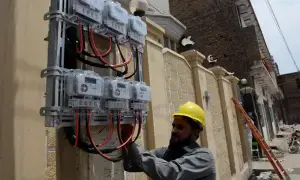
THE Karachi Water and Sewerage Board (KWSB) announced an increase of nine per cent from the next fiscal in water and sewerage tariffs for all consumer categories — except flats-dwellers. This underlines the unthinking manner in which the burden is ultimately passed on to the people. The proposal to revise the tariff in subsequent years was initially taken in 2001. Yet the prospective increase will be the first for domestic consumers since 2001-02, and for bulk consumers since 1998. One wonders why the enhancements were not gradually phased in over the past years. Meanwhile a number of bulk consumers — including major industrial units and subsidiaries of the federal and Sindh governments — are defaulting on dues to the tune of Rs4bn that are owed to the KWSB, which itself has been sent a notice by the KESC for an outstanding sum of Rs4.75bn. In this context, it seems that domestic consumers of KWSB must pay for the sins of the defaulters, at a time when inflation and escalating prices are already taking a heavy toll.
The decision to exempt flat-dwellers from the increase is positive, the assumption being that such citizens belong to comparatively under-privileged economic brackets. Yet this must be contrasted with the fact that domestic un-metered consumers living in accommodations of up to 120 square yards have been included in the tariff increase — despite the fact that residents of such accommodations are also bound to feel the pinch. Furthermore, the increase will be levied on large numbers of consumers who already pay water and sewerage taxes despite being outside the water-provision net of KWSB. Several areas face endemic water shortages and rely heavily, if not entirely, on the tanker mafia. Increasing the tariffs for these consumers is insult to injury, given that defaulting domestic consumers face being taken to court. The KWSB needs to take a second look at its plan to revise its tariff rates. One cannot deny that an upward revision is due. But it should be gradual and inbuilt into the tariff system. There is also an urgent need to make the raise progressive — that is higher for those who use more water and can afford to pay more.
Ensuring timely justice
AN honest and law-abiding citizen serves the people diligently. He endures severe hardships to save some money in the hope of providing post-retirement security to his family.
For instance, a poor person purchases a small residential flat, gives it on rent to someone so that he could repay his loan and also use it after retirement. But the tenant occupies the flat and refuses to pay rent. The owner is advised by his friends to hire a gangster to deal with the tenant but he chooses to go to the court to seek justice.
He keeps attending the court for, say, two years but fails to get relief. He gets no rent; the loan keeps piling up; he retires and is forced to vacate his official accommodation. Now he thinks he is left with only two options: either to take the law in his own hands and kill the tenant or to put an end to his own life. He is too weak to use the first option so he commits suicide and finishes his own life.
Who is responsible for the loss of this innocent life and irreparable disaster to his family: the person who illegally devoured his property or the system that could not provide timely justice to the victim? The answer is obvious.
Justice or ‘Adl’ as it is called in the Quran is most vital for sustenance of human society. The very basis of creating this universe is the divine plan of trial and justice.
Allah sent the divine code of conduct through His Books and messengers so that human race may enjoy the blessings of nature in this world and also become entitled to the eternal life of peace and tranquillity in the world hereafter. At the same time He granted the request of Iblees (Satan) and gave him respite till the day of judgment to try misguiding man and prove his assertion that human race is ungrateful and unjust and is inferior to Iblees.
According to Ayah 18, Surah Al-Aaraaf, Allah said, “Get out from this, disgraced and expelled. If any of them follow thee’, hell will I fill with you all”. On the other hand, Ayah 25 of Surah Al-Baqra promises due reward for those who follow the code of conduct. Allah expects His servants, the human race, to abide by the same principle of trial and justice in this world, to ensure peaceful sustenance of life on earth.
According to the divine commandments the essentials of justice include:
• Timely justice on merit for all, rich or poor, friend or foe.
• No room for influence of wealth, position or recommendation (safarish).
• No concealment of witness or evidence.
• Enforcement of justice with an iron hand without delay.
Any violation of the above essentials of justice is akin to wilful disobedience of Almighty Allah. No reason whatsoever including strikes, protests, vacations etc. can justify any delay in providing timely justice to the aggrieved party.
Justice is an attribute of Allah and to stand firm for justice is to be a witness to Allah. Very serious responsibility lies on the shoulders of those servants of Allah who have been endowed with the duty of imparting justice. Any delay or partiality in providing justice to the aggrieved party amounts to betrayal of trust that Allah has imposed on the judges.
Ayah 58 of Surah An-Nisa says, “Allah commands you to render back your trusts to those to whom they are due. And when you judge between man and man that you judge with justice: Verily how excellent is the teaching that He gives you! For Allah is He who hears and sees all things”.
Ayah 135 of Surah An-Nisa says, “You who believe! Stand out firmly for justice, as witness to Allah, even as against yourselves or your parents, or your kin, and whether it be (against) rich or poor: for Allah can best protect both. Follow not the lust of (your hearts) lest you swerve, and if you distort (justice), verily Allah is well acquainted with all that you do”.
The Latin principle of justice is, “Let justice be done though heaven should fall”. The Islamic principle of justice is even higher. Dispensation of justice, without fear or favour, is a sacred trust and has been declared by Allah, as an essential part of piety (taqwa).
Surah Al-Maidah, Ayah 1, categorically commands, “You who believe! Fulfil all obligations”. Abdullah Yusuf Ali in his commentary on this Ayah has written that this verse is so comprehensive that it forms a paragraph or a chapter by itself. The Arabic word “Uqud” (translated as obligations) implies so many things that a whole chapter of commentary can be written on it. There are divine obligations that arise from our spiritual nature and our relations to Allah. Then there are worldly obligations that govern the existence of human society. Administering justice in this world is an important obligation for ensuring the very existence of human society and is therefore even more sacred than our spiritual relationship.
Ayah 152 of Surah Al-Anaam reads, “…whenever you speak, speak justly, even if a near relative is concerned; and fulfil the covenant of Allah: Thus does He command you, so that you may remember”. It is obligatory for us to support the truth and provide immediate, unbiased justice to those who deserve.Ayah 119 of Surah At-Tauba commands, “You who believe! Fear Allah and be with those who are true (in word and deed)”. Ayaat 32-35 of Surah Al-Muarij (70) promise rewards and blessings for those who justly fulfil their worldly obligations. “All those who fulfil their trusts and covenants, who uphold their testimonies, and those who are mindful of their devotional obligations, they will live in gardens with honour”.
It is indeed important that justice should not only be theoretically announced but it should be implemented with an iron hand. Timely compliance of justice must be ensured with full force of law. Ayah 25 of Surah Al-Hadeed explains this vital point in the following words: “When We sent Our apostles with clear signs and sent down with them the books (code of conduct) and the balance (of right and wrong) that men may stand forth injustice. And we sent down iron in which is (material for) mighty war as well as many benefits for mankind that Allah may test….. for Allah is full of strength, exalted in might”.
Allah has sent His code of conduct for the human race through his scriptures and messengers. Timely justice in the worldly affairs without fear and favour is in no way less important than the spiritual obligations. Persons entrusted with the responsibility of administering justice among men (judges) have a huge responsibility on their shoulders.
Delay in providing justice to the aggrieved party cannot be justified under any pretext whatsoever and it amounts to betrayal of the sacred trust imposed on judges by the Allah Almighty. Criminals, anti-social elements and violators of law must be handled with a strong arm symbolised by iron in the holy Quran (surah Al-Hadeed).
Cost of climate action
THE author of an influential British government report that argued the world needs to spend just one per cent of its wealth tackling climate change has warned that the cost of averting disaster has now doubled.
Lord (Nicholas) Stern made headlines in 2006 with a report that said countries needed to spend one per cent of their GDP to stop greenhouse gases rising to dangerous levels. Failure to do this would lead to damage costing many times more, the report warned — at least five per cent and perhaps more than 20 per cent of global GDP.
But speaking on Wednesday in London, Stern said evidence that climate change was happening faster than previously thought meant that emissions needed to be reduced even more sharply.
This meant the concentration of greenhouse gases in the atmosphere would have to be kept below 500 parts per million, said Stern. In 2006, he set a figure of 450-550ppm. “To get below 500ppm... would cost around 2 per cent of GDP.”
Speaking at the launch the world’s first ratings agency for carbon offsetting projects, The Carbon Rating Agency, Stern warned that the two per cent estimate required governments to act quickly.
The Stern review in October 2006 called for global emissions to be cut by a quarter by 2050 and to be stopped from rising above the equivalent of 550ppm of CO2, a measure that combines the effect of all the greenhouse gases. The current level is 430ppm, and is rising by 2ppm a year.
Stern, a former World Bank chief economist and head of the UK government economic service, said he now believed the limit should be 500ppm. This would reduce the risk from a 50 per cent chance to a three per cent chance that the global average temperature would rise by 5C above pre-industrial levels, said Stern, pointing out that the last time this happened, 35-55m years ago, alligators lived near the north pole. “These kind of temperature changes transform the word,” he said.
— The Guardian, London
OTHER VOICES - Pushto Press
Peshawar out of danger?
Hewad, Peshawar
The Chief Minister of NWFP, Amir Haider Khan Hoti, has said that there is no prospect of the Taliban ever capturing Peshawar and that the action of the government in Swat is well-placed. The CM has further said that the government has begun long-term planning to bring about durable peace in the province.
The statement of the CM has made headlines in the provincial capital while the news of a deadlock in the dialogue between the armed militants in Swat and the government has spread around the world. Meanwhile, the armed radicals are apparently strengthening their grip around Peshawar amidst fears that they may enter the city.
The presence and strength of militants in Khyber Agency, Mohmand Agency, Swat, Mardan and other areas of NWFP and the dialogue of the government with these extremists are regularly reported in the press. The fact that the government says that it will not engage in a dialogue with militants in settled districts but will talk to those who are entrenched in other parts of the province implores the questions: is the writ of the government limited only to the settled districts of NWFP? Does the government not have the requisite power to establish the writ of the state in areas where militants are entrenched? Is the government unable to stop a handful of armed men from dictating their terms by force? The process of dialogue is continuously marred by daily threats from militants of ending the pact, which exposes the powerlessness of the government.
Undoubtedly the dialogue for peace should be facilitated but the government should not do so from a position of weakness. It would be better to talk to local elders instead of the militants. It is the people of the area who should be taken into confidence when it comes to making a decision about them and their future. Therefore, they should be approached by the government...to ensure peace. Agreements that take place with the consent of the people will be more sustainable as opposed to those taken without their approval. If signed by the local elders, the looming threat of accords being broken will diminish. However, at the same time, no one should be allowed to wreak havoc on the lives and property of the people under the guise of these pacts.
The government must exercise caution in order to ensure that the militants don’t take advantage of agreements and regroup themselves. One can only hope for peace and prosperity in this beleaguered province in the future. — (June 22)
— Selected and translated by Khadim Husain