0
0

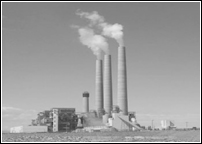 The new PPP-led government has inherited the daunting task of overcoming the longer and increasing periods of load-shedding. However, overcoming load-shedding is not a new or baffling task for the PPP. The situation in early nineteen-nineties was almost the same with respect to load-shedding when the then PPP government announced the much hyped power generation policy of 1994.
The Power Policy of 1994, though hiking the electricity prices, had at least succeeded in alluring internationally reputed firms to invest in private power generation and in overcoming the load-shedding. But the recent fire-fighting by the government does not support that notion. It appears that this time something is missing and the matters would go awry.
Instead of focusing on coal-based power generation, the government chose to sign accord with Dong Fang of China for a 525 MW at ChichoMalian combined cycle power project. Experts are of the opinion that provided the gas is available, combined cycle technology is a good choice, especially for the purpose of tariff. But the same technology based on furnace oil as fuel is not only a nightmare for people operating the machinery but very costly in terms of cost. The tariff on furnace oil on current world oil prices may well cross over 18 cents (above Rs11) per unit.
It is known that gas is a scarce and precious commodity. Its availability in coming years is very bleak for power generation. The government has already prioritised gas available for fertiliser and domestic sectors. In such a scenario, gas availability Chichoand the other recently signed combined power plant of around 450 MW at Nadipur would surely run on furnace oil.
If the government is willing to import the furnace oil why is it not thinking for developing projects based on imported coal. Experts estimate that bigger projects of 1800 MW (even involving construction of jetties) would not cost more than nine cents per unit i.e. half of the cost involved in furnace oil. Further, the projects based on imported coal would create know-how and skill development much needed for developing local coal resources, which are still untapped.
Somehow the rich coal potential, especially of Thar (Sindh) with its 175 billion-ton reserves that are sufficient to meet the current electricity demand for next 100 years, have failed to attract attention of succeeding governments.
The notion that something is amiss that gets impetus from the tug of war recently started between two government entities responsible for bringing additional power generation. PEPCO (organisation that has assumed responsibilities of Wapda’s power wing) and PPIB has recently called expressions of interest for developing combined cycle power generation projects of 500 MW each at Dadu (Sindh), and Faisalabad (Punjab).
Ironically, PEPCO and PPIB are not doing different projects, rather they are consuming their energies on the mutually exclusive projects i.e. PEPCO (for public sector) and PPIB (for private sector) are in a tug of war for the same projects, and the winner of the two will complete the projects. Probably, the government has decided to embark upon ‘competitiveness’ by allowing two of its organisations to compete with each other. Both of these organisations have invited technology suitable for three fuels i.e. gas, diesel and furnace oil. The cheaper of these fuels i.e. gas is not available for full utilisation of 500 MW capacity at either of the sites advertised by these two organisations. The partial availability of gas is only for about one and a half year.
PPIB is already processing a heavy portfolio of private power generation based on oil and with the addition of 2x500 primarily oil-based projects, the impact on consumer tariff would be drastic.
With the price of only six cents per unit pursuant to 94-policy, the consumers had to bear the brunt for spiralling the electricity prices. Probably, the economic managers can still justify that costly electricity is better than no electricity; but given the tug of war between PPIB and PEPCO, the chances of having new generating units coming into operation are not bright. As always, the net loser in the sum game would be the ordinary consumer.
The new government would have to review the overall structure of power sector. It may be pointed that ‘electricity’ is the one subject which is also on concurrent list.
There is a long list of questions such as, ‘how much the provinces are geared to assume the responsibility of an integrated power grid’, ‘how well the provinces would espouse with the restructuring and reforms programme started in power sector way back in 1990’s at the behest of World Bank and other such institutions’, ‘what will be role of power regulator – Nepra, ‘what would be the fate of long-term IPP agreements’, who will benefit from the cheaper hydro electricity’, ‘who will control nuclear generation’, ‘how economies of scale would be achieved at Thar and how Thar would be developed for its potential of generating more than 100,000 MW’ and so on.