0
0

India on board: IPI
EVEN though much more remains to be done, Pakistan and India seem to have made a major breakthrough on the gas pipeline question. Given the history of the Iran-Pakistan-India pipeline project, tied as it is to the bilateral relationship between Islamabad and New Delhi, optimism without some reservations would be unwarranted. The differences between Pakistan and India, especially over the transit fee and transportation charges, have already delayed the pipeline project, raising the cost from $3.3bn in 2004 to $7.5bn today. But the two energy ministers told a press conference in Islamabad on Friday they had now agreed on the “fundamental issues” of the project. They were hopeful that a final agreement could be signed in weeks if not days. President Mahmoud Ahmedinejad’s imminent visit to the two capitals will, no doubt, help expedite the project which — besides meeting the two countries’ fast-expanding energy requirements — is not without geopolitical importance.
Several factors have delayed the materialising of IPI, one of them being America’s hostility toward Iran and New Delhi’s sensitivity to Washington’s concerns. As a result India stayed away from three meetings between Pakistani and Iranian officials during the last nine months. However, hard economic realities coupled with a domestic backlash have combined to force a rethinking in New Delhi. Many Indian politicians, especially those on the Left, and sections of the media have criticised what to them appeared to be their government’s lack of spine in standing up to US pressure. This was in sharp contrast, they pointed out, to the resolve shown by Tehran and Islamabad to go ahead with the project. Then there is the obvious fact that India has to rely on imports to meet its gas requirement. The signing of a bilateral agreement with Turkmenistan and its entry into the trilateral Turkmenistan-Afghanistan-Pakistan gas pipeline project are an indication of its desire to ensure uninterrupted supply of gas for the future. However, what brought the Indian oil minister rushing to Pakistan is the possibility that China may respond to President Pervez Musharraf’s invitation during his visit to that country to join the Iran gas project. That perhaps clinched the issue for New Delhi.India’s ‘re-entry’ into the IPI project is a welcome development. Iran may be under several layers of American sanctions, and indeed there may be threats every now and then of America or Israel attacking Iran. But that is no reason why the three countries should abandon a project that serves the economic and energy interests of all of them. For Pakistan, a greater problem is the safety of that portion of the over 700-kilometre pipeline which runs through Balochistan. Even though the level of insurgency has fallen, acts of sabotage of vital installations still continue. To ensure the safety of the pipeline it is essential to remove the causes of Baloch unrest and ensure peace in the country’s largest province territorially.
Confusing signals
THE decision of the Sindh government to reconstitute two vital components of the City District Government Karachi and the refusal of the CDGK to comply with the orders has indeed added to the uncertainty that prevails in the province regarding what may or may not lie ahead. If anything, it is ominous. However, it all happened when leaders from both the PPP and the MQM were meeting to sort out their differences and taking the latter onto the bandwagon of the ruling coalition. In fact, the rival CDGK notification almost coincided with the statement of the MQM delegation that the talks had progressed smoothly and that ‘something good’ was likely to come out of it. Obviously the two parties have yet to reach an understanding. Technicalities apart, the decision of the Sindh government to reconstitute the Karachi Water and Sewerage Board and the Karachi Building Control Authority appeared to have a political undertone. PPP leaders — though not the central leadership itself — have been talking about turning back the clock on the existing local governance system. Besides, there has also been talk about the perceived need to clip the powers that nazims had been given under the Sindh Local Government Ordinance 2001.
The fear in certain quarters that the wrangling may put further strain on the fragile equation between the two parties is not totally unfounded. Though at the time of the earlier decisions — 2002 for KWSB and 2004 for KBCA — the CDGK was not being headed by the MQM, the recent developments clearly pit the two parties against each other. That the provincial government chose to move ahead with the nazim’s summary dismissal from the management of the two bodies through an executive order instead of taking the more prudent route of amending the relevant ordinance is also a matter of debate. This in itself has the potential to snowball into something ugly given the uncertain scenario prevailing in Sindh, more so in its urban centres from where the MQM has been returned to the assemblies in numbers. It is in the interest of the ruling party to take a broader national view of the existing system. It may have its logic behind a possible reversal, but decisions taken in any single province will render them predisposed to accusations of bias and political one-upmanship. And when that province happens to be Sindh, with all its peculiarities, the need to tread carefully becomes that much more imperative.
Wasteful trips
HAD we truly stood to profit from President Musharraf’s numerous trips to foreign countries, the expenditure of almost Rs1.5bn incurred on his travels would have been considered money well spent. But in the last five years — from Jan 2003 to Jan 2008 — we have seen the president undertake 37 trips abroad, often with large entourages, with little to show for it. Pakistan has hardly progressed over the years and, apart from the fact that we finally have an elected government in power, there has been no improvement in terms of the socio-economic health of the nation. So one would be justified in inquiring about the point of such trips. In several instances, the president flew to the same country more than once as in the case of Saudi Arabia which he visited eight times. Sometimes, the president’s choice of country also rankled — for example, what on earth did he achieve by visiting Poland last April?
Moreover, some of his trips were in sheer bad taste as was his visit to the US in September 2006 to promote his autobiography which he did with much fanfare. Equally ill-advised was his European tour earlier this year, which he undertook with the intention of removing western ‘misperceptions’ regarding the political situation in Pakistan. If indeed any explanation was due, was it not the job of the Pakistani missions in the countries he visited to do the needful? It is unfortunate that under President Musharraf, Pakistan’s image has been of a country run by an individual rather than a government with properly functioning institutions. President Musharraf’s foreign trips have only reinforced that image. He should have realised long ago that not only are such trips wasteful — for presidential security and protocol cost the taxpayer a lot of money — he has also weakened the role of diplomats and others entrusted with the task of strengthening foreign relations. We hope things will change now. A government that has been elected and has popular support should not feel the compulsion to send its leaders on foreign jaunts to establish its credentials and polish its image.
OTHER VOICES - Bangladesh Press
In the shadow of emergency rule
Jai Jai Din
BANGLADESH has long been under a state of emergency. Two former prime ministers Sheikh Hasina and Khaleda Zia are behind bars on charges of corruption, but many say the trial process has failed to protect their rights. It is widely believed that the ‘solitary confinement’ of the two leaders is a violation of human rights.
Two Canadian lawyers came to Bangladesh to observe the trial of Hasina. Barrister Cherie Blair, wife of former British prime minister Tony Blair, was the latest. It was her first private visit to Bangladesh. She first came to the country in 2002 when her husband toured South Asian countries including India and Pakistan as prime minister to bring a ‘calming effect’ to the troubled region. Cherie Blair also spoke on the state of emergency and human rights.
Blair’s comment coincided with a crucial verdict by the Supreme Court, which scuttled the scope of people’s right to bail in cases filed under emergency rules. Senior lawyer Barrister Rafique-ul-Huq said the court verdict drove the last nail into the coffin of the people’s right to bail.
The government has pledged national elections — free, fair and credible — by year-end. The government says whatever it is doing is for the sake of elections, but people are losing faith in its promises. Blair said she came to Bangladesh to observe human rights conditions.
If Blair and others had looked at things carefully, they would have noticed that there had been numerous instances of human rights violations after the 1/11 changeover. The media, a case in point, has been under unwarranted pressure.
Double standards took root in society. With emergency rule in force, some politicians — mostly handpicked by the government — can launch political parties; students and Islamic hardliners can take to the streets, garment workers can demonstrate for better pay. But it is the politicians of the mainstream parties who are denied the democratic right to public rallies and meetings.
We strongly feel that the government should lift the state of emergency to put the country back on the path to democracy. A long-running emergency will not bring any good to the country.
New US ambassador to Bangladesh James F. Moriarty said it would be extremely difficult to hold proper elections under the state of emergency. An end to emergency rule is a must to create a festive atmosphere in the run-up to elections. Elections in a congenial environment are much more credible. — (April 25) n
— Selected and translated by Arun Devnath
Abdullah Haroon: a man of vision
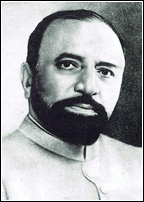 SETH Abdullah Haroon, whose death anniversary is being observed today, was a multi-faceted personality, but most eminently a leader of outstanding merit.
He is also remembered as a successful business magnate, an entrepreneur, a committee man, an organiser, a philanthropist and the founder of several educational, religious and social institutions. In the last four years of his life (1938-42), he came to occupy a front seat in Muslim India’s politics.
All through the mid-1930s, he worked phenomenally for the merger of the All India Muslim Conference (f. 1929), an umbrella organisation of which he was the president in 1935, with the All-India Muslim League (AIML). Thus he hoped to bring solidarity in Muslim ranks. Abdullah Haroon’s insight into Indian politics was remarkable. He was one of the few men with the vision and imagination to see the problems of Sindhi Muslims in an all-India context and establish linkages between the Sindhi component and the pan-Indian Muslim community. The only other Sindhi leader who shared this honour with him was Sheikh Abdul Majid. Not only in the provincial context but also in the regional context, Abdullah Haroon’s impact on all-India politics was immense and impressive.
Indeed, in the region now constituting Pakistan, his contacts with all-India leaders and his involvement in all-India Muslim politics were only next to Mian Muhammad Shafi (d.1931). Abdullah Haroon was president of at least six all-India conferences and bodies. However, his role in the AIML from 1937 onwards surpassed all his other contributions in his entire political career. In that year, he undertook the Herculean task of organising the League in Sindh.
In 1938, he masterminded the First Sindh Provincial Muslim League Conference at Karachi, with himself as chairman of the reception committee. In 1939, he was elected president of the Sindh Provincial Muslim League and also became chairman of AIML’s foreign sub-committee. In 1940, he was nominated member of the AIML working committee. In 1941, he presided over the Punjab Muslim Students Conference at Lyallpur (now Faisalabad). The same year he secured the Manzilgah mosque in Sukkur on behalf of the Muslim League.
His contributions to the Muslim cause are many. But his most notable achievement was organising the First Sindh Provincial Muslim League Conference on October 8-10, 1938. This gave a direction to the course of Indian Muslim politics. Though a provincial moot, it was not only presided over by Jinnah, but also attracted a galaxy of Muslim leaders. The list almost read like a who’s who of Muslim India at the time.
Nor were the topics discussed or the decisions taken confined to Sindh. Haroon’s welcome address set the tone for the conference — it was radical and militant and commended an ideological goal. Unless adequate safeguards and protection for minorities were duly provided, declared Haroon, the Muslims would have no alternative but “to seek their salvation in their own way in an independent federation of Muslim states”.
He drew a parallel with Czechoslovakia which had been partitioned to provide safeguards to the Sudeten Germans, and warned that the same could take place in India if the majority community persisted in its ‘present course’. He added, “We have nearly arrived at the parting of the ways and until and unless this problem is solved to the satisfaction of all, it will be impossible to save India from being divided into Hindu India and Muslim India, both placed under a separate federation.”
This was indeed radical stuff. No one had spoken from the League’s platform in such a strong vein before. In contrast, Jinnah, who spoke next, was characteristically mild and moderate. Yet he could not help getting infected by Haroon’s tone and tenor. At two different places, he also referred, albeit vaguely, to the Sudeten German case, warning the Congress to ‘mark, learn and inwardly digest’ the lessons provided by that case.
The main resolution adopted at the conference carried the stamp of Abdullah Haroon’s political thought. Though diluted in the subjects committee deliberations on the insistence of Jinnah himself, who was characteristically cautious about not showing his hand prematurely before the Muslims were fully mobilised and public opinion galvanised behind an ideological goal, the resolution yet retained enough of its clout to become a trendsetter and to warrant attention.
For one thing, it put forth a common position by the Muslim leadership in the majority and minority provinces. The Lucknow (1937) League had lambasted the Congress for its anti-Muslim conduct in the Hindu provinces. Along with it, the Sindh Conference also focused on the Congress’ machinations in the Muslim provinces, ‘to render the power of the Muslim majorities ineffective and impotent’ in these provinces.
This confluence of interests of the Muslim majority and minority provinces represents a milestone in evolving a common goal for the entire Muslim community and towards enunciating the concept of Muslim nationhood. The resolution argued the case of separate Muslim nationhood, not merely in political and immediate terms, but on an intellectual plane spelling out its basics and basis. Equally significant, for the first time the Hindus and Muslims were not only officially pronounced as two distinct ‘nations’, but also ‘political self-determination’ for them and a scheme enabling Muslims to attain ‘full independence’ was recommended. In historical perspective, therefore, this resolution became the precursor of the Lahore resolution of 1940.
Between this conference and the Lahore session (1940), Abdullah Haroon made by far the most significant contribution in popularising the ideal of a separate state for Muslims. He chaired the foreign and domestic subcommittee of the AIML, which produced a series of working papers and literature, and corresponded extensively with prominent Muslim leaders throughout the subcontinent.
To quote R. Coupland, who studied the constitutional problem in the early 1940s, Abdullah Haroon was “the only Muslim politician of any standing who had so far taken a public part in the constitutional discussion”. And the subcommittee which he headed prepared a comprehensive report which became the basis of the Lahore resolution.
In thus advancing the cause of a Muslim homeland at a critical stage, Abdullah Haroon carved for himself a niche in history as one of the founding fathers of Pakistan, although he did not live long enough to see his dream come true in 1947. n
The writer is HEC Distinguished National Professor, and co-editor, Unesco’s History of Humanity, Vol. VI.
smujahid107@hotmail.com
Watching a baptismal
I HAVE had the occasion from time to time to visit Christian churches and Jewish synagogues and witness their services. The preachers and their sermons are as ‘run of the mill’ as those of most of our khatibs. But outside of regular prayer they can be convivial.
The Christian wedding (a sacrament unlike our marriage), with men in formal wear and women in flowing robes, the ceremonial, and the vows the bride and the groom exchange (‘love, cherish, and honour until death do us part’) is charming.
The other day I witnessed a baptismal. Shenaya, my friend Cecil Joseph’s granddaughter, was to be baptised. Baptism is essentially washing (or bathing) of a person’s body with water in one of various ways in the expectation, among others, that the exercise will purify him and admit him into the community of believers. In one form or another, the practice seems to have been in vogue even before the advent of Christianity. John the Baptist, who was already a prophet when Jesus was born, baptised folks in his vicinity and is believed to have baptised Jesus by dipping his entire body in the Jordan river. Jesus himself and/or his disciples also baptised people.
In most Christian churches baptism is mainly an initiation ceremony. But some theologians maintain that it also assures the subject grace and salvation. Opinions vary as to the time in one’s life by which baptism must be done. More often than not, it happens while one is an infant. Some churches maintain that age is irrelevant to its performance. Constantine, the Roman emperor who accepted Christianity and did much to promote it, is said to have deferred his own baptism until he was close to death and no longer capable of committing any more sins.
In early Christianity, the preferred method was to dip the subject’s entire body in a flowing river or stream and then pull it up. (But shorter procedures may have been permissible even then, for reportedly one of the apostles once baptised nearly 3,000 persons in Jerusalem in the space of a day.) Later, it was deemed satisfactory to stand the person concerned in a body of water (river, stream, lake, pond or even a tub) with part of his body under water and then to pour water on his upper body. Still later, simply washing or bathing of the entire body began to be considered enough. While all of these modes are still permissible, washing of the subject’s head, or even mere sprinkling of water on it, is considered good enough.
In our own subcontinent it is customary among Muslims, Hindus and Sikhs to wash or bathe the newborn baby. But it is to clean him up simply because he comes out soiled and needs cleansing. It has nothing to do with initiation or purification in any otherworldly sense. Muslims have their own initiation practice, which is to have someone say the azan (call to prayer) in the baby’s ear. That is the Muslim way of admitting the baby into the community. Another custom is to shave the baby’s head in the hope that her/his new hair will come out thicker and dense. This practice has more to do with cosmetics than spirituality.
Let us now return to Shenaya’s baptism. A pastor from the Anglican church (called the Church of Pakistan) held her, nicely wrapped up in a pink blanket and sound asleep, in his arms while another sprinkled ‘holy’ water on her head and then read her a hymn. All of this was preceded and followed by some prayer and readings from the New Testament. Psalms taken from the Bible were read and the priests and the congregation chanted devotional songs. Some of them were in English but I was pleasantly surprised to find that several had been composed in Urdu and Punjabi.
The congregation consisted of about 100 men and women, most of them relatives of the baby’s grandparents. They appeared to be middle-class people, probably professionals, government and corporate employees and skilled workers, I had been under the impression that many Christian women in this country wore western clothes. That turned out to be wrong. I saw a few women wearing saris and blouses, but most of them wore shalwar and kameez. I could not tell how fancy or expensive they were but they all looked pretty nice to me. A few of the men wore native clothing but most of them, as many of the rest of us, wore pants and jackets.
Hardly any of them spoke English. They spoke Punjabi with a sprinkling of Urdu. They were all Punjabi-looking: medium of height and build, lighter shades of brown skin, straight features (no hooked and only a few flat noses). Only a few had names that were entirely western. In a few cases, part of the name was western (Christian) but in many the entire name (first and last) was the same as Muslim names (Farsi or Arabic words or indigenous last names indicating ethnic origins such as Rajput or Jat among others). In sum, they are ethnically, linguistically, and culturally our own people. They differ from us only in the matter of doctrine concerning the status of Jesus.
But it is a terrible shame that many Pakistani Muslims, unlike Muslims of some Arab countries, do not treat Christians (or for that matter, Hindus), especially those in rural areas, as their people. This in spite of the fact that our religion and theirs proceed from the same antecedents. Violating the injunctions of Islam and our Constitution, the aforementioned Muslims mistreat and victimise our Christian citizens in all kind of ways when fanaticism and blind passion seize them.
A commentary in this newspaper (April 20) tells us of a group of Muslim militants accusing a fellow worker in a factory, a Hindu young man, of blasphemy and beating him to death while other workers, supervisors and guards watched silently and did nothing to stop this brutality. Likewise, the larger Muslim community, including the professors of Islamic doctrine, stays virtually silent when these atrocities are committed against our Christian people There can be little doubt that our claims of commitment to Islamic virtue and our professions of tolerance and regard for minority rights are false.
The writer, professor emeritus at the University of Massachusetts, is currently a visiting professor at the Lahore School of Economics.
anwarsyed@cox.net