Unwarranted speculation
WITH neither side having officially denounced the Bhurban Declaration, the reports in the media about differences between the PPP and the PML-N on the judges’ issue appear odd, if not outlandish. While it would be presumptuous to say that such unattributed stories, lacking credibility because they are based on ‘sources’ and unnamed personages, are being planted, one cannot but note their negative fallout on what otherwise is a scene full of hope and optimism. Of the major stories on the issue, most revolve round Asif Ali Zardari’s purported remarks to a closed-door meeting of the party’s Central Executive Committee and a dialogue with Aitzaz Ahsan. In those meetings the PPP co-chairman is reported to have come up with a list of alleged grievances against the judges and lawyers, especially with regard to their purported indifference to his long period of incarceration. There are other stories also — like Ahmad Mukhtar’s remarks about President Pervez Musharraf. While the presidential spokesman welcomed the defence minister’s remark that the president was ‘an asset’, Mukhtar denied having made it. Other unconfirmed reports include the PML-N’s reservations about a constitutional package allegedly being prepared at the behest of the presidency.
In sharp contrast to these reports, there is a clear-cut statement by the PML-N in the form of a press release issued on Friday after Nawaz Sharif’s meeting with his party’s ministers. According to the press release, the former prime minister made it clear that he stood for restoring the judges within 30 days of the formation of the federal cabinet as spelled out in the Bhurban declaration. Law Minister Farooq Naek has also helped clarify the matters by his assurances to journalists in Khairpur that the judges would be reinstated within 30 days as envisaged in the Bhurban document.
It is true that differences did exist between Nawaz Sharif and Benazir Bhutto even before the Feb 18 election. While both denounced the president’s March 9 decision making the chief justice ‘non-functional’, Benazir’s emphasis was on the independence of the judiciary, while Sharif insisted on restoring the 60-odd judges. The Bhurban declaration served to clinch the issue by laying down a time-table for restoring the judiciary through parliament rather than through long marches and agitation. The nation rightfully heaved a sigh of relief, for a major irritant in relations between the two major coalition partners had been removed. Raising doubts about the sincerity of this party or that at this stage would be unfair to the people of Pakistan and to its fledgling democracy. While the Sharifs’ position is available to us in black and white, Zardari has said or done nothing that should arouse concern or unwarranted speculations. Let us all show restraint.
Another wheat flour crisis
THE latest wheat flour scarcity and its surging prices being experienced by consumers in Punjab don’t augur well for the fledgling coalition government, which is yet to come good on its promise of giving an economic relief package for the poor. The re-emergence of fresh flour shortage in less than two months after the acute winter food shortages had eased speaks volumes about the efficacy of official policies. The factors responsible for the disappearance of flour from the market are not much different from the ones that had triggered the nationwide winter food crisis — the wheat supply and demand gap and hoarding by speculators. When the federal government re-fixed the official wheat procurement price for the coming crop at Rs625 per 40kg, it couldn’t foresee the possibility of hoarding by speculators of existing stocks for another fortnight to rig profits. Nor did it boost the dwindling supplies to the mills owing to depleting official stocks and hoarding by speculators of imported wheat until the new crop hit the market. The provincial government’s decision to stop the mills from selling flour through their dealers’ network and instead supply the product to consumers through the district administration did not help. In fact it had the reverse effect. The conventional channel of supply — the retail market — was disrupted leading to shortages and causing much hardship.
As the situation stands today, several mills have closed down in Lahore and other cities of Punjab because of undue official interference with their business operations and reduction in the official wheat supplies. Flour is in short supply and its price has already jacked up to Rs370-380 per 20kg bag from the previous Rs300-305. The recent flour shortage in Punjab — the country’s granary — may turn into a nationwide food crisis, particularly in a year when the crop output is feared to fall substantially short of domestic needs. Unless the government takes immediate measures to end the shortages with a combination of policy and administrative measures like raising the official wheat price for existing stocks and forcing the speculators to bring out their stocks, it would have to pay a heavy price in the weeks and months to come. Moreover, it would have to move quickly to put together a comprehensive relief package for the poor and the vulnerable groups to prevent more people from being pushed into the ‘food insecure’ zone due to spiking food prices.
Gas disaster in Faisalabad
NOTHING can be more dreadful than death. It puts an end to the world of those who die and opens a whole new painful page in the lives of their survivors where grief mingles tragically with concerns for the future without the dear departed. Yet it seems nobody cares. Otherwise, why should people lose lives only because they happen to be in the proximity of businesses that burst into disasters every now and then because they were set up with no attention at all to rules and regulations, let alone respect for human life? Those who sell commercial tinderbox in a wanton manner placing lives at risk and those condoning this disregard for laws are avaricious pursuers of material profit who have sealed their senses from the potentially tragic consequences of their enterprise. Only such crass commercialism can explain the death of 13 innocent people in Faisalabad recently when a two-storey warehouse full of oxygen cylinders smack in the middle of a bustling locality came down to the ground after a blast. The authorities are yet to establish the real cause of the accident but there is no hiding the absence of all the safety measures such a storage facility should have before it is allowed to operate.
In a similar incident about two years ago 30 lives were lost when a shop used for storing and selling LPG cylinders burst into flames in Lahore’s Allama Iqbal town. The authorities had then announced that all dangerous businesses would be shifted outside the residential areas. Nothing of that sort has happened. Dangerous gases and other materials are being traded in full view of the law and right in the middle of their potential victims. This is happening even more blatantly in the backwaters — as places like Faisalabad have become due to sheer official neglect. What we see today is the result of an approach that puts money before safety, when profits are regarded higher than people and when personal interest takes precedence over collective responsibility. Those making money in complete oblivion to the suffering they may cause to others and their backers in the officialdom need to be brought to book — and promptly.
Restitution of the judiciary
ONE must compliment the Pakistan People’s Party for initiating the process to resolve the continuing judicial crisis through its prime minister who, even before being sworn in, gave orders for the immediate release of illegally detained judges.
One must equally praise the Pakistan Muslim League-N for keeping the restoration of judges, who refused to take oath under the Provisional Constitution Order promulgated on Nov 3, 2007, on top of its agenda in its 2007 manifesto. These actions are commensurate with the parties’ earlier commitment to preserve the independence of the judiciary as expressed in their Charter of Democracy in 2006. As a testament to this commitment, the PPP and PML-N have agreed, in their recent Bhurban declaration, that “the deposed judges would be restored, on the position as they were on Nov 2, 2007, within 30 days of the formation of the federal government through a parliamentary resolution.”
The coalition parties have now formed the government and set up a parliamentary committee to deal with the issue. As a concerned citizen and a member of the legal community, I would like to aid the parliamentary committee by proposing a resolution for discussion and debate by the public before its final adoption by the National Assembly. This process is intended to help in achieving a common goal through proactive participation rather than reactive protests later on if things do not work out as expected.
The so-called restoration or — more correctly stated — restitution of the ousted judges is essential for maintaining the independence of the judiciary. The judiciary’s independence is ingrained in our constitution and expounded by our courts. It is an integral part of the Objectives Resolution, which is a manifestation of the will of the people of Pakistan. Accordingly, the Constitution of 1973, like all the constitutions before it, lays down an independent structure for the superior judiciary. The respect that the constitution affords to the judiciary and the safeguards it introduces for the protection of its integrity and independence is evident from Article 63(1)(g), which stipulates that any person who acts in any manner prejudicial to the integrity or independence of or defames or brings into ridicule the judiciary may be disqualified from being elected or chosen as, and from being, a member of parliament.
The superior courts have endorsed the principle of the independence of the judiciary in a number of cases (Mehram Ali vs Federation of Pakistan (1998 PLD 1445) and Al-Jehad Trust vs Federation of Pakistan (1996 PLD 324) being amongst the most notable) and have held that the manner of appointment of judges and the security of their tenure forms the cornerstone of the independence of the judiciary.
Most recently, a full bench of the Supreme Court gave new impetus to the independence of the judiciary in its order in the matter of Chief Justice of Pakistan vs The President of Pakistan (2007 PLD 578). In this order, the full bench set aside, by a majority decision, the presidential reference against Chief Justice Iftikhar Mohammad Chaudhry, as well as the order of the president, March 9, 2007, and the order, of the same date, of the Supreme Judicial Council restraining the chief justice from acting either as the chief justice or even as a judge of the Supreme Court.
Pakistan is neither unique nor unusual in seeking to uphold the independence of its judiciary. In fact Pakistan is only now falling in step with the universally accepted principle of independence of the judiciary as enunciated in the Universal Declaration of Human Rights, the International Covenant on Civil and Political Rights, the United Nations Basic Principles on the Independence of the Judiciary (1985), and the Bangalore Principles on Judicial Conduct (2002).
The United Nations Basic Principles on the Independence of the Judiciary, adopted by the Seventh United Nations Congress on the Prevention of Crime and the Treatment of Offenders (General Assembly Resolutions 40/32 of 29 November 1985 and 40/146 of 13 December 1985), require that the term of office of judges, their independence, security, remuneration, conditions of service, pension and age of retirement be adequately secured by law. These principles further require that the tenure of judges be guaranteed until the expiry of their term or until the judges’ reach a mandatory retirement age. The principles also mandate that in the event that a charge or complaint is brought against a judge in his judicial and professional capacity, it be processed expeditiously and fairly according to an appropriate procedure and stipulate that judges may be suspended or removed only for reasons of incapacity or behaviour that renders them unfit to discharge their duties.
In light of these legal principles, Gen Musharraf’s proclamation of emergency of Nov 3, 2007 was not merely unconstitutional but also contrary to established norms of civilised nations. The proclamation targeted the superior judiciary and made unsubstantiated allegations against it in order to remove non-compliant judges illegally. Neither the process nor the substance of the measures taken by the general can by any stretch of imagination be deemed valid.
Since the self-imposed president has admitted to the fact that the proclamation was an “extra-constitutional” measure, the Provisional Constitution Order No 1 of 2007, issued pursuant to the proclamation, requiring the then incumbent judges of the superior courts to be governed by and be subject to the Oath of Office (Judges) Order, 2007 and to refrain from passing any orders against the president or the prime minister, was equally beyond his legal power and scope of authority.
In order to protect these unconstitutional and illegal measures, the president purported to amend the constitution by an executive order. The Constitution (Second Amendment) Order, 2007 issued on 14 December 2007 is equally without legal merit even though the president and his advisers now argue — against all norms of constitutional jurisprudence — that this ‘amendment’ was part of the constitution when it was revived on Dec 15, 2007 by the Revocation of Proclamation of Emergency Order, 2007. Parliament has not ratified the proclamation, the PCO or the constitution amendment order. These instruments therefore do not have any validity in the eyes of the law notwithstanding the judgment of the de facto Supreme Court upholding the same in the cases of Tikka Iqbal Mohammad Khan vs General Pervez Musharraf and Watan Party vs Federation of Pakistan (PLD 2008 SC 6).
It is incumbent therefore on the parliamentarians to declare their commitment to establishing an order wherein the independence of the judiciary is secure; to ensure the separation of the judiciary from the executive and to afford the highest respect to the judiciary. It is imperative for them to further declare that the proclamation, PCO, Judges Oath Order and Constitutional Amendment Order are unconstitutional and void from the beginning and removal of judges in pursuance of these instruments is without legal force. On these grounds, the parliamentarians must mandate the concerned executive authority to facilitate the judges in returning to their posts.
This resolution will remedy not only the wrong done to the judges, but will respond to the need and desire of the entire nation. The parliamentarians’ courage and determination in adopting the proposed resolution will be Pakistan’s Magna Carta for its judiciary.
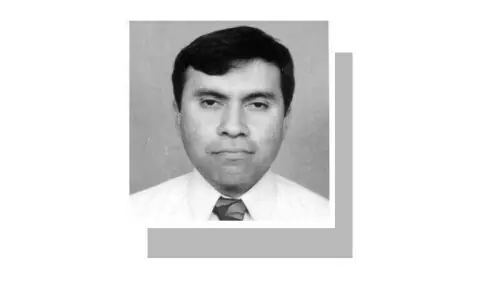
The writer, a former chairman of the Securities and Exchange Commission of Pakistan, is a lawyer based in Islamabad.
thassan@ijurist.org
OTHER VOICES - Indian Press
Sinister nexus
The Asian Age
THE leaders and cadres of the Students’ Islamic Movement of India have persistently denied any involvement in anti-Indian subversion. However, it is an open secret that ever since its formation in 1977, the outfit remained in cahoots with jihadist elements throughout the country. To Simi should go the credit, or more relevant, the discredit, of facilitating the spread of Islamic militancy….
Investigating agencies found that Simi’s leadership had links with the Pakistan-aided jihadist cadres who operated mainly in northern India, and in due course, had also established a working relationship with Al Qaeda-Taliban subversives. ….It was the unearthing of Simi’s sinister links and agenda that led to its outlawing in 2001. The ban, however, does not seem to have dulled the outfit’s jihadist zeal, and it has never been off the security radar.
Police vigilance paid off on March 27 when 13 top activists were caught in Madhya Pradesh on the charge of waging war against the government and the country. Seven more Simi activists were arrested in Bhopal on Sunday. Now that the police has a better insight into Simi’s subversive activities, investigations against the outfit must be thorough and leave no loopholes in the assembling of evidence. — (April 3)
Shoaib ban
The Assam Tribune
PAKISTAN Cricket Board’s imposition of a five-year ban on mercurial fast bowler Shoaib Ahktar for the latter’s ‘gross’ misconduct … would do the cause of not just Pakistan cricket but the game in general no good…. The 32-year-old bowler from Rawalpindi, who ranks among the fastest in the world, has had a controversial stint, rocked by injuries, disciplinary problems and a doping scandal.
Often referred to as the ‘problem child’ of Pakistan cricket, it is a shame … that a crowd-puller and a one-of-a-kind asset … has been a victim of controversies that could have been avoided. While Akhtar may well have to pay the price for being outspoken, the PCB would also lose out on goodwill for its ad hoc policies for which many talents have faded into oblivion rather prematurely.
Given that the maverick pace bowler who still has a few more years of international duty in terms of his age, has apologised for his actions to the PCB disciplinary panel, it is imperative from a purely cricketing perspective that it lifts the ban… The PCB needs to … adopt transparency … while Akhtar must exercise control over his temperament… A pep talk involving some of the greats can help convey the dos and don’ts to the bowler for good. Pakistan cricket … cannot afford to lose another legend-in-the-making. — (April 4)