



 0
0

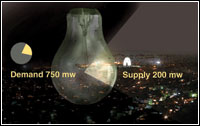 Top bosses of the privatised Karachi Electric Supply Corporation (KESC) have been invited by the federal water and power ministry on Tuesday to discuss issues that the Karachi utility has with the Pakistan Electric Power Company (PEPCO) on payment of bills for the electricity supplied by Wapda system. But there are doubts that the meeting would be held at all as the process of government change-over has begun and the National Assembly meets today. There is a big question mark on the status of the caretaker minister Tariq Hamid.
“Payment and recoveries of all utilities have political dimensions for which the caretakers have no mandate,” argued an official who is convinced that the matter would come up for detailed discussion next month when the elected federal and Sindh governments are set in place and competent bureaucrats, experts and elected representatives are assigned the job to tackle the complex issue amicably.
The KESC is on a notice from Pepco to pay Rs3 billion by April 1 next against a total outstanding amount assessed at Rs37.5 billion for purchase of power from the National Transmission and Dispatch Company (NTDC), a subsidiary of Pepco. The Pepco wants KESC to enter into a regular power purchase agreement with the NTDC that should stipulate payment schedule in future and also a plan to clear all outstanding dues.
On March 6 some 20 million people of Karachi woke up to find suspension of power generation, transmission and distribution as the Pepco abruptly and without any notice cut off power supply from its system to the city. This suspension closed down the generation of the KESC system also. After more than two hours when Islamabad was informed of the Pepco’s abrupt action and its impact on Karachi, the power supply from Wapda system was restored. Normal supply with load shedding was resumed late in the evening as Wapda supplies were at 200 megawatt as against a demand of 750 megawatt a day.
Debt: “It is a circular debt’’ contends the Chief Executive of the KESC retired General S.M. Amjad making two points on the issue. First, the clearance of Pepco is linked with the recovery of KESC dues from the federal, provincial and local government agencies in the city which are identified as ‘strategic customers’ by the government.
“Recoverable amount from these strategic consumers is 19 per cent of our total revenue and we are instructed by the government not to cut their power connections’’, he disclosed, and emphasised that payment to Pepco is linked to receipt of outstanding bills from the government agencies that include about Rs4.75 billion from Karachi Water and Sewerage Board (KSWB).
Second, the KESC disputes Rs37.5 billion outstanding amount as it maintains that the Pepco is charging on marginal cost obtained from its most expensive and uneconomical power generating unit. The National Electric Power Regulatory Authority (Nepra) decided in May 2006 to allow Pepco to charge on the basis of marginal cost. The Pepco purchases power from a number of companies. Hydro power roughly constitutes 35 to 38 per cent of the total mix of electric power generation. Hydro power is the cheapest source of energy and till privatisation of the Karachi Electric Supply Corporation Wapda was charging on the basis of a mean cost of whole mix that came to Rs3.69 a unit. Pepco is now demanding Rs9 plus for a unit.
But officials in Pepco Lahore consider the KESC an “inefficient monopoly”. “This is not a circular debt’’, a senior official in Pepco informed Dawn on telephone from Lahore. The KESC is now a private independent entity and should ensure its recoveries from its consumers and not link it to payment of its dues to us. He said that Pepco bills to KESC for purchase of power were in accordance with the Nepra decision.
Intervention: But, in short, the KESC is seeking government intervention for quick recovery of about Rs11-Rs12 billion from public sector consumers. Also, the cost of electric power being purchased from Wapda system should be on a mean basis rather than on marginal cost.
“Once these two arrangements are made, the KESC would be in a much better position to improve its cash flow and plan for meeting the rising power demand for future’’, an official explained.
“We have not increased our tariff of water supply and distribution for our customers for last more than ten years,’’ a well placed source in the KSWB said who revealed that the KESC billing had jumped up from an average of Rs30 million a month in 1997 to Rs180 million a month now. The board has improved its bill recovery after paying 25 per cent of the recovered amount to 18 town committees and 178 union councils of the city. The latest reports suggest that the board has given fresh employment to more than 4,500 persons which is more than 50 per of the existing workforce of about 8,000. There is yet no idea on increase in the wage bill of the utility and its impact on its balance sheet.
In countries like Singapore and South Korea, the ratio of employees in water utility is two to three for every 1,000 connections. But in Pakistan in most of the utilities including KSWB it is more than 25 for every 1,000 connections. Then there is water loss through leakages and pilferage, with increase in population and problems in water supply and distribution mainly because of old and worn out distribution system. The provincial government had been asked a few years ago to further augment water supply from River Indus which too would need a big capital investment. A revamping of water distribution system is also a capital- intensive activity. The next government will have to work out a strategy to harness resources for this essential need of the city.
Repayment: The KESC has entered into a long-term arrangement with the Sui Southern Gas Company and the Pakistan States Oil on payments for fuel. For long the utility remained a defaulter of both the companies and there were frequent reports of KESC getting notices from SSGC and PSO of suspension of oil and gas supply. But well-placed sources in the SSGC disclosed that the KESC was now sticking to the payment schedule worked out in October last year. It was paying all current dues well in time every month with Rs500 million to adjust the accumulated default of Rs4 billion. The PSO also informs that it was receiving all payments from the KESC according to the arrangements it has reached with the utility.
In Karachi, most of the industrialists and businessmen are not ready to buy the idea that Wapda should bill the KESC on the basis of marginal cost.
“The fuel cost in whole country is uniform because we in Karachi contribute to the pool’’ argued a businessman. He said Karachi being a port city where imported oil and fuel comes, the cost should be lowest. Similarly, the people of Karachi pay the highest revenue and have contributed most in payment of foreign and domestic loans acquired for the construction of the Tarbela, Mangla and Warsak Dams. How can the benefit of low cost hydro power be denied to Karachi?





























