0
0

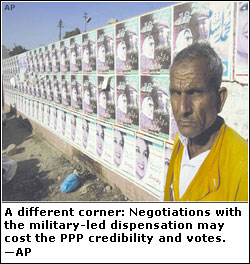 KARACHI, Oct 17: Benazir Bhutto’s second homecoming in just over 20 years will certainly be different from the one experienced by the Pakistan People’s Party (PPP) chairperson in Lahore in 1986. The dynamics and ramifications of the two events are totally different. The one thing in common, however, is the blessing of the West.
The banners across the city, extensive television coverage and hectic activity at roadside camps suggest that Ms Bhutto’s arrival today (October 18) may draw crowds of supporters to rival those witnessed two decades ago, something the PPP is clearly expecting. But back then, Ms Bhutto was 20 years younger and untainted by shadows of alleged corruption and back-door negotiations that haunt her footsteps today. Back then, she rode upon a tide of popular support and the massive outpouring of public sentiment was underpinned by the legacy of her father Zulfikar Ali Bhutto, founder of the PPP and a prime minister deposed and executed by an unpopular military government.
This time round, the realities are very different. Ms Bhutto is returning from eight years of self-imposed exile, as a former prime minister twice elected and twice ousted under charges of corruption that remain unproven in any court of law. In these eventful years, she has clearly learnt the art of political survival and honed her negotiation skills.
Her 1986 return primarily set the ball rolling for change that was to come after some years. Today, she will arrive with a firm agenda – perhaps even expectation – to become prime minister for the third time after the promised general elections pave the way for a transition to the façade of democracy. Most significantly, her homecoming this time results from long, secret back-channel negotiations with the military-led dispensation.
Can BB deliver?
Whether Ms Bhutto will prove capable of ensuring that the military returns to the barracks and stops meddling in governance is a moot point. The biggest question now is whether the former prime minister can deliver upon her promises in terms of national reconciliation, countering militancy and extremism, and addressing nationalists’ concerns about issues such as provincial autonomy.
The ground realities are that General Musharraf has not yet given up his uniform, having merely assured the Supreme Court that he will do so before taking an oath as president for a new term. The PPP’s demand for an independent election commission has not been met, and neither has a caretaker government been put in place, with or without any consultation of major political parties.
In these circumstances, it remains unclear why Ms Bhutto is so confident that her party will not be cheated out of the elections. Why does she trust the general so?
Furthermore, given General Musharraf’s track record, another concern is how long Ms Bhutto and the general can co-exist, even if the former is elected to the prime ministerial position. Popular perception says that both players are marking time and will dispense with the other at the first opportunity.
Ms Bhutto’s first tests will concern her handling of the war on terror and issues of rapidly increasing unemployment among the country’s millions. Much would depend on the election outcome — many in the PPP believe that the establishment and the ruling Chaudhrys will try for a hung parliament to clip the Bhutto wings, similar to the 1988 situation when the IJI had a Nawaz Sharif-led government in the Punjab.
The days ahead, therefore, would certainly witness realignments within the PPP and between the various political parties.
Agenda details unclear
The twice ousted prime minister has promised a new social contract in a country facing religious and ethnic extremism, issues of political expediency and provincial autonomy, rising unemployment and the crippling lack of economic opportunity. How exactly would Ms Bhutto go about addressing the peoples’ misgivings, particularly in the strife-torn tribal areas? Details remain unclear about the sort of package she has envisaged for them, particularly when her earlier agenda of public-private partnership proved unsuccessful.
Changes to the foreign policy are likely to be merely cosmetic, with the establishment calling the shots. The general perception that Ms Bhutto’s triumphant homecoming is based upon the need to foster Washington’s geopolitical agenda in the region cannot be discounted.
The citizenry cannot help but wonder whether, if made prime minister for the third time, Ms Bhutto will continue with the economic policies of the Musharraf-led government, particularly in terms of privatisation. However, the PPP chairperson has so far disclosed no details. Meanwhile, there are apprehensions that the fallout of Ms Bhutto’s back-channel negotiations with General Musharraf will be increasing polarisation in the country since the dealings have been widely criticised by nationalists, sectarian, ethnic and religious forces. Whether the former prime minister admits it or not, these forces will pose a significant threat to the votes commanded by her and the PPP, as will the challenge from the rightists: the Chaudhrys and the PML-N.
Meanwhile, the PPP is gearing up to welcome its leader when she lands at the Karachi airport today. While the government has expressed misgivings about possible threats to her life, Ms Bhutto has commented that the government’s apparent concern about security is actually aimed at creating an atmosphere of fear in order to discourage people from participating in what she terms will be an historic event.