



 0
0

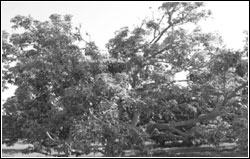 MANGO is an important foreign currency-earning fruit crop. It is liked and relished by all due to its flavours and dietary and medicinal value. Mango is nutritionally rich in carbohydrates and vitamin A and C. Immature fruit is an effective antidote for mild sunstroke.
Mango suffers from a number of diseases which affect different parts of the plant at various stages of its development. The quick decline or sudden death or tree mortality is a problem which has emerged recently. Scientists are busy in studying the cause of the disease and finding measure to control it. Anthracnose, powdery mildew, sooty mould, fruit rot, leaf blight and stem blight are some other old and known fungal diseases of mango here. But, no information regarding the extent of damage to plant is available.
The powdery mildew is caused by Odium mangiferae. It is one of the destructive diseases common in most of the mango-growing countries, including Pakistan. The powdery mildew appears from January to March. The disease is characterised by whitish-grey mycelia growth, initially appearing on flowers and buds (inflorescence) later the fungus spreads to fruit leaves shoots and trunks.
The surface of the affected flowers and young fruits gets covered with powdery substance consisting of million of spores called condia. When these spores becomes mature, they are blown away by wind from the effected portions to healthy parts and produce fresh infection on the same tree or on trees in the neighbourhood and near by orchards. A few affected flowers may cause a wide-spread epidemic under favourable climatic conditions. Infected flowers fail to open and sometimes shed before fertilisation and result in substantial reduction in fruit crop.
Delayed infection of the disease affects the fruit development and a large number of them drop prematurely. The period of rainfall and moderate temperature favour the development of powdery mildew causing fungus. Its maximum germination occurs between 14-24 degrees centigrade.
High nitrogen levels produce succulent and rapidly growing tissues which are attacked by the fungus increasing mildew severity. Plants growing in shade also have severe mildew infection. Reduced light favours in the spread of the infection and growth of the fungus. In the light of these facts, preventive and curative measure for the control of the disease must be applied to save the tree from the disease and have better mango crop.
High doses of nitrogen fertilisers, proper sanitation of the orchards and pruning of trees may help reduce the infection curbing growth of the fungus. Spray of suitable fungicides at an interval of 10-15 days after the inflorescence starts appearing also helps in checking the spread of the fungus. If disease appears in epidemic form, the plant should be sprayed again. While spraying due care should be taken not to hit the flowers directly. The fungicide should be used alone and in proper doses.
With special reference to the quick decline or sudden death or tree mortality disease of mango, Khuhro et al.(2004) suggested that the integrated pest and disease management practices must be applied by using suitable fungicides in different combinations. Different culture practices may also help check the problem. The following measures are recommended to help check the spread of the disease. Keep trees healthy and save them from unnecessary stress (drought, injury, poor nutrition, etc.).
As the infested plants survive and often can recover with age, therefore, large space should be kept between plants in nurseries and orchards to help slow down the spread of the disease from one plant to another.
Only healthy seeds, seedlings and plants should be used for planting and budding or grafting. Inter-cropping, mix cropping cover cropping in or in the surrounding of mango orchards must be avoided so that similar pathogen of the sown crop and mango may not be multiplied and spread in orchards.
Irrigation must be carried out as per requirement and not subject to the availability. High doses of nitrogen fertilisers should be avoided, and proper and balanced doses of applied on the basis of soil type, age and need of the tree. Proper cleaning of orchards and pruning of trees (eradication of disease-causing organisms through removing and burning of diseased plants or plant parts) help reduce the infection by checking its growth, development and further spread of beetle and the fungi causing disease. Heavily infested plants or plant parts should be removed and destroyed. Once attacked the tree becomes more attractive to female beetles, therefore infected trees must be removed immediately and burned before the completion of the life-cycle of the beetles that require 55 days.
Easily available broad-spectrum insecticide in combination with fungicide should be used when all other ways prove a failure. Proper application method with optimum dose must be confirmed. However, encouraging results could be obtained by consulting with the entomologist and pathologist.





























