0
0

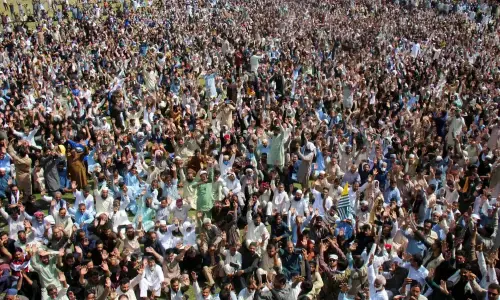
KIEV: It looked like the soul of democracy, a repeat of the 2004 Orange Revolution: high-spirited, flag-waving demonstrators on Kiev’s central square decrying an attack on the constitution.
A few hours before, they had been a train full of kids gushing over how they would spend their pay for protesting.
The scene from Ukraine’s latest political crisis in April reflected an open secret in the former Soviet world: protests taken in the West as signs of grassroots political passion are often more a matter of dollars and cents.
Oleksander Chernenko, an activist from an independent voter advocacy group, the Committee of Ukrainian Voters, saw it from the inside, infiltrating a trainload of paid protestors supporting Russian-backed Prime Minister Viktor Yanukovych’s Regions party in April.
“About 20 per cent of them had come with genuine convictions – but that doesn’t mean they didn’t take the money,” said Chernenko, who posed as a protestor from the Yanukovych stronghold of Donetsk to board the train.
He later published a report on the trip with photographic evidence from the train and the protest.
Party organisers paid hundreds of young people, most in their late teens and early 20s, $26 each for an overnight protest in Kiev, Chernenko said.
“They all talked about the money very openly,” along with the excuses they had used to get out of work or school.
The practice – which provoked a nationwide investigation by the prosecutor general into the illegal recruitment of children under 18 – is hardly unique to Ukraine.
In Kyrgyzstan, a former Soviet state often called Central Asia’s most open democracy, opposition rallies in April were filled with protestors bussed in from rural towns, many of whom had trouble explaining to reporters why they were there.
Mukhamed, who was camped out in a traditional nomadic tent on the main square of the Kyrgyz capital Bishkek, complained about poverty in his native city of Naryn. But he gave a gold-toothed grin when asked whether his protest had come at a price.
“How many of us do you think would be out here if we weren’t being paid?” he posed a question.
A friend named Almaz quickly admonished him. “What he said about them paying us was a joke, you understand,” he told the reporter.
Protestors are reluctant to talk about the practice, organisers usually deny it exists, but analysts say it has become a standard tool for gaining media attention and pressuring opponents.
“It’s barely even hidden anymore,” said Volodymyr Fesenko, a political analyst at the Penta think tank in Kiev.
For Chernenko, the irony is that Ukraine’s Orange Revolution, which saw hundreds of thousands take to the streets of Kiev to protest a flawed presidential election, spawned the protests-for-hire trend.
“People didn’t come to make money” in the Orange Revolution, but “now the situation is different, and it's worrying”.
“A sort of psychological complex sprung up in those times: the fear of the street,” which since has prompted political forces across the spectrum to tap into that anxiety and “use protests as a technique,” he said.
In Russia, the fear of an Orange-type revolution is keen and has triggered the creation of several well-funded, pro-government youth groups who face down domestic opposition and support the Kremlin’s foreign agenda.
Three of these, Nashi (Ours), the Young Guard, and Mestnye (Locals), were on the streets daily during a nasty diplomatic row with Estonia in April over the relocation of a Soviet war memorial in Tallinn.—AFP