0
0

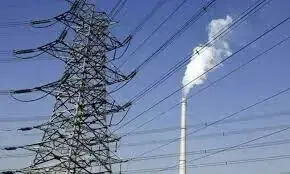
THE government has directed Wapda officials to overcome the existing 1247MW power shortfall by rehabilitating old power projects on "fast track basis". They have also been asked to line up considerable funding from local banks as it might take time to seek any financial support from the World Bank, the Asian Development Bank or any other agency for the rehabilitation of these projects.
At the same time an "action plan" has been envisaged for the removal of power shortages which need expansion in the supply of hydropower by undertaking short- and medium-term development projects. The plan is expected to be considered in the next cabinet meeting likely to be held after the arrival of Prime Minister Shaukat Aziz from China next week.
A senior government official told Dawn that the action plan also sought to reinvigorate the engineering and industrial sectors, besides offering suggestions how to overcome the growing power crisis. He said availability of alternative sources of energy like nuclear, wind and solar were also critical for providing sustainable power to remote areas. The cost of power generation was very high and with the rising price of furnace oil, it might not be possible to supply power at a lower cost. As coal was an important input in the process, its beneficiary should reduce the cost, he added.
Nuclear power, he said, was another source in power supply which was expensive in installation, but the generation cost was low and declining gradually. Currently expansion in this area required technologies in all segments of nuclear fuel cycle such as mining/processing of uranium, its conversion into fuel bundles, production of heavy water and design and manufacturing of reactors, he added.
At present total installed capacity of the system is 17,400MW. The maximum available capacity recorded ending June 2005-2006 was 13,847MW. Thus there was a deficit of 1247MW which is being met by load shedding and load management.
Another concerned official said that a capacity in power generation was urgently required, besides construction/up-gradation of transmission system in order to overcome the shortfall.
The future loads of all types of categories were calculated on the basis of present pattern of power consumption, taking into consideration industrial and agricultural development programmes, future GDP growth and other economic factors. As a first step, he said, Wapda had been asked to rehabilitate the Jabban Hydroelectric Power Station in the NWFP on fast track basis. The Jabban station had become redundant due to a fire on December 11, 2006. It will cost little over Rs1 billion.
This power station is considered highly beneficial due to less project cost as the existing civil works are being reused. Moreover, the capacity of the plant is being increased from 19.6MW to 22MW, having an annul energy output of 122GWh due to the new electro-mechanical equipment of better efficiency.
The calculated financial benefits over the project life of 30 years depict an internal Financial Rate of Return (IFRR) at 21.53 per cent which makes the project viable. The generation cost worked at Rs0.72/KWh (1.201 US cents) over the useful life of the project and cost per KW installed capacity being Rs47,275 ($788) are also very attractive to reflect the financial benefits of the project. It will help reduce load shedding and will generate revenue of Rs.269.121 million annually.
Construction of the project would likely take 36 months, including designing, preparation of tender documents, awarding of contract, construction and testing and commissioning of the plant.
All the four turbines inlet valves, governors, generators, control panels, instrumentation and control, and all other related accessories will have to be replaced. Emergency values will be replaced by spool pieces of equal dimensions.
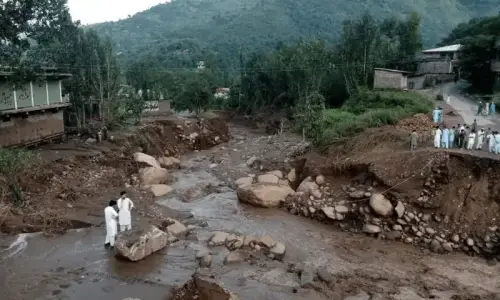
The Jabban Hydroelectric Power Station is located in District Malakand, NWFP at a distance of 45 km from the city of Mardan and 7 km upstream of 20MW Dargai Hydroelectric Power Station. The Jabban Station since its commissioning in 1937 and addition of two units in 1952 has been playing a vital role in providing low cost energy to the national grid. The plant has already outlived its useful life and needs rehabilitation.
The 70-year-old power station was badly damaged in a fire incident. The extent of damages is such that it is not possible to restore operation of the existing units. The situation has necessitated carrying out its rehabilitation on fast track basis by installation of new machines of higher efficiency at the same site. After its rehabilitation, it would be in a position to supply consistent power to the National Gird for at least for another 50 years.
WAPDA officials have also started construction of another hydropower station called as Malakand-3 on the Upper Swat Canal which will be fed from auxiliary tunnel. The water of the upper Swat canal will be shared between the Jabban/Dargai hydroelectric stations and the incoming Malakand-3 hydropower station, according to the water share agreement between Wapda and the NWFP government.
During lean water months, water supply to the Jabban station will reduce considerably due to the allocated share of Malakand-3, resulting in reduced generation of both the Jabban and Dargai.
The NWFP government has agreed to compensate Wapda for the loss of generation of the Dargai and Jabban power stations after operation of Malakand-3 hydropower station project and 59 MKWh energy will be supplied free of cost to Wapda every year as compensation out of which 29 MKWh will be for Jabban.