0
0

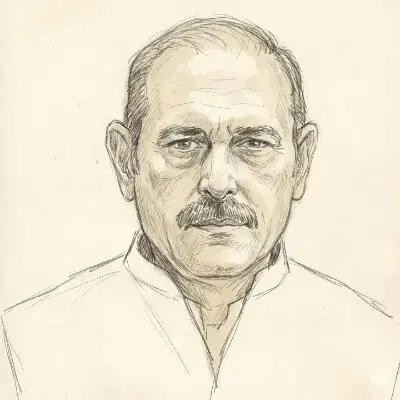
 WANA, April 11: Pakistani security forces operating in the South Waziristan tribal region have made a three-tier security deployment to stop cross-border infiltration by militants into Afghanistan, a senior military commander said here on Wednesday. He also said that Pakistan would shortly commence fencing of its borders along a 12-km stretch with Afghanistan to `choke off’ cross-border infiltration.
“No regular movement is taking place between South Waziristan and Bermal of Afghanistan. It is very less; if at all there is any movement. If someone proves it through satellite imagery, I am responsible,” Major Gen Gul Muhammad told a group of Pakistani and foreign journalists visiting the region.
Mr Gul, who commands Pakistani troops operating in most of the tribal region straddling the Pakistan-Afghan border, said he had made what he described as `coercive deployment’ of troops to stop cross-border infiltration.
He said that Pakistani forces had set up 33 check-posts along South Waziristan’s borders with Afghanistan, conducting regular patrolling, mostly through the night and sharing information with western forces across the border.
The troops operating in the border region had also imposed a night curfew in a stretch of three kilometres to check cross-border movement. “Nobody can go out or come in during that time.”
The U.S-led Nato forces have been blaming much of the violence in Afghanistan on cross border infiltration by pro-Taliban militants from Pakistan’s tribal region.
Pakistan says it has done enough and it was now for Afghanistan and the allied forces to do their part and control the lawless border on their side. “We are strong on the ground in the border area,” Gen Gul said.
“The Taliban problem lies in Afghanistan and not in Pakistan. We are trying to make sure that there is no active support from here”, military spokesman Major General Waheed Arshad told the reporters.
Gen Gul - a graduate from military colleges in the United States and France - said he understood well the US and Nato’s military tactics and strategy and shared information with them to help stop cross-border movement. “We keep close contact.”
TRIBALS-UZBEK CONFLICT: Gen Gul emphasized that tribal uprising against Uzbek militants in Wana region was “entirely home-grown and indigenous affair.”
He, however, did try to push the point that it was the result of what he called Pakistan’s three-pronged strategy to deal with the presence of foreign militants in the tribal region.
“Its indigenous and its picking up momentum. It’s a home-grown affair”, Gen. Gul Muhammad said.
But he also said that the tribal uprising against Uzbek militants was due to the three-pronged strategy of the government that included what he called coercive deployment, political engagement and socio-economic development to “win over the hearts and minds of the people.”
However, while the military clearly tried to claim credit for the tribal uprising, conspicuous by their presence at the military briefing at the brigade headquarters at Zari Noor in Wana was the political administration.
Reporters who had been told that a meeting had been arranged for them with the political administrator and tribal elders spearheading the anti-Uzbek campaign, were later informed that the elders had gone to flush out central Asian militants from an area close to Wana region.
Giving background of the present conflict between Uzbek militants and tribesmen, Gen Gul said the initial sympathy factor was overtaken by resentment amongst the local populace due to involvement in target-killings, car-snatching, beheadings, armed robberies and kidnapping for ransom by foreign militants.
He recalled that the first uprising against Uzbeks had occurred in Shakai by Malik Khannan in November last year. That was followed by a small uprising in Wana Bazaar in December last.
“Shakai served as role model for Wana. And Wana will become a role model for North Waziristan “, he remarked.
He said military and paramilitary forces had moved in and occupied strategic hill-tops and ridges in Shin Warsak, Kalosha and Tora Gola on the request of the tribal volunteers who formed the lashkar to prevent their takeover by Uzbek militants again.
He said that the entire Wana region was now almost clear of Uzbek militants and the tribal lashkar was now chasing them in Nandran, a mountainous area outside Wana. “It will take time”, he added.
The military commander put the Uzbek casualty figure between 150 and 200, though some sources say the Uzbek death toll was even less. Gen. Gul put the tribal casualty figure at between 40 to 50.
He however, said that he had no knowledge about the whereabouts of Uzbek militant leader, Tahir Yaldashev. The leader of the Islamic Movement of Uzbekistan carries a $ 5 million reward by the United States.
Answering a volley of questions regarding the involvement of pro-Taliban commander, Maulvi Nazir in support of the tribal uprising, Gen. Gul said the militant commander was subservient to the tribe and not above it.
He referred to the tribal jirga’s decision that “no foreigner” would be given shelter and anyone doing so would face a fine of Rs. 1 million and would have his house demolished. “When they (the tribal elders) talk to me they talk about “foreigners” and not just the Uzbeks”, he said.
He hoped that in the second phase, local tribes people would get rid of the militants. “There are no quick-fixes in this war. We are here for a long haul.”