0
0

PESHAWAR, April 6: The NWFP health department in collaboration with the World Health Organisation (WHO) has extended the basic development need (BDN) project to five districts of the province, officials said.
The project is replication of the basic development need programme of the WHO aimed at women’s empowerment and community participation. It was started in Nowshera and Peshawar in 1995.
The health department has approved a PC-1 of the project for Dera Ismail Khan, Bannu, Upper Dir, Buner and Battagram districts. The project will be completed in three years at a cost of Rs12.5 million.
The government will provide Rs7.5 million, while the rest has been pledged by the WHO. Under the project, well-equipped labour rooms will be set up in rural health centres in the designated districts to improve mother and child health services at the community level.
“The WHO will also provide training to 15 lady health visitors (LHVs). Each labour room will have three LHVs,” WHO operation head for NWFP and Fata Dr Muhammad Saeed Akbar Khan said.
According ton him, three posts of LHVs, one computer operator and one laboratory technician would be created in each of the five districts.
Meanwhile, the federal government is also launching a five-year BDN programme in all the provinces and Fata. It had allocated Rs1,700 million of which Rs75 million would be spent in Fata, officials said.
The PC-1 of the programme is being processed by Ecnec.
The NWFP will receive Rs240 million that will either be allocated to the five districts already selected by the health department or BDN projects to be launched in other six districts.
“We have already designated the Orakzai Agency for the project which will be later extended to other tribal agencies,” a health official said, adding that it was aimed at alleviating poverty through women empowerment.
Village development committees (VDCs) will be established in the selected tribal unit. Besides financial help, the WHO will also provide technical support to the VDCs in identification and implementation of the projects.
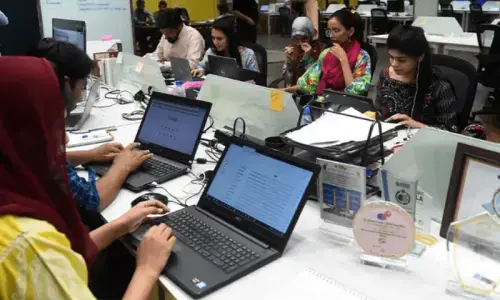
The official said that a strategy would be adopted in the selected areas which would be in conformity with their socially acceptable norms, while computer centres would be established to build capacity of women.
He said the development of social sectors such as education, health and skill development of women would be given priority. He said in order to create an atmosphere conducive to development, basic primary education would be provided and embroidery centres would be established in these districts.
Centres would be set up on the pattern of Nowshera district where 13 vocational training centres had been established for women.
The WHO official said that they had trained 44 women health activists who worked as volunteers in Nowshera and a similar strategy would be adopted in other areas.
He said under the BDN, volunteers would visit houses, weigh children and maintain a growth monitoring chart. In case of low weight, the child would be referred to local health centres for treatment, he added.