Fencing the Durand Line
FINALLY, Pakistan has decided to “selectively” fence and mine the border with Afghanistan. Whether mining falls in the same category as fencing and whether the two will serve the purpose for which they are to be used are questions of a tactical nature; the strategic question is: is the fencing in Pakistan’s interest? If it is, the government should go ahead with it and ignore Kabul’s objections. Afghanistan’s immediate reaction was, as expected, negative: there could be no other reaction from a regime which relies on foreign armies to prop itself up. The government in Kabul has failed to come up to the minimum expectations created in the international community when Mr Hamid Karzai was installed as Afghanistan’s chieftain — first as a nominee of the Bonn conference, and later elected by a grand jirga and still later by a general election. Reacting to the fencing-mining decision by Pakistan, an Afghan presidential spokesman termed it insufficient, called Pakistan’s move as “beating about the bush” and said that what Islamabad must do is to “confront terrorists in a real manner”. If Pakistan were to “confront terrorists” the way the Karzai regime is doing in Afghanistan, then perhaps terrorists would be the happiest lot.
In spite of having been in power for more than five years, Mr Karzai has done nothing to rid Afghanistan of terrorism, and the country’s southern part has become one big battlefield in which Afghan security forces and their American and Nato allies have been a fighting a losing battle — and blaming Pakistan for their own shortcomings. Like the post-Saddam security forces being raised in Iraq, Mr Karzai’s own Afghan national army is nowhere in a position to make its presence felt and give security to the Afghan people. During these years, Mr Karzai has made no attempt to broaden his political base and has relied entirely on force to settle what basically is a political problem. Contrary to what was expected of him, he has made no worthwhile political moves to end the insurgency or consolidate his own regime by going out to the warlords and other recalcitrant elements by developing a consensus among all of Afghanistan’s diverse political and ethnic groups.
It is a measure of the failure of Islamabad’s diplomacy that every western government asks Pakistan “to do more”, while ignoring the continued influx of Afghan refugees into Pakistan. Since the Soviet invasion, this country has played host to millions of Afghan refugees, and though many have gone back, millions are still in Pakistan.
Fencing may or may not give results, but Pakistan should continue to give priority to the political approach and ignore disingenuous advice from or uncalled for criticism by “friends and allies”. Things in North Waziristan are far from ideal, but there may be some improvement in the situation. It is time Mr Karzai’s friends in the West told him to pay some attention to his own country instead of seeking a scapegoat in Pakistan.
For uplift of the Baloch
THE suggestion reportedly being studied by the parliamentary committee headed by the ruling party chief not to allow would-be settlers from other parts of the country in Balochistan to vote for 50 years is too drastic a demand. It is equally absurd to suggest that such residents should not have their national identity cards issued in Balochistan. Though initially some reasonable measures need to be put in place, say, for a decade for so, to allay the fears of the Baloch people that they would be further marginalised by the influx from elsewhere of a qualified labour force and big investors, prolonged continuation of such a policy cannot be justified. There are large resident communities in other provinces too that do not belong to the local ethnic stock. It would be unfair to deprive the children born to non-Baloch parents of the right of domicile in their birthplace. The fear of the Baloch people is rooted in their long-standing political and economic deprivation; the solution also lies in their empowerment in these two areas, not only in keeping them in a majority in their home province. The aim should be for everyone to get an equitable share in the economic advancement of Balochistan following the coming on line of the mega-development projects being undertaken there.
Keeping the Baloch people impoverished and subservient to a handful of sardars acting as their overlords, but in a majority in their own province, will only compound the problem. The need is for affirmative action to bring the local people politically and economically on a par with the would-be settlers within a stipulated timeframe. This calls for setting up schools, colleges, dispensaries, hospitals and, more important, vocational training centres, to ensure that the local labour force acquires enough technical know-how and skills in the months ahead so as to bind the investors to give preference to the Baloch over the non-local workers in the initial period. The unfair socioeconomic and political set-up in Balochistan is crying out for liberation, not for perpetuation of the tribal sardari system which in the wrong hands can be mistaken for one serving the cause of narrow nationalism.
Munir Niazi
SOME clichés are very apt, for instance, when one says that Munir Niazi was the last of the bohemians, and that with his passing has come to an end a whole era marked by that nearly extinct breed of poets who spent a lifetime making poetry — and just that. His was a soul untouched by all worldliness; he found little alluring in life; he lived and died an existentialist: searching to put some meaning to being, to life itself. The quest was a lost cause, and he knew it; remorselessly, he asked himself: zinda rahen to kya hai jo mar jaaen ham to kya? (What difference does it make whether I live or die?) The people of his city were as cruel as he was fond of being lynched by them: kuj shehr de lok vi zalam san, kuj sanoon maran da shauk vi si. But this enveloping self-abnegation was informed by the poet’s equally wry sense of humour. Candidly he would tell friends that he was perhaps not a bad poet after all but for having been sandwiched between two (great) ‘F’s: Faiz was senior to him in years and Faraz his junior.
Munir Niazi sought little from life; still fewer riches came to him, of which popularity among the initiated and lay readers he cherished the most. His expression wore many similar shades: melancholy, ennui, despair, sorrow, self-nihilism; but fear eluded it. The muses that came to him as crutches on which to walk included humanism, romantic lyricism and universality of thought: alienation from the material, urban jungle that surrounded him, as it does so many others everywhere. Hence the popularity of his translated verse globally. Equally at ease with Urdu and Punjabi as his mediums of expression, he leaves contemporary Pakistani poetry poorer by his departure.
Coming to grips with the power crisis
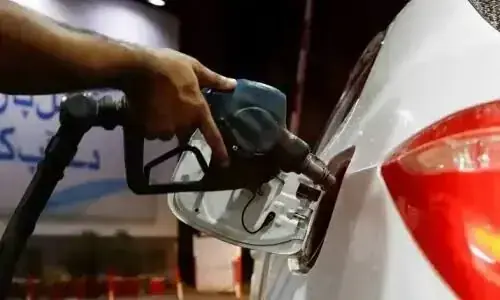
WITH the domestic oil production static at 50,000 barrels a day for the last 50 years, Pakistan has to meet 80 percent of its oil needs through very expensive imports. Determined efforts by successive governments to cut down oil import have not been successful. As a result the import of oil has risen from 160,000 barrels a day in 1986 to over 350,000 barrels in 2006.
And the total oil import this year is likely to be $7.5 billion due to larger imports and higher prices instead of $6.5 billion. That has aggravated the balance of trade deficit and the balance of payments.
Almost every time the oil exploring companies look for oil they are more likely to come across gas but the gas they find is not large enough to meet the varied and rising needs of Pakistan. So the shortage of gas has forced many factories in Punjab to close down and a few in Sindh as well.
Meanwhile, the government has announced a comprehensive alternate energy development policy which promises large incentives to the companies developing alternate energy. The government has promised active assistance to such companies. Such decisions should have been taken a long time ago, but various factors, including the hope that the world price of oil will come down have stood in the way as it is a virgin field in Pakistan.
The government is also exploring various energy conservation measures after talking too much about it and doing too little. In fact, the practice of lavish illuminations was permitted particularly on weddings eves along with illegal use of electricity for street cricket at night.
The energy crisis has become acute at a time when the government needs far more power and gas to supply to the people before the general elections next year. President Musharraf and Prime Minister Shaukat Aziz have promised water and power to all by the year 2007 but without mentioning before the elections and they are trying to act on their promises as much as they can in spite of overwhelming odds.
The shortage of power has become acute because of the crisis in Balochistan and the greater power consumption there, gas connection to many villages keeping with the pre-election promises and the fall in the output of hydel power because of reduced withdrawal of water from the dams by the provinces following heavy rains. The election season also demands that the POL prices are not high and that the people are allowed to enjoy relief as the world oil prices come down. But the prime minister refuses to do so. He says as the world price of oil drops, the money saved has to be used to reduce the budget deficit or meet the shortfall in the petroleum surcharge earnings. Although the World bank and the IMF pressure too is in that direction, he would soon see political wisdom in reducing the POL prices before the elections which the ruling coalition led by general Musharraf is determined to win.
Meanwhile, the prime minister has asked the ministries of water and power and petroleum to come up with short, medium and long term energy conservation policies. And they are working on such policies. The Wapda has moved the government for Rs 50 to 60 billion in foreign exchange for importing furnace oil to produce enough power. And the government is reported to have told Wapda to rely less on furnace oil, but it says it has no other option except resorting to load-shedding which is abhorrent in an election year.
One of the energy conservation proposals mooted was to have an extra weekly holiday on Saturday, but that option has been rejected by the prime minister. Earlier moves to have an extra weekly holiday showed that not much power could be saved through that means. In a country where too much of power is vested in the government and crime is on the rise, it cannot afford another weekly holiday while there are even otherwise too many weekly holidays. It will retard economic growth as well.
That option is hence not there. Reducing the shopping hours has not been successful either and not much of an energy saver and anyway the government is not ready to hand over Rs50 billion to Wapda to buy furnace oil.
But in a pre-election period the government can also not afford extensive and frequent load-shedding. What happened in Karachi this summer cannot be repeated all over the country without horrid consequences? Anyhow, chairman of Wapda Tariq Hameed has said that his organisation will face a shortfall of 2,000 MW by January and it may have to resort to half an hour of load-shedding daily in the big cities.
The situation may not have become so acute if the government had taken decisions on major dams earlier instead of delaying it for seven years. It could have started work on the non-controversial dams earlier instead of waiting for political clearance for the contentious Kalabagh dam. The World Bank has been urging the government to take firm decisions on the dams, get aid and start work on the project early, but the government delayed the decision for too long.
It has now decided to go ahead with five dams which may cost $20-25 billion. Preparatory work on the Kalabagh, Diamer, Bhasha and Akori dams is to start quickly and all the dams will be completed by 2016, says the prime minister.
The international aid agencies are coming to the help of Pakistan in every sector of energy development. They are dissatisfied with the performance of the government in the energy sector, particularly the tardy energy reforms. While they admire many of the energy reforms of the government, they find the reforms in the energy sector feeble and inadequate. And they are dissatisfied with the performance of the official institutions in the energy sector and want radical improvements there.
And they want early privatisation of PSO, Pakistan Petroleum and OGDC instead of delaying that on one pretext or another. The government is to move decisively in that direction soon.
Meanwhile, the Karachi City Council has called for a 25 percent reduction in POL prices to pass on the benefit of the falling world oil prices to the people. More local government councils may follow suit and issue such calls.
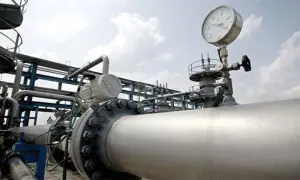
Meanwhile, a ray of hope in this sector is the possible arrival of gas from Iran through the Iran-Pakistan-India gas pipeline. There has been some delay in finalizing the agreement and starting work on the project because of the disagreement on pricing which is sought to be solved with the help of an expert from London. Meanwhile president Musharraf has reaffirmed that the IPI gas line would be built at all costs heedless of the UN resolutions on Iran’s power quest. But the Iranian gas may take four to five years to arrive in Pakistan and that is a very long wait.
Foreign minister Khurshid Kasuri who has returned after meeting the Iranian president has also said the UN policies will not affect Pakistan-Iran relations.
A major reason for the sharp increase in the consumption of POL products is a rise in the number of cars, thanks to the liberal bank loans. The affluent persons are replacing small cars with large ones and supplementing their fleet. The traffic jam in Karachi is increasing and now each kilometre travelled consumes more petrol or gas. The quest for parking space results in further loss of energy. If more convenient and comfortable public transport was available, there would be less demand for private cars. But the public transport system is inadequate and inefficient and buses are over-crowded. Bus fares are also rising frequently.
Meanwhile, a planning commission official has said that Pakistan will face a gas, oil and power shortage in the medium and the long term. The fact is that Pakistan cannot depend on import of oil to the extent of 80 per cent of its needs and which will go on rising. And if oil consumption within a year can go up by 80 per cent as it is reported to be the case this year, that is too difficult to cope with.
It is easy to ask the ministries of water and power and petroleum to come up with comprehensive energy consumption for the short, medium and long term, but it is difficult to act on that as past experience has shown. Waste and theft of power is more common in Pakistan than energy consumption for which there is very small public support.
With such lasting and acute power shortage it is difficult to attract sufficient foreign investment. It is not every investor who has the money to invest in power production units as well and he may not be willing to borrow money for that purpose from the bank at a high interest rate.
The law and order situation in the country demands that more homes keep their lights on rather than off in the night.
Anyway with the price of oil being what it is and fluctuating along with the shortage of gas in the face of rising demand we have to make determined efforts to make energy conservation a success and prevent the vast power theft.