0
0

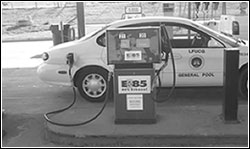 For several decades, Brazil continued developing its growth model based on substitution of imports, keeping its own markets in focus. This has allowed the country to install a solid and diversified industrial park.
But the most important snag in this model was the low petroleum production capacity (80 per cent of the demand was met by imports).
The first petroleum shock in early 70’s created big trade deficit in Brazil´s trade balance, forcing the country to redirect its development process and to revise of the national energy matrix.
A great effort to reduce the consumption of petroleum and its by-products was organised. Ethyl alcohol carburant (ethanol carburant), the object of ample previous experiences, was chosen as a substitute for gasoline. In 1975, “Proálcool” was set up—a government plan to create the demand for this renewable fuel. Brazil has used ethanol carburant since 1920. The effort was based on Brazil´s exceptional agricultural vocation.
In the early 70’s Brazil produced the appreciable volume of 70 million tons of sugar cane, six million tons of sugar and 0.7 million litres of ethanol. Thirty years later, the levels of cane production reached 340 million tons generating a volume of sugar close to 22.5 million tons and 13.5 billion litres of ethanol. Now the country has emerged as a leader in producing and using this renewable energy.
After the second petroleum shock in 1980, the automobile industry launched the alcohol fuelled car which enjoyed popular acceptance. Sales grew quickly, serving a fleet estimated at 4.4 million vehicles in 1994, with a corresponding consumption of hydrated ethanol at around 9.8 billion litres.
Yet another experience that was consolidated in 1993 was the mixture of ethyl anhydrous alcohol in gasoline at a proportion authorised by a specific law- that can vary within the range of 20-25 ±1% per cent.
The markets of anhydrous ethanol (mixed in the gasoline) and hydrates (cars fuelled by alcohol) grew fast. The country became great producer and user of these products.
Statistics indicate that the maximum level of demand occurred in 1996, when the consumption of these two types of this product reached 14 billion litres. Now, this consumption, due to the reduction of the fleet of cars fuelled by alcohol, approaches a total of 12.5 billion litres a year.
This pioneering initiative allowed Brazil to accumulate vast knowledge on the technology of use of this product in spark ignition motors, and in the production processes, transport, storage, additives to gasoline and its distribution.
The project has, currently, the technological domain on the whole production cycle and use of sugarcane and its main by-products, including the production of industrial equipment. The Brazilian ethanol industry is very competitive.
Ethanol carburant is a product with all attributes to evolve as a commodity in the global market. First, it is a clean fuel, renewable and safe; second, it is easy to be produced in great amounts, and third, it is a relatively cheap product.
The mixture of this product in gasoline, at a proportion of 10 per cent, allows it, without affecting performance of motors, to improve the burning of fossil fuel substantially and reduce significantly the emissions of a series of gases; it helps reduce the greenhouse effect.
Brazil allocates close to 160 million tons of sugar cane for producing ethanol. The average output range between 6.5-7 thousand litres for each hectare farmed. Under these conditions, the production of each million cubic metres of that product demands a cultivation area of nearly 150 thousand hectares.
With production costs at around $0.16/0.27 per litre, Brazil is a natural candidate to be a great exporter of ethanol carburant The idle capacity of the Brazilian alcohol industries is around 4.0 billion litres. If there is a demand for the product, in the period that precedes the beginning of harvesting, it becomes feasible to reduce the production of the exportable surpluses of sugar and dedicate the corresponding cane juice for ethanol production.
As the technical ratio for raw material needed for the production of sugar and alcohol is 1 to 1.7, it means that the increase of 1.0 billion litres of ethanol will result in reduction of about 1.7 million tons for producing sugar.
Ethanol carburant is not a common product. Its use as an additive to gasoline requires that the countries that will begin its use take a series of steps, of an institutional and operational character, that will allow its introduction, slow and programmed, among their consumers.
For the importing companies, an important aspect is the creation of infrastructure for handling and storage of the product, and the operational logistics for the mixture of the additive and its distribution to consumers.
The accumulated experience in Brazil in these activities, indicates that such tasks can be performed in a conventional way, with low cost, and without any need for technological knowledge or special equipment.
The risks in international trading can be tackled by long-term contracts for arranging schedules and delivery of volumes. In Brazil, the ethanol industry has the support of the Futures and Commodities Exchange – BM&F, that allows for price and business references.
In the case of Brazil, the life cycle of the sugarcane allows an annual consumption of a volume around 13.6 million tons of carbon dioxide per hectare of culture. This occurs due to the characteristics of this raw material that has, as energy, 1/3 in the form of ethanol; 1/3 as fibres and 1/3 as leaves.
The electric power co-generated in the sector, for self-consumption and surplus sale, is, today, around two thousand megawatts, and has the second lowest generation cost, only above the energy generated by hydro-electric plants whose fixed costs were already amortized by usage time.
The generation potential of this system, if the production units were to use high pressure boilers in the process, would increase to six thousand megawatts of nominal potency.
This generating mechanism of energy not only reduces the final cost of sugar and ethanol production, but also generates at the same time an additional income for the production units, besides being a clean and sustainable means of generating energy.
In fact, calculations on the energy balance of sugarcane indicate that in all its productive cycle, it is capable of generating up to eleven units of clean and renewable energy, for each unit of energy of fossil origin used in production phases (starting with the equipment).
The mixture of anhydrous ethanol to gasoline makes it possible to homogenise the burning of different hydro-carbides that are part of the physiochemical composition of that fossil fuel, reducing the emission of poisonous gases.
According to studies from Copersucar´s Center of Technology, a renowned Brazilian research centre in the sugarcane field, and, considering the whole production cycle, the substitution of gasoline by anhydrous ethanol provides a reduction of emissions in the ratio of 2.7 tons of equivalent CO2 per 1.000 litres of ethanol.
Under these conditions, the ethanol derived from sugarcane is a product with enormous use potential in the control of the greenhouse effect and warming of the planet, and may render great help regarding the demands of the Protocol of Kyoto that many countries will have to comply with.