0
0

A conditional offer
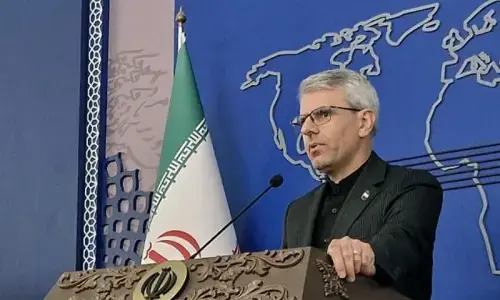
IT IS typical of the Bush administration that it should appear to be making a conciliatory gesture but to clothe it in such language and hedge it in with such conditions that the situation should remain confusing as ever. Iran has reacted cautiously to US Secretary of State Condoleezza Rice’s statement on Wednesday that Washington is ready to join multilateral talks with Iran on the nuclear crisis. But it puts Tehran in a difficult position because the offer is accompanied by the precondition that Iran should first suspend all uranium enrichment-related and reprocessing activities in a verifiable way and also adhere to the additional protocol that calls for unfettered access for nuclear inspectors. More than this condition is the language of threat and blandishments that accompanies what sounds like a reasonable proposal. Throughout her statement Ms Rice referred to the Iranian government as the “Iranian regime”; she refused to rule out the use of force; she accused Iran not only of supporting terror, but also of involvement in violence in Iraq. This was accompanied by the threat of the Iranian government incurring “great costs” if it chooses to reject the preconditions. There was also the veiled implication that in case of Iran’s persistence in its present course, the security concerns of other states in the region would be addressed by the US — that is, Israel would be further strengthened and encouraged.
The package of incentives that will be on offer if Iran agrees to suspend enrichment was not spelled out: it was due to be discussed in Vienna yesterday with America’s European allies. The position of Russia and China on the Iranian statement was not clarified: Ms Rice repeatedly fudged questions on this point during her press conference where she made her statement. “Iran can and should be a responsible state, not the leading sponsor of terror,” Ms Rice said. Coming from an administration that has proved to be highly irresponsible in its actions in Iraq and Afghanistan, the phraseology will convince few. The US is again going out on a limb very much on its own without much respect for the majority opinion in the international community which is clearly against the use of force or the threat to use force. The abrupt and cavalier-like manner in which the Iranian president’s letter to Mr Bush was greeted also reflected lack of diplomatic finesse.
However, the sign of some flexibility in the US position is welcome. Offers for talks had been vaguely made before by American officials, and indeed there were unconfirmed reports of secret contacts between the two sides. But Washington’s position has now been spelled out in less ambiguous terms, and obviously Tehran should consult both Russia and China before making any serious move. The nuclear question has to be resolved in a way that respects Iranian sovereignty and also meets the concerns of the international community. None of this lessens the validity of the argument that the US has to set an example of good conduct in international affairs and stop throwing its weight about. It has to stop pampering Israel, start preparing to withdraw from Iraq and generally abandon the interventionist course it has adopted in respect of other countries. A few states cannot be allowed to have a monopoly of nuclear weapons. A sincere adherence to international consensus building on universal nuclear disarmament is the only way forward to a truly peaceful international order.
A little over-optimistic
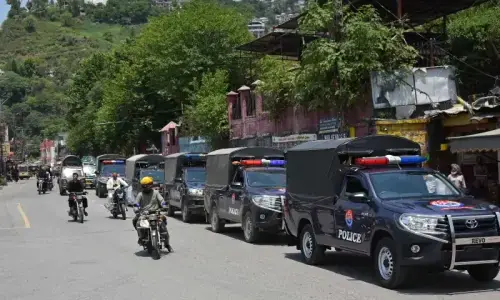
BALOCHISTAN Governor Owais Ahmad Ghani seemed a little over-optimistic when he told a NIPA delegation on Wednesday that the province’s tribal society was “fast transforming” itself into a progressive one because of the ‘mega’ development projects launched by the government. Precisely on the day the governor was talking to the NIPA delegates, Bolan Mail had a narrow escape when terrorists failed to get their timing right, for the track blew up after the train had passed. This averted what could have been a major disaster for the train that was proceeding to Quetta from Karachi. The sabotage attempt highlights the continuing trouble in Balochistan, for acts of terrorism like the blowing up of gas pipelines and rocket attacks on power and railway installations have been going on now for nearly two years. The governor said that a middle class was emerging in the province and that those resisting development were losing their control over tribesmen.
The governor is not wide of the mark when he blames tribal sardars for resisting economic development for fear that they will lose their present control on Balochistan’s predominantly tribal society — a control that automatically translates into a position of power in politics. Because the middle class is a small entity, the sardars return to the national and provincial assembles since they see to it that the tribesmen under their control vote for them. Only fast economic development — schools and colleges, roads, hospitals and industries — will create a new middle class that will have a strong interest in a democratic order and in the continuation of development activity. However, one cannot wait till that day for peace to return. At present, the sardars call the shots in parts of Balochistan, and they are in a position to sustain the current wave of terrorism. They also get some foreign help in their criminal activity. Police methods alone cannot restore normality in the province. The immediate task should, therefore, be to resume talks in earnest and remove the misgivings in some Baloch quarters — not necessarily sardars — that the government is not sincere about its claim that it is interested in finding a political solution to the present crisis.
Who killed Munir Sangi?
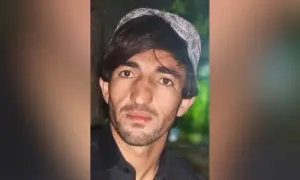
INTERNATIONAL media watchdog organisations are correct in asking the Pakistan government to investigate the death of a TV cameraman, Munir Sangi, who was shot dead on Monday while covering clashes in Larkana. There are some who suspect that Mr Sangi may have been targeted for his TV channel’s reporting on a jirga’s decision. While it is difficult to ascertain the validity of this claim, given that journalists continue to be harassed and intimidated for reporting on contentious issues, the claim cannot be easily dismissed. It is the country’s chequered record of press freedom that must have prompted organisations like the Committee to Protect Journalists and the International Federation of Journalists to express their concern and demand an investigation into Mr Sangi’s death — a call that is also supported by local groups. Since his death, there have been province-wide protests in which people demanded that Mr Sangi’s killers be arrested and punished. Although four men have so far been apprehended, a judicial probe is needed to ascertain the truth without any interference from any quarter.
Despite the boom in the TV media and the relative press freedom in the country, journalists often work under dangerous circumstances. The French organisation, Reporters Sans Frontier, in its annual report cited 2005 as the deadliest year for journalists around the world since 1995 so the problem of threats and intimidation is not just limited to Pakistani media professionals. The kidnapping and non-recovery of journalist Hayatullah Khan in December from Waziristan is just one example of the dangers those in the press have to contend with. If Mr Sangi’s death is not properly investigated there is a risk that many journalists will be intimidated into practising a degree of self-censorship while reporting on controversial issues. This would be a negation of honesty and objectivity which are the guiding principles of reporting.
Opting out of the system?
WHEN you retire after almost 50 years in active journalism, are you also in some way perhaps opting out of the whole system in which you have been involved, have written about and reported on?
That is a nagging thought at the back of the mind — and it is a disturbing thought. Has this happened recently or was it setting in gradually over the years? The political scene has been a confusing one in Pakistan for the past 50 years and more. So what’s new? Is it perhaps a loss of hope? May be it is more a deadening of the soul, a deep disillusionment not only with politics and politicians but also with what you see as a general decline in values and professional standards.
Irresistibly the mind goes back to the turbulent days of 1970. It is not the charismatic figure of Zulfikar Ali Bhutto that springs up; his betrayals were too many. It is the spirit of hope after 10 years of the first martial law that still stirs the soul. General elections loomed, and the political battle lines were also then drawn between the fundamentalists and secular, people-oriented forces. The Pakistan Times as it then was hummed, at the staff level, with excitement at the mass consciousness that had been created by the People’s Party. This is something that has never really been fully captured by all those who have written weighty books on that period.
Mr Bhutto was the first leader in Pakistan to give the ordinary people a sense of identity and power, and this is essentially what continues to keep the People’s Party the largest vote-catcher in the country. This is also what made so many of us forgive Mr Bhutto his devious role in the separation of East Pakistan and still hope that what remained of the country could be turned into a democratic, progressive and caring society.
Anyway, this sentiment among the vast majority of The Pakistan Times staff was not matched by the paper’s policy as determined by the chief editor in those days, Mr Z. A. Suleri. The Bhuttos have been accepted by the establishment only when there has been no alternative (Mr Bhutto in 1977, Ms Benazir Bhutto later), and Mr Suleri was a pro-establishment man to the core. He campaigned vigorously for the Jamaat-i-Islami-led right-wing and on the day of the election, The Pakistan Times, if memory serves, had editorially advised the people to go and ‘vote for Islam’. They didn’t. The results, in both wings, stunned everyone. The people had voted for what they saw as their own interest, for themselves really. It was the biggest anti-establishment popular vote since the 1954 East Pakistan assembly elections. That day many of us had tears in our eyes at what we saw as the triumph of democracy and a victory for the people. That is what involvement had meant.
In the period that followed, including the period of disenchantment with Mr Bhutto and the events leading up to the fateful polls of 1977 when everyone was getting elected unopposed, there was disillusionment, but the fight had not been given up. Society was still politicised and active. Even in that nightmarish Zia era, from whose after-effects we continue grievously to suffer, there was anger and resentment and, yes, resistance, not least from women’s organisations and journalists’ unions. Indeed, the repression of Zia rule had bred a wonderful defiance that may not have been reflected in the mainstream press but which was palpable on the street.
Wasn’t it in those days that we had heard the phrase that a maulvi had got stuck in our TV sets, “TV mein maulvi phans gaya hey”? Wasn’t it a time when the most piquant of political jokes about Zia were freely traded among the strollers on The Mall in Lahore — like the one about Zia walking his huge pet dog in Rawalpindi and a passerby shaking his head and saying “Aren’t you ashamed of walking with a donkey” and an outraged Zia saying “Sir, this is not a donkey; it is one of the most expensive dogs in the world” and the man saying, “Sir, I was addressing the dog, not you”?
Where has all that spirit gone, you wonder. The greatest disservice that Gen Pervez Musharraf has done is to depoliticise the nation and make us all feel totally irrelevant to the running of the state. His is one of the blandest administrations we have ever had: it arouses neither hatred nor attachment. The general may be relieved at the former but if he doesn’t feel worried by the latter as he doffs his uniform, at least for the night, and heads for bed in Army House, he is a far simpler man than one thought. He doesn’t evoke any feelings at all.
Never before perhaps have the people felt so excluded (much of the Zia years were spent outside, so comparisons must necessarily be somewhat superficial), and this must surely rank as one of the most uncaring government ever. There isn’t, in this total preoccupation with the war on terror, Waziristan and Balochistan and in enmeshing the Pakistani economy into the globalisation net, even an appearance of caring, of being bothered about the lot of the ordinary citizen. The sentiment that the military knows what is best for us has never been made to intrude into the national consciousness as now.
When pronouncements are made from high up about controlling prices or improving communications or spending more on development, they sound patronising and hypocritical. You write about fancy cars for VIPs, no one even bothers to answer; when ruling party legislators are accused of manipulating the sugar market, there isn’t even an explanatory squeak from Islamabad; when the constant problem with ministerial absenteeism from the National Assembly is pointed out, there are broad, toothpasty smiles from the ruling party chieftains.
Whatever you get should be seen as a gift and a great act of kindness: that is the kind of message that is getting across. A good example is the quarter page advertisement in last Friday’s newspapers (also already picked on by Mr Ardeshir Cowasjee), saying “We owe you so much. The citizens of Karachi are indebted to Senator Babar Khan Ghauri, Honourable Federal Minister for Ports and Shipping, for his generous gift in the shape of the University of Engineering Science and Technology, Karachi, Pakistan.” “Generous gift”? Has the honourable minister set up the university out of his own pocket?
The advertisement has a picture of President Musharraf, flanked by mug shots of the chairman of the Higher Commission of Education (poor soul, dragged into this), Prime Minister Shaukat Aziz, MQM boss Altaf Hussain and the minister himself. The advertisement is from the “Citizens of Karachi”, coping with power breakdowns, water shortages and the problem of getting to work and getting work to do to earn a decent living.
Political parties and the opposition have contributed to the depoliticisation. The religious parties have no interest in the people’s problems or with democratic accountability. They are worried about their rocky understanding with the government, their strikes and protests, with reinforcing our faith, and in fostering the most regressive and violent trends among their followers.
We have almost daily sermons from London from Mr Altaf Hussain which all of us duly publish, we have PPP men rushing off to London or Dubai for consultations with Ms Bhutto for the smallest of affairs concerning the party and now we have Mr Nawaz Sharif, in more flexible exile in London, having statements transmitted to the media through his partymen in Lahore on a regular basis. PPP leaders like Mr Amin Fahim apparently seem to have enough time to appear on a frivolous television show hosted by a cross-dresser whose mannerisms and witticisms are now beginning decidedly to pale.
The PPP-PML Charter of Democracy has been both derided and praised, but it is perhaps more the bona fides of Ms Bhutto and Mr Sharif as democrats that are in question. However, more and more Gen Musharraf’s efforts to keep the two major national parties out of the system are beginning to look self-defeating, the strains within the artificially assembled coalition in Sindh being just the most recent indicator. We have been in a constant state of denial — denying democracy and the free play of politics, denying natural majorities, denying geography, denying, in terms of political and social development, which includes education, that we are a failed state. The results are before us.
Is a sense of despair, then, not justified? Justified, perhaps yes, but confidence in the people’s judgment and political instincts should not be so easily set aside. The next general elections, if fairly held, promise to revive hope in the future of the country. A whole new generation of wide-awake young people, educated and politically conscious, has come on stream in the urban centres. In the rural areas, the political instincts of the people were always sharp; they may have been dulled in the past eight years, but the people need only an opportunity to express themselves.
If the elections are again manipulated and we continue to ignore the challenge of democracy — posed not least by the example of India next door and even Bangladesh slightly lower down —- we will truly flounder. A day must come when we can live without strutting generals and two-timing politicians.