0
0

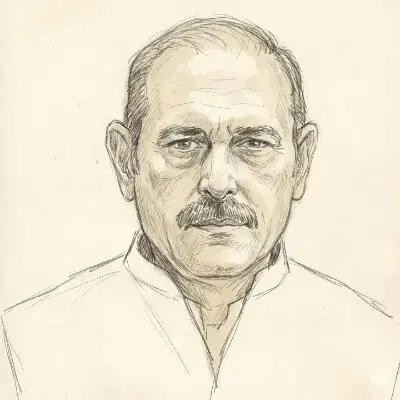
PESHAWAR, May 26: Pakistan’s former spymaster on Friday pooh-poohed the idea of fencing or mining borders with Afghanistan to control cross-border movement between the two countries, saying the suggestion was not practical.
“Afghans know for example that we cannot control the cross-border movement; not with 80,000 troops, or for that matter with any number. Let us say so. We know that fencing or mining this border was not a practical proposition.”
Even if it were, without effective cover of fire and observation, it would be breached before one could say ‘Durand Line’, Lt-Gen (retired) Asad Durrani, former head of the ISI, remarked.
Speaking on the current Afghan situation at a talk arranged by the Area Study Centre, University of Peshawar, Mr Durrani said by proposing to fence or mine the border, Pakistan was making the Afghan suspect that it was seeking to clinch the issue (Durand Line) once and for all.
“Of course their suspicion is ill-founded, but that’s how one survives in a trial society: by being suspicious; and not by being trustful,” Mr Durrani said.
He said that while most in Pakistan were relieved to shed some of the Afghan baggage which, in his view, was getting unwieldy but most of the Afghans, he added, were convinced that Pakistan had not given up its Taliban option.
He said that perceptions on the refugees of the two countries were even more diverse and even more absurd. He pointed out that while Pakistan suspected that Kabul was hedging on their return by design to use them as the ‘fifth column’, whenever, the Afghans on the other hand believed that Islamabad would only send those refugees under a Taliban flag.
Dwelling on the conception of strategic depth, the ex-ISI DG said that Afghanistan served for Pakistan as a forward strategic depth against the Soviet Union. “When the Soviets invaded the country, we lost this depth.”
He said that Pakistan’s strategic concerns were best served by winning over the Afghan hearts. “Most Afghans, however, believe that we would rather conquer the Afghan heartland. And most Pakistanis would rather not believe in such amorphous conceptions to start with.”
Denying that Pakistan had ever vied to install a ‘friendly government’ in Afghanistan, he said: “Any ruler of Afghanistan would ultimately be friendly, if not for the love of Pakistan then out of compulsions of Afghanistan.
Those who were crowned in Kabul, because they vowed to be less friendly, paid the price for accepting the Pakistani reality,” he remarked.
“But then no ruler in Kabul, even if he rode to power on Al-Khalid tanks, would do our bidding once he was there.”
Calling for the civil society in both the countries to get involved to clear the misperceptions and remove mistrust, the retired general said that bureaucratic compulsions to respond in kind had only aggravated the grumpy environment.
Mr Durrani said that during his recent visit to Kabul, he had found much concern over rapid decline in relationship between the two countries.
He said that he also discussed ideas of setting up a standing joint commission to stem the rot or form a council of wise men on both sides to promote dialogue.
“The principle of dialogue on multiple tracks, even with different speeds, was always unexceptionable. It is a clich d version, ‘people to people contact’, helped us synergise the peace process with India. Didn’t we often blame India for being a ‘stingy big brother’? So how about showing a bit of magnanimity to our little brothers in distress,” Mr Durrani said.