0
0

ISLAMABAD, April 27: The Supreme Court was told here on Thursday that no evidence was available so far to establish health risks to humans living close to cellular telephone towers.
The Pakistan Telecommunication Company and the Ufone, respondents in a case against installation of a cellular telephone tower in the Defence Housing Authority telephone Exchange Phase-II Karachi, stated in a reply to the petition that low exposures emitted from these towers never caused any affect on biophysical grounds.
The bench was hearing a joint petition of Dr Nazir Ahmed Chaudhry and Shahid Paracha who have challenged the Sindh High Court’s rejection of their petition against the installation of the cellular tower very close to their residence in Karachi.
A two-member bench comprising Justice Faqir Mohammad Khokhar and Justice M Javed Buttar however ordered the managing director Ufone to appear before it on May 2 to answer charges of creating health hazard by erecting structure in a residential area of Karachi.
Advocate Naeemur Rehman, representing the petitioners had sought immediate demolition and dismantling of the structure constructed near their house pleading that the uncontrolled growth of cellular telephone towers in residential areas without any regulation was violative of their fundamental rights guaranteed by the Constitution.
The PTCL and Ufone quoted a summary of reports on mobile phones and health (2000-2004) compiled by the National Radiological Protection Board (NRPB) of UK and suggested that very low exposures from the base stations were unlikely to cause any effects on biophysical grounds, though localised exposures, typical of those from mobile phones, could induce affect as a result of mild heating of superficial tissues close to the handset.
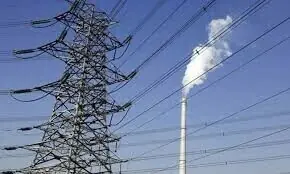
Telecommunication towers are different from “energy towers” as well as Radio/Television transmitters/boosters as both emit much higher radiation as compared to telecommunication towers, which operate through radio frequency.
Police wireless, emergency services, operators and taxi services also use radio frequency throughout the world and in Pakistan, which also emit radiation similar to that of telecommunication towers.
Installed by different cellular phone companies at different places, Karachi alone has 1,700 towers. These towers are the backbone of telecommunication system.