0
0

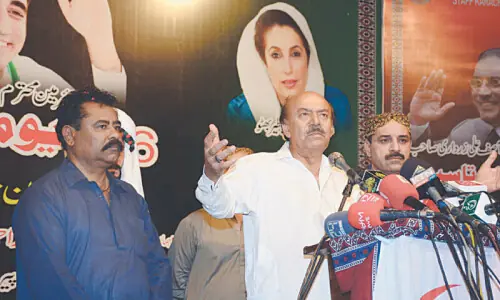
KARACHI, April 25: Participants at a consultative workshop on 'Developing SLGO Model: By-laws for the Taluka Municipal Administration' prioritized by-laws on at least six subjects aimed at expanding people's participation in local government setup and making local government/administration effective and vibrant.
The workshop was organized by the Decentralization Support Programme, Sindh Programme Support Office to provide a set of by-laws for local council's adoption and promulgation, filling the gap between the promulgation of SLGO and its implementation at the local government level, to facilitate local governments in the smooth performance of their functions, to enhance the performance of local governments and to increase the capacity of the local governments in the formulation of any future bye-laws.
The workshop was attended by around more than 40 nazims, TMOs and local government representatives from all over Sindh.
Discussing the SLGO, they prioritized by-laws regarding prevention of encroachments, trade licensing, registration of sale and control of cattle and animals, tempering with any main pipe or any apparatus or appliance for the supply of water, parks and open spaces for people recreational and sport-based activities and disposing of carcasses of animals.
They said provisions regarding slaughter of animals and maintenance of slaughterhouses should also be re-oriented.
Secretary, Local Government, Ishaque Lashari said that the 150-year-old local body system was abolished after the promulgation of SLGO 2001.
He said that in the new system, every nazim has a lot of power, authority and independence to develop their respective areas but the government has also a check and balance system on them.
Special Secretary Finance Shoaib Siddiqui said due to absence of by-laws local government was feeling handicapped on a number of subjects, especially the subjects added in the Ordinance for the first time. He said that there should be consensus on making by-laws, so that occurrence of any conflict could be rooted out.
Barrister Zafarullah Khan outlined the importance of making by-laws for making local government effective, easy and transparent. He said that the present local government design was based on five fundamentals: the devolution of political power, decentralization of administrative authority, de-concentration of management functions, diffusion of the power-authority nexus and distribution of resources to ensure that genuine interests of the people are served and their rights are safeguarded.
He said for making all theses provisions of the Ordinance successful and effective, formation of by-laws were necessary and there should be a consensus upon which by-laws should be immediately implemented and which should not.
Dr Riaz Memon, Programme Director Decentralization Support Programme and Syed Ejazullah, Consultant, Juris consultants also spoke.—PPI