0
0

LAST week’s explosion in Karachi’s Nishtar Park which killed 57 and injured over 100 has had particularly painful implications for business.
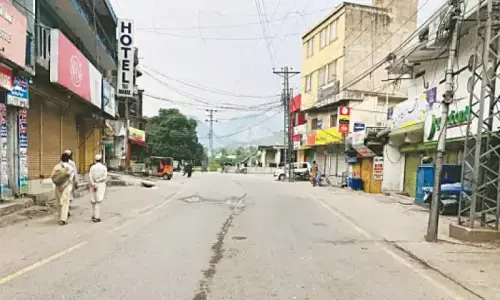
The expected happened: commercial activity was virtually shut down for most of the week, industrial production dwindled to just 20 per cent of normal levels, and daily wage earners had to scrape by on just three working days out of seven.
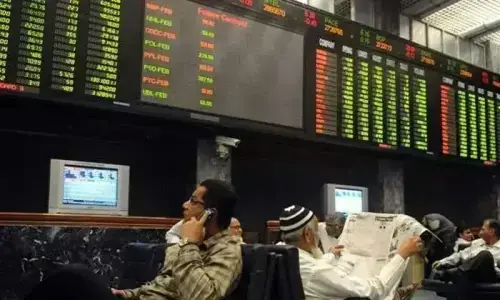
Petrol stations across the city remained closed, compounding the chaos. The unexpected also happened this time around. The Karachi Stock Exchange did not open for business on Wednesday, the day after the explosion. This decision by the KSE was an especially bad idea.
Karachi is accustomed to violence on a regular basis. Business always suffers as wholesale and retail trade comes to a standstill and industrial activity takes a blow. Almost always, however, the KSE remains open no matter how thin trading volumes are.
According to the KSE’s own statistics, the last time trading was shut down for a full day on account of security concerns when General Pervez Musharraf staged a military coup in 1999. There has certainly been no paucity of violent incidents or law and order problems in the city since that time. Then why this decision?
The management of the KSE defends their decision on several counts. First, that this was the biggest incident of violence in recent years which killed several prominent religious leaders.
Second, that the funeral prayer for Haji Hanif Blue, one of the Sunni leaders slain in the Nishtar Park attack, was to take place at the Memon Masjid near the KSE building. Moreover, Billoo was from the nearby Kharadar area of the city and his funeral procession was to pass through the Mereweather Tower area en route to Mewa Shah graveyard. This, the management said, left the KSE vulnerable in the face of possible violence after the funeral prayer.
Third, was the fear of reaction from the band of green turbans who are in a significant majority among the trading community at the KSE.
Fourth, worries about the several hundred cars that are parked in the KSE’s parking lot each day. This could have attracted violent protestors looking for cars to set fire to, the management says.
This combination of factors led to a telephone discussion among the broker members of the KSE board on Wednesday morning. The decision to remain closed was communicated to the chairman of the Securities & Exchange Commission in Islamabad. Ultimately, barely minutes before trading was scheduled to begin, the management announced that the exchange would remain closed for the day.
This was a bad decision on several counts. First, the tension and panic already prevalent in the city from Tuesday evening’s bomb blast was compounded on Wednesday morning with news of this announcement by the KSE. The business community suffered an additional ripple of jitters, unaccustomed as they are to this one trading centre closing for business.
Second, the closure of the KSE significantly worsened the country’s image problems. As it is, treacherous headlines made the rounds the world over on Wednesday. But when international investors found out that even the stock market was closed, it led to a moment of pause.
As some stock brokers put it, the embarrassment for Pakistan was doubled by the KSE’s decision. Indeed, Pakistan’s market is now much more closely watched than ever before. Foreign portfolio investors have turned active in the country this fiscal year with $470 million in net portfolio inflows coming in between July 2005 and February 2006, compared to just $82 million in the same period last year. Most of this, over three-fourths has come from the US, where investors are especially sensitive to reports of violence.
Additionally, with the launching of a third sovereign bond by the Pakistan government last month, the country’s politics, economics and stock market are now closely and routinely scrutinized by investors who snapped up the long-term bond.
Bad news like the Nishtar Park incident are enough to rattle their confidence. They don’t need to see closed share markets along with that. Stock brokers dealing with major international investors say that they spend a good amount of time convincing their clients that Pakistan gets a raw deal from the international media and things on the ground are not as bad as they may seem. But when an incident leads to a closed share market, that argument is severely diluted.
Moreover, this level of severity that leads to the closure of markets also tests the nerves of local fund managers. Some of them have said this week that they plan to minimize the risk of investing in Pakistan by diversifying into other markets now that they have the legal permission to do so.
So why did the KSE not take a more prudent approach? For example, the government could have been requested to provide additional security in and around the KSE to ensure trading could continue. The KSE could also have coped with thinner volumes had that been the case.
The SECP chairman could also have exercised his authority and insisted the market open for business. Clearly, the fine line between micro management and effective oversight at critical times has not yet been entirely understood.
The KSE’s decision was proven wrong in share trade the very next day on Thursday when volumes ended the session at a perfectly decent level of 350 million shares and the index even crossed the 12,000 points level.
If security concerns alone were severe enough to prevent the market from being opened on Wednesday, why was it safe to open for trade on Thursday or Friday, both equally critical days for the city?
As brokers, exporters and businesses struggled to cope with the fallout of the Nishtar Park incident on their clients’ willingness to do business with Pakistan, the federal government did not help to improve the situation. The day after the explosion President Musharraf held a meeting in Rawalpindi with two Latin American mineral exploration companies and the press reports issued by the state-run news wire service the following day carried this headline: Musharraf assures safety to foreign investors. This is enough to make even government supporter cringe with embarrassment.
The president’s assurance of “full protection” to foreign investors included a level playing field with local investors, vibrant economic growth and the prospect of strong returns. That’s all very well. But it is worrying when the country’s leader does not even allude publically to the most obvious worries any foreign investor would have.
These problems are much more serious today when foreign investors of all kinds have finally put Pakistan on the radar screen. Foreign portfolio investors have been forced to look at the country given the strong rally in share prices, foreign direct investment has been picking up pace, the sovereign bond issues have led to more investors tracking developments in the country, and the privatization process has also led to greater interest. The internal losses are also significant.
The tangible financial losses of days without industrial and commercial activity and the resultant reduction in tax revenues are obvious. But there are also the longer term implications of domestic investors reconsidering their investment plans in the face of growing unrest.
While it is unlikely that any of the top leaders will satisfactorily address the fallout of this major incident in the country, the negative impact could have been restricted to the bad press alone. If the availability of petrol had been better managed, the KSE had remained open as always and acted to improve security rather than close for business, perhaps the embarrassment caused by the attack could have been a little less. At time likes this, every bit counts.
<nmangi@yahoo.com>