Another tragedy
ANOTHER religious gathering has been struck by tragedy. The nation has been left to mourn yet again the death of innocent people, this time, poignantly, women and children. The stampede following a women’s congregation at Karachi’s Faizan-i-Madina mosque, run by the Dawat-i-Islami, has left at least 21 women and eight children dead and over four dozen injured. The congregation that is held every Sunday at the mosque was bigger this weekend because of the approach of Eid Miladun-Nabi. There was only one exit, two other exits having been blocked some time ago because of the construction of a park next door. Something happened as the women were streaming out: a child fell or a rumour spread. A rush to get out of the sole doorway took place, and people were crushed. It was a women’s gathering, and male rescuers found it difficult to gain entry. These are the bare facts: the sadness that has descended on so many families cannot be described in words.
Religious gatherings and pilgrimages in the subcontinent attract huge crowds. Lack of organisation and foresight ensure that catastrophe always lurks beneath the surface. Religious organisations that draw out people cannot escape responsibility for what happens. In this particular case, the Dawat-i-Islami should have anticipated that there would be more people present than normally. They knew that there was only one entry and exit point, and whoever is to blame for closing the other entrances, the organisers knew what the position was and should have acted accordingly, perhaps holding the congregation at some other place. They — and all religious organisers — should also be blamed for failing to persuade women to leave their children at home. If there were women who could not leave their children alone at home, they too should have stayed home. There are already too many religious programmes on television that can be watched in the safety of one’s house. What many religious ‘tanzeems’ and jamaats are doing is to involve people in rituals while making no effort to explain and preach Islam’s real message of peace, harmony and tolerance. It almost seems that where some of these organisations are concerned, they only want to stage religious gatherings and processions to establish their strength and political clout. This point should be taken into consideration when an inquiry into the Dawat-i-Islami tragedy begins. The closure of two exits should be thoroughly investigated, and the conduct of the organisers also probed to ensure that all due precautions were taken. If the state minister for religious affairs spent a little time on such issues rather than have his attention constantly divided by his television programmes, some reform may be expected.
A more general observation also needs to be made. There are so many of us in this overpopulated part of the world that human life appears to have no meaning. Citizens are killed in their hundreds in road accidents and other acts of violence. No one bothers. There is a great deal of tut-tutting and messages of condolence. But in the end there is nothing. There is no check on transporters; there is no check on street gangs and robbers and dacoits. Violence by the state and state’s evasion of the rule of law encourage lawlessness. As a nation, we are also benighted by a lack of discipline in our daily lives. If governments became more orderly, perhaps the people will follow, and there will be less chaos.
A thoughtless directive
EVER so often governments in Pakistan come up with some measures or policy decisions that reflect poorly on those behind it. A case in point is a circular issued by the cabinet division asking state functionaries, including members of parliament, not to directly contact Indian diplomats. Such a directive, foolish and disingenuous as it is, might have made sense in the cloak-and-dagger days of years gone by, when everyone leaving or entering the Indian high commission in Islamabad was shadowed, stopped and interrogated by the intelligence agencies, but these days it can only make a laughing stock of us in the eyes of others when both countries are engaged in a peace process. Presumably, the directive is the result of a tendency among senior government officials or some members of parliament to directly approach diplomats of foreign countries for visas and so on. In such cases, the government believes that the Foreign Office is the appropriate channel to route all such applications.
If the intention is to channel all official contacts via an established hierarchy and process, one can understand it. But if the idea is to prevent members of parliament from meeting the diplomats of any foreign country — be it India or any other — then one can only wonder at the myopic mindset behind the move. In any case, it is downright irresponsible for the cabinet division to assume that our MPs, including those in the ruling party, are liable to be indiscreet while in the company of Indian diplomats. To impose a blanket ban on meeting Indian diplomats and extending it to include all members of parliament implies that the government does not trust elected representatives. The fact is that such misguided notions tend to negate the peace process with India, especially considering the fact that one of the principal purposes is increased contact and interaction between the people of the two countries. To deny elected representatives that right is as absurd as it can be. That part of the directive that relates to MPs must be rescinded forthwith.
Reconstruction costs
GIVEN the rise in cement prices these past few weeks, it comes as no surprise that Erra has warned of a substantial increase in construction costs in the quake-hit areas. This is a serious problem that has to be tackled immediately as the reconstruction phase has begun and the government cannot afford to exceed its budget estimates marked for this crucial phase. The deputy chairman of Erra has said he may ask the government to consider allowing import of cement as a way of bringing down the price but it should also look into other options including a price-control mechanism to be put in place specifically for quake reconstruction purposes. There is also some concern over the relocation of Balakot, a town especially ravaged by the Oct 8 earthquake, and no final decision has been taken yet as to where the people will be relocated. This is important given that Balakot lies on fault lines. But the government should also take into account the residents’ apprehensions of moving to another place. So far Erra officials have not confirmed whether Bessian will be the place where Balakot is to be shifted, nor have they offered a timeframe for the town’s relocation plans — which is only adding to the peoples’ concern and anxiety about their future.
As it is, the quake victims have suffered heavily and need all the support they can get to rebuild their lives. There is fear that they will be forced out of their temporary shelters and left to fend for themselves. This must not happen. The authorities need to complete the reconstruction process by October, before the winter sets in and makes it impossible to work in these areas. It must take all necessary decisions soon so that there is no delay in the actual reconstruction process.
Interplay between politics and economics
PAKISTAN has had many moments in its history when economics influenced politics in unexpected and negative ways. It happened in 1969 when growing discontent with the economic policies pursued by the Ayub government created discontent ultimately leading to regime change.
It happened again in 1977 when Zulfikar Ali Bhutto’s economic programme failed to end poverty, provide jobs to unemployed youth and failed to pacify the various regions of the country that were unhappy with the way Islamabad was treating them.
On at least five occasions in the 1990s, economic mismanagement and rampant corruption were so disillusioning that the citizenry was happy to see elected representatives replaced by quasi-constitutional means. Are we entering that period again?
This question would sound strange to Islamabad when there is so much to celebrate about the economy. Let me summarize the arguments presented in this space in the last two weeks to indicate why, during what policymakers regard as happy moments, seeds of discontent are sown. They may sprout before the realization develops that all is not well with the state of the economy.
The line of argument I laid out in the previous two articles rested on the belief that a number of positive developments and policies helped to revive the economy, increase investor confidence and the consumption level besides producing impressive growth rates. The most important determinant of growth recorded was the continuity in policymaking. The same set of actors dominated decision-making in politics and economics.
Continuity in policymaking brought foreign capital into the country. There is also visual and anecdotal evidence to suggest that some structural changes have begun to take place in the economy’s real sectors. A series of successful privatizations have brought new foreign capital and the promise of new management practices into some vital industrial sub-sectors. For instance, we can look forward to a significant change in the way the steel sector will be managed following the privatization of the Pakistan Steel Mills.
Changes in agriculture are also palpable as agro-processing is becoming a significant business with the entry of new capital, introduction of new technologies, and development of elaborate distribution networks. The dairy industry is at the centre of this development. We have been frequently reminded that Pakistan is the fifth largest producer of milk in the world. Given the fact that this business reaches a large number of people, many of them poor, the modernization of the dairy industry should have very positive social consequences. With the base of this business expanding, its products should be able to enter the export market.
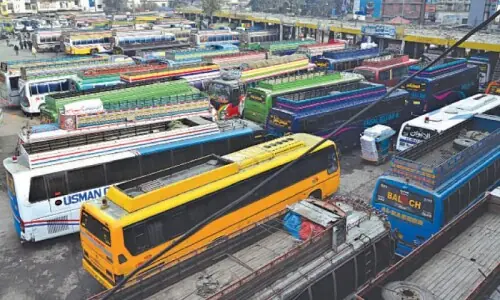
Two, other economic changes will be of considerable significance for economic growth and prosperity. Signs of change in this context are visible and they tell a story still not picked up by official statistics. The construction of the Lahore-Islamabad Motorway and the way it is being operated has spawned a new business — bus services, that by providing comfort, safety and regularity, have begun to wean away passengers from airlines. The motorway was an expensive project which siphoned away a large amount of public money that could have been better spent in other activities. But economists have a way of dealing with even the most egregious mistakes. Treating the investment in the motorway as “sunk cost” it would be useful, to analyse and build upon the changes being introduced in the economy by this development and to expand it in order to increase the contribution it could make to the development of some modern services.
The other positive development is the push towards the modernization of higher education. The initial forays into this long-neglected area were made by the private sector working either for profit or motivated by the desire to develop the country’s large but neglected human resource. Now the government has joined in this effort after the establishment of the Higher Education Commission, whose strategy, performance and the way it could help bring higher education out of darkness are some of the subjects to which I will return later in a new set of articles.
Having underscored some of these positive developments I began to sound the alarm bells in the last two articles. I identified four worries about the current state of the economy. One, the high rates of growth of the last two years are not sustainable. Without a serious correction in the course the economy is taking, the rate of increase in the GDP will fall back to somewhere in the range of four to five per cent. Given the current structure of the economy this is the most it can produce. According to some reports, value added in agriculture will not register any increase this year compared to 2004-05. If this is the case the rate of growth in GDP may not exceed six per cent.
Two, at a rate of growth falling in this relatively low range, the economy will not be able to bring about a significant change in the incidence of poverty. The number of new jobs created will be considerably less than needed by a rapidly growing workforce. Rural-urban migration will continue to proceed at a rate twice the rate of increase in population which in turn will place even greater burden on large cities already bursting at the seams and unable to fully cater to the basic needs of the population.
Three, a combination of poverty, increasing population of large cities and a boom fed by speculation in the capital markets and real estate will worsen income distribution which is already skewed in favour of the rich. This will create the basis for social turbulence.
Four, if social unease occurs, it will happen as the country moves towards the time when another set of elections must be held. This must happen no later than 18 months from now.
These elections will be more critical than the six that were held over the last 20 years, in 1985, 1988, 1990, 1993, 1997 and 2002 and will be important since the current establishment will be testing people’s acceptance of the hybrid system of governance it has been using to run the country. I would make the prediction that for Pakistan’s political history 2007 will be as much a turning point as were the elections of 1970 and 1977.
In 1970, the military gambled that by allowing the people to give voice to their aspirations and frustrations they would be able to produce a viable and durable political structure. That did not happen. The 1970 elections were fair but released tensions the institutions available to the society were too fragile to absorb. The rest is history.
In 1977, Islamabad, now under the control of a new political establishment that, after brushing aside the military, had gone on to introduce a number of social, political and economic changes. Having done that, it lost its nerve and was not prepared to test its popularity with the people based on what it had given to them in the realms of economics and politics. It was apprehensive that the old vested interests would be able to marshal enough response from the citizenry to unseat the incumbents. The party in power resorted to massive rigging. The result it produced was not acceptable to the people and the agitation that followed its declaration brought the military back to power. The rest, again, is history.
Many years before the political scientist Samuel P. Huntington won fame by writing his book on the clash of civilizations, he wrote an equally challenging book that warned policymakers in the developing world that rapid economic change produces tensions that poorly developed societies find hard to handle. The most serious source of these tensions is “relative deprivation”. This situation results when some segments of the society move much faster than others. This causes resentment. Therefore, it is not only absolute deprivation or extreme poverty that those who hold power must worry about but also widening disparities in the distribution of wealth.
Writing in Dawn recently, Dr Pervez Hasan drew attention to the fact that the government’s claim that there has been a sizeable reduction in the incidence of poverty needed to be checked carefully with respect to the base year being used for drawing the trend line and the methodology used for analysing the data still to be released. Given the sharp increase in the rate of growth in GDP I would not be surprised if there was some reduction in the number of people living in absolute poverty. What is worrying is the growing income inequality if Samuel Huntington’s line of argument is to be taken seriously.
Whether income inequalities may have worsened in the last few years is something only detailed data on household income and wealth will show. However, an impression of growing inequality is substantiated given that speculative investments in real estate and in the stock market may be responsible for some of the boom noticeable in the economy.
Some simple calculations will explain why some of these speculative activities don’t produce incomes for the poorer segments. If an investor puts down one crore rupees to buy a kanal of land in one of the large cities and puts in another half a crore to build a house on it, he must obtain a minimum return of Rs1,25,000 a month to justify this investment.
This is the case whether the property is rented or not. Even if it is self-occupied, the foregone income is of the order of Rs1,25,000 a month.
There are very few households in the country that can afford to pay this amount or forego it as income. And yet plots continue to sell. They are being bought in the expectation of appreciation. These speculative activities don’t produce employment and income for the poor; they only add to the incomes and wealth of the rich.
It seems to me, therefore, that there is enough happening in the economy to worry Islamabad as it prepares to test public opinion by holding elections. Complacency will not postpone the day of reckoning.