0
0

GAZA, April 8: Palestinian Prime Minister Ismail Haniyeh said on Saturday his government would not bow to foreign pressure to recognise Israel and disavow violence despite funding cuts that are pushing the Palestinian Authority (PA) to financial collapse.
As Mr Haniyeh stood firm on his refusal to moderate the policies of his Hamas movement, Israel stepped up pressure with a second deadly air attack against militants in two days. Two gunmen died as they drove in their car.
Since taking office last week, Mr Haniyeh has faced violence with Israel, prompting vows of revenge by Hamas’s armed wing as well as a clash with the international community over aid and tension with President Mahmud Abbas over his powers.
The United States and the European Commission suspended direct aid on Friday to the Hamas-led government until it ‘renounces violence’, recognised Israel’s right to exist and supported internationally backed Middle East peace initiatives.
“The attempts to strangle the government has one aim,” Mr Haniyeh said. “(But) they will not extract political concessions from us that will harm the rights of the Palestinian people,” he said at the opening of a children’s art exhibition in Gaza.
Hamas, which is sworn to Israel’s destruction and has carried out many suicide bombings, won a sweeping victory in parliamentary elections in January.
In the latest strike on Saturday, Israel fired a missile at a car ferrying militants back after firing rockets into the Jewish state, killing two Al Aqsa Martyrs Brigades militants.
Palestinian Authority cabinet spokesman Ghazi Hamad said Israel’s attacks would ‘not change the positions of this government’.
On Friday, in the deadliest strike in five months, missiles hit a car leaving a militant training base in the southern Gaza Strip, killing five militants and the five-year-old son of one of them who had come to watch his father train.
‘ARMS OF RESISTANCE’: Khaled Abu Hilal, a spokesman for the Hamas-controlled interior ministry in charge of security matters, said he supported calls by Hamas’s armed wing, which has largely abided by a truce since March last year, to avenge the air strike.
“Our people have the right to keep the arms of resistance and to respond to the aggression,” he told reporters. “We understand the need of our fighters for training bases to rebuild themselves. We will secure that,” he added.
Mr Haniyeh and Mr Abbas failed to resolve a dispute over powers in late night talks on Friday over the latter’s decisions this week to assume control of Gaza’s border crossings and make a high-level security appointment.
BORDER: In an interview with Britain’s Guardian newspaper, Mr Abbas said any attempt by Israel to unilaterally set its borders would delay rather than solve a resolution to the conflict.
“After 10 years our sons will feel it is unfair and they will return back to the struggle,” he said.
Despite the aid cuts, the United States said in its announcement in Washington it would boost humanitarian assistance to the Palestinians through U.N. agencies to avoid widespread economic distress in the West Bank and Gaza Strip.
The cuts have left Mr Haniyeh’s government scrambling to find ways of paying 140,000 workers employed by the Palestinian Authority who support about a third of the 3.8 million population in the territories.
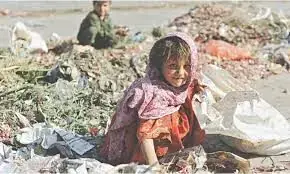
Even before the aid cutoff, many Palestinians struggled to subsist in an economy suffering from widespread poverty, high unemployment and rife with corruption.
Hamas has appealed to Arab states and Iran to fill the shortfall, but has not even been able to find a bank willing to handle its finances.
The EU has been the main donor to the Palestinian Authority since its creation under the 1993 Oslo peace accords. —Reuters