0
0

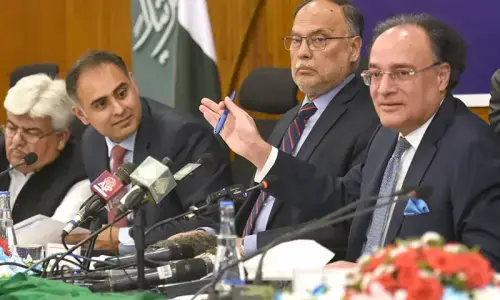
BAGHDAD, April 2: US Secretary of State Condoleezza Rice and Britain’s Jack Straw flew in secret into Baghdad on Sunday in a dramatic bid to break a deadlock over forming a unity government that can halt a slide to civil war. A day after senior figures in the ruling Shia Alliance bloc broke ranks and turned publicly on Prime Minister Ibrahim al-Jaafari, Rice and Foreign Secretary Straw will certainly add to the pressure on the premier to step aside.
The US military said the two pilots of a helicopter lost south of Baghdad on Saturday were presumed dead and were likely shot down, a reminder of the violence gripping Iraq as the political vacuum deepens.
The chill was palpable when Rice and the embattled Jaafari exchanged small talk on a rainstorm raging outside as reporters looked on. The smiles were frosty, the body language awkward.
No breakthrough is likely to be announced during the two-day trip, officials said — both Iraqi leaders and their visitors are anxious not to give the impression that Washington and London are imposing a new leader over the elected Jaafari.
“The fact that we’re going out to have these discussions with the Iraqi leadership is a sign of the urgency which we attach to a need for a government of national unity,” Rice told reporters who travelled with the two ministers from Britain.
Rice was visibly more friendly in her meeting with Vice President Adel Abdul Mahdi, a candidate for prime minister if Jaafari steps aside.
“How are you? It’s wonderful to see you,” she told him.
The flight from Liverpool, where the pair had spent two days of “backyard diplomacy” in Straw’s home region, was shrouded in a secrecy far greater than typical unannounced visits to Iraq.
Asked if the plan was to force Jaafari to step down and have his Alliance colleagues nominate someone acceptable to the minority groups in parliament, Straw said: “We will recognise and respect whoever emerges as the leader through this system.”
“Our concern, however, is that they have to make swift progress,” he added, underscoring the fact the elections were held four months ago.
Privately, US and British officials make little secret of their view of the unsuitability of Jaafari, a soft-spoken Islamist physician, long exiled in London and with backing from Iran. They have questioned his ability to unite and lead Iraqis.
“It is important to have fresh messages from time to time from Washington and from London,” Rice said as she and Straw denied interfering in Iraq’s democracy or setting a deadline.
In talks with President Jalal Talabani, Rice and Straw said they prefer a prime minister who can unite Iraqis and that Jaafari does not have that quality, political sources said.
A British embassy official said the ministers were not expecting to hold a news conference in Baghdad until Monday. They have a programme of meetings with Shia, Sunni, Kurdish and secular leaders, both bilateral and as a full group.
With US congressional elections in November, President George W. Bush’s administration is keen to show progress in Iraq and hold out the prospect that US soldiers will soon be able to start going home.
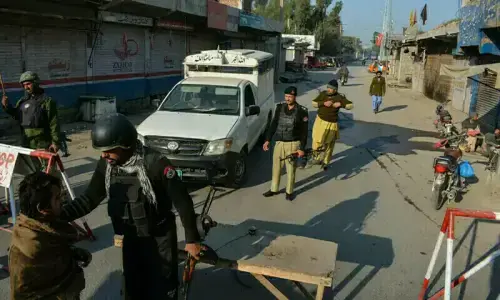
A sharp increase in sectarian bloodshed in the six weeks since the bombing of Shia shrines of Imam Ali Naqi and Imam Hassan Askari in Samarra has cast a cloud over those prospects.
Some two-to-three dozen bodies are turning up every day in Baghdad alone, showing signs of death-squad killing.
Rice said Iraq was “vulnerable” after years of sectarian tensions held in check by repression and accused Al Qaeda leader in Iraq Abu Musab al-Zarqawi of aiming to foment civil war.—AFP