0
0

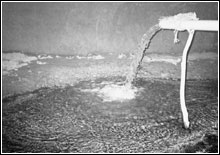 IN the desert of Thar, the sight of sweet water is reason enough for ecstasy. The sight of sweet water gushing out of a pipe is cause for major celebration. And that sight persisting 10 months on, is nothing short of a miracle.
Just ask the people of the village of Somoo Sama, some 17 kilometers south of Khokrapar and one of the villages closest to the Indian border. The Muslim inhabitants of this village have long suffered the neglect of their remoteness. Their only access to the outside world is a bus that comes through the village twice a week.
There is just one school with one teacher for 114 students in one cramped room. The nearest Basic Health Unit is as far as Umerkot because of which two women have died in childbirth in the last few months alone.
These livestock farmers don’t even get government relief in times of drought since their village falls in the taluka of Umerkot and therefore does not even get declared as a drought zone. “We border dwellers feel like we’re neither in Pakistan nor in India,” says Abdul Halim, the school teacher, as he points out India’s powerful searchlights clearly visible at the border.
But their greatest agony has always been water. “We had to travel the 17 km to Khokrapar every day to fetch water,” says Ismail Somoo, the village elder. “And that too was salty water.” This cumbersome ritual tied up several men in the villages who instead of going out to find work, would spend all day fetching water on camel back.
Somoo says one year ago Thardeep agreed to dig a well. But 600 feet below ground, the water was still salty and Thardeep was close to giving up. “Things got ugly between us and Thardeep because I knew there would be sweet water at 1,100 feet,” Somoo says. Until the Indian border was sealed in 1992, Somoo’s relatives from the other side visited regularly and had related their experience of accessing sweet water at 1,100 feet below ground level.
So in May 2005, at the cost of Rs6 million, 20 per cent of which was contributed by the villagers in the form of labour, Thardeep installed a tube well 1,200 feet deep. Since then, water has been gushing at the same pressure level even though the generators are yet to be switched on. Although water storage tanks are still under construction, enough water has collected in the area to form a large pond of water in the sand.
“Life used to be hell for us without water,” says Zainab, a mother of 11, in this village of 500 households. “Now I go to the tube well where the water is flowing and cry there in gratitude. Most of us never tasted sweet water before now. We can now bathe everyday, not like before when we bathed only once a month. And our men can go out and find work. It is just a miracle from above. Nothing less.” —NM