0
0

Opting for continuity
THE Monetary Policy Statement (MPS) issued on Thursday by the State Bank indicates continuity rather than change. Many would not see this as prudent given present macro-economic trends like the massive trade deficit of $5.8 billion during July-December 2005 and a high inflation rate during the year. But the new State Bank Governor, Dr Shamshad Akhtar, wants to ensure that “changes in interest rates do not significantly weaken the on-going growth momentum”. Her aim is to stabilize prices and sustain economic growth. The MPS has come at a time when the pace of economic growth is set to drop “moderately below” the 2006 target of seven per cent from the record 8.4 per cent last year. Any significant tightening of the monetary policy may risk inviting recessionary trends at a time when “inflation accounted lending rates have turned positive” and “the prospect of deceleration of inflation appears to be promising”. The inflation rate was 8.5 per cent in December after hitting a peak of 11.1 per cent last year. The lending rates are up at 9.77 per cent. The overall credit expansion has been counterbalanced by a decline in net foreign assets, limiting broad money growth to eight per cent so far this year.
Yet, the State Bank acknowledges the need to formulate a tight policy with core inflation hovering around 7.4-7.6 per cent. It is also committed to monitoring inflationary pressures and adjusting the key interest rates as the situation demands. It is concerned over the difference between lending and deposit rates which has risen to 7.4 per cent since July last, with deposit rates moving at a snail’s pace. Lending rates are not globally competitive and the return on deposits is negative. Bank deposits are being raised largely through expatriates’ remittances. While short-term interest rates went up, the long-term interest rates were stable during July-December 2005. The State Bank expects the government to raise funds by auctioning additional Pakistan Investment Bonds to reduce its short-term borrowings and to serve as a reference for the capital market for long-term funding for investment.
Another key element of the monetary policy is management of the exchange rate. On the whole, the rupee has remained stable despite the widening trade deficit at $5.58 billion during July-December 2005 but the overall balance of payments deficit at $0.9 billion recorded for the first five months of fiscal 2005-2006 is much lower than the last fiscal year’s comparable figure of $1.5 billion. The improvement is attributed to surging exports (up by 23 per cent), a robust inflow of remittances, foreign direct and portfolio investments, multilateral loans and foreign donors’ contribution to relief and rehabilitation of earthquake victims. With capital inflows and foreign exchange reserves at $11.7 billion, the State Bank sees the foreign exchange position as stable. Foreign loans and investments are helping expand industrial capacity and the building of the social and physical infrastructure. The State Bank says that the manufacturing sector takes the lion’s share of bank credit, and rise in consumer loans continues unabated. But it is not very clear how much credit is financing export-oriented industries and how much of it is going into financing import-substitution production of durable items like cars, household goods, telephones, etc. In the short term, the situation may appear comfortable but in the long term, the trade deficits will become unsustainable and lead once again to a debt trap if export-oriented production is not combined with import-substitution industrialization.
Ties with Moscow
IN SPITE of a past full of bitterness stemming from their role in the Cold War, relations between Pakistan and Russia seem to be improving, though it goes without saying that they have a long way to go. At a meeting in Islamabad on Friday with a group of Russian media persons, Prime Minister Shaukat Aziz emphasized the need for strengthening their bilateral relations in a number of fields, including science and technology, education, trade, investment and defence purchases. Notwithstanding the misunderstanding that exists between the two, some recent developments are of a positive nature and must be taken note of: Pakistan has been given observer status at the Shanghai Cooperation Organization (SCO), because Russia chose not to veto it. In its turn, Islamabad supported Moscow for being given observer status at the Organization of Islamic Conference, and last October a Russian firm signed an MoU with Pakistan on energy — a sector in which Russia has advanced technology. Last October, Prime Minister Shaukat Aziz visited Moscow to attend the SCO meeting and used the occasion to discuss bilateral relations with Mr Mikhail Fradkov, his Russian counterpart. On Iran’s nuclear question, the two seem to agree on a political solution, with Mr Aziz asserting that Iran had every right to use nuclear energy for peaceful purposes.
Russia might be undergoing a period of economic and political eclipse in the aftermath of the collapse of the Soviet Union, but its assets — a huge territorial expanse, natural resources, skilled manpower and a high level of technology — remain intact. It would be a great mistake to underestimate Russia’s role in global affairs at a time when the unipolar world is undergoing a change. Pakistan and Russia may not be neighbours, but they have mutual concerns in such areas as Central Asia and Afghanistan. Russia is concerned over the activities of religious extremists in what it regards as its “near abroad”, and here Pakistan is in a position to play a positive role. The economic relationship, too, needs to be further strengthened. At present, the volume of trade is at a miniscule 200 million dollars, even though there is a wide scope for a substantial increase in bilateral trade.
Frontier verdict
THE verdict by an additional district and sessions judge in Peshawar ordering the amputation of the hand and foot of a person convicted of robbery will only serve to embolden the extremists in the country. The judge delivered his verdict after finding the accused guilty of robbery at a bus stop and stealing over Rs 300,000 from a passerby. The court has also jailed the man for five years and fined him Rs 30,000. The fact is that the handing down of such a punishment would not be possible were it not for Gen Ziaul Haq’s so-called Islamization and the introduction of the discriminatory Hudood ordinances. Of course, one is not trying to defend the robber here but to point out that the punishment should be commensurate with the crime and also not be of a kind that it disables the perpetrator for life.
While handling such cases, it should be noted that the fundamental principle of the Islamic legal system is justice combined with compassion. Besides, the enforcement of Hudood punishments presupposes the existence of an Islamic society based on economic and social equality and justice. A mere enforcement of the penal part of Islam while ignoring the fundamentals of a welfare state amounts to a negation of all that Islam stands for. Such punishments, as experience shows, are never implemented, but they make world headlines and add to a distortion of the image of Pakistan and of what Islam is all about. The verdict has to be confirmed by the Federal Shariat Court and hopefully it will be changed in favour of a more humane form of punishment, as has happened on several occasions in the past when similar punishments were handed down by lower court judges. That still does not take away from the fact that there really is no place in this day and age for such punishments to be on our statute books.
Economic weaknesses to worry about
ALTHOUGH our economy has been growing at over six per cent per annum since 2003, much of this has been possible because of the consumer binge that came from a decline in savings and the funding available from banks to finance consumption. The manufacturing sector has been able to service this buoyant growth in consumption demand through high-capacity utilization rates and sizable profits.
However, despite growing business confidence, investment demand has not gone up as sharply as one would have expected. In fact, the rate of investment has fallen below the level of 1999/2000. Also, there has been little diversification; project funds sanctioned by banks and financial institutions for expanding and modernizing existing capacities outweigh those meant for new projects.
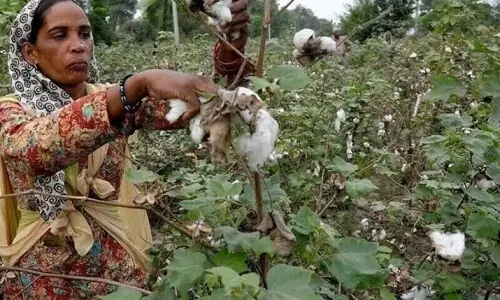
Moreover, this growth has been narrowly based in both agriculture and industry. In agriculture, the entire growth has been in cotton and wheat, thanks largely to good weather conditions. However, the prospects for the agricultural sector this year certainly do not look as bright as that of last year, considering that the size of the cotton crop then was the highest in living memory.
In the industrial sector, much of the production expansion has been in automobiles, sugar, chemicals, in none of which Pakistan has, or likely to have, in the foreseeable future, any comparative advantage. These generally inefficient sectors have been thriving simply at the expense of hapless consumers. Two sub-sectors of industry — textiles and leather — in which we have greater ability to compete internationally have done well largely because of the local availability of the key ingredient, the raw material. However, a segment of the textile industry producing knitted garments is now experiencing a painful death, unable to save itself from the tsunami of more competitive Chinese products.
The prospects for 2006/07 require more pro-active government monitoring and surveillance. The two most worrying aspects are the high rate of inflation — highest among comparative economies — and the widening gap between the import bill and export earnings, likely to (based on figures for the first six months of the year) touch, if not cross, an alarming $10 billion in the negative. Part of this chasm in the external trade account can be filled by annual remittances of overseas Pakistanis of around four billion dollars. But this will still leave a gap of six billion dollars, which will require bridging through a combination of the following:
a) capital inflows from donors for funding earthquake relief rehabilitation and reconstruction activities (considering that four billion dollars out of the pledged six billion dollars will be in the form of loans to be made available over the next three years or so; some of these funds could be expected to pour into the foreign exchange reserve);
b) annual contributions of one to 1.5 billion dollars from donors like the World Bank and Asian Development Bank for regular programmes and projects (some of this money will go into meeting obligations to service external debts); and
c) foreign investment either into new projects of sectors like telecommunications, oil and gas and mineral exploration or to buy stocks in corporate entities in which the government is divesting its holdings, such as Sui Southern, Sui Northern, Steel Mills, the KESC and one or two electricity distribution companies.
The remaining hole which, despite the foreign exchange inflows referred to above, could be a sizable amount that will require a combination of measures ranging from a rundown of foreign exchange reserves, a downward adjustment in the value of the rupee (which is required in any case because our inflation rate is distinctly higher than that of most of our competitors and trading partners) to maintain profitability of exports versus sales in domestic markets and further raising of interest rates by pursuing a more contractionary monetary policy, which will have implications for economic growth and real incomes of people.
To check the sharp rise in trade deficit, decision-makers could be tempted to raise the levels of import duties or slap trade controls which would violate our commitments under the WTO rules or, even if permissible within the WTO framework, would clearly be a regressive step that would penalize consumers as well as provide a stimulus for smuggling.
Moreover, thanks to the analysis of trade data conducted by Abn-Amro, we discover that contrary to official explanations that the trade deficit was widening on account of imports of plant and machinery, a large proportion of what is classified as capital goods/equipment is essentially motor cars and other consumer durables like refrigerators, airconditioners. This partly reflects on the quality of the information generated by government systems.
In other words, the rising import bill is not simply because of high oil prices and imports of plant and machinery for investment that will create more production capacity, thereby enhancing the country’s export capability resulting in narrowing future trade deficits. Much of the imports are being soaked in by the surging consumer demand.
The other matter of concern is the sharp increase in income and wealth disparities and inequalities between the haves and have-nots, as those with little skills, the majority of the population, find that despite economic growth their wage levels and living standards have, at best, remained stagnant, if not worsened.
Furthermore, the economic outlook could be adversely affected by another factor, a slowing down of consumer demand in the US. The relatively high growth rate of the US and the UK economies have sustained high levels of consumption that has been fuelling demand for goods and services stimulating industrial and service sector growth in the rest of the world, particularly the economies of countries like China, India and Pakistan.
The key question is to what extent these heightened levels of demand are sustainable. All kinds of doubts are being expressed about the longevity of a process whereby the US continues to borrow at a mind-boggling rate of two billion dollars a day, having already outdone all laws of economics, and having defied all predictions of sceptics that such a state of affairs could not persist. Laws of gravity must eventually prevail. Fiscal rectitude is required in the US, and soon, as hard choices cannot be deferred indefinitely by a country living on borrowed money and borrowed time. This likely correction raises the risks in 2006 for economies like ours, given our high level of dependence on exports to the US — 26 per cent of our total exports in 2005 and 32 per cent of total exports to the UK.
There is, therefore, a need to exercise greater caution while forecasting the economic landscape for 2006. This is not to suggest that the future looks bleak but that the fallout of a weakening in consumer demand in the US and UK, by hitting exports, could dampen our economic performance. Considering that export growth during the first six months of this financial year has already been much more subdued than the feverish pace at which imports have been rising. Such a development will hurt investor sentiment and the economy’s growth prospects as well.
The writer is a former finance minister of Punjab
Medical breakthrough
THERE aren’t a lot of things that could save half a million children annually, but an effective rotavirus vaccine could. This diarrheal disease is one of the world’s top killers — less murderous than Aids (which caused an estimated 3.1 million deaths last year) or malaria (a bit over onr million), but remarkable for the fact that its name is not widely known.
Earlier this month the New England Journal of Medicine published the promising results of large-scale clinical trials for two rotavirus vaccines. It seems a breakthrough has arrived.
The question is how quickly the vaccines can be deployed in the poor countries where nearly all the deaths happen — and, by extension, whether other new vaccines can be put to use quickly, transforming life expectancy in the poor world. History counsels caution: Every year, about 27 million children don’t get the basic shots that are standard in rich countries. But two major efforts have recently improved the odds of deploying new vaccines widely.
The first is the global polio eradication campaign. Starting in 1998, polio immunization drives have greatly reduced the burden of this paralyzing disease; in India, for example, the number of cases has fallen from 75,000 annually to fewer than 100 last year. With enough persistence, polio may be eradicated; but in the meantime, the campaign has created an infrastructure for delivering vaccines — everything from detailed registries of the children living in each village to supplies of cold boxes for transporting doses to remote clinics. The progress against polio has created thousands of motivated health care workers and, just as important, millions of parents who have learned to trust the health system.
The second promising development is the creation in 2000 of the Global Alliance for Vaccines and Immunization, which aims to tackle financial and other obstacles to the broad deployment of vaccines. So far the alliance has disbursed about $700 million, enabling millions of extra children to be vaccinated and saving an estimated 1.7 million lives.
—The Washington Post