0
0

100 days after the quake
ONE hopes that after visiting the quake-hit areas and seeing firsthand the extensive damage and human misery prevalent there, former US president and UN Special Envoy for Pakistan Earthquake Relief, Mr George Bush, will press the international community hard to deliver on the aid pledged a few months ago. Very little of the total of $6.2 billion promised at the international donors’ conference in November last year has come in, whereas of the $550 million the UN requires for its relief operations, only half has been received. It cannot be stressed too much how urgently the money is needed to facilitate the on-going relief process, recently hampered by heavy rain, snowfall and landslides, which forced the UN to ground its helicopters for a second consecutive day on Monday. As a result of this grounding, presumably thousands of survivors, who are heavily dependent on aid groups for food and medicines, are likely to suffer. It is not just survivors living in the relatively inaccessible mountainous areas like the Allai Valley that need urgent attention as Mr Bush may have seen for himself while visiting some of the stricken areas. Living conditions in over 100 makeshift camps are inadequate at best — there is no concept of sanitation, cold-related and other diseases are rampant and the psychological frailty of the survivors can be judged from the fact that organizations continue to voice concern about the potential rise of mental health disorders as a result of the disaster. This is not surprising considering the uncertainty surrounding the survivors’ future — from coping with the traumas of losing “an entire generation”, they have to contend with rebuilding every aspect of their life from scratch. From many survivors’ accounts government support has been sluggish.
It is reassuring to hear that President Musharraf told Mr Bush that the homes and buildings in the quake zone would be re-built on modern lines, indicating that some lessons have been learnt from the disaster. However, these words provide little solace to the survivors who believe that 100 days on, they are no better off than when the earthquake struck. This criticism may be fair, given that so many thousands are still living in non-winterized tents, beset by diseases like pneumonia and still await the much promised reconstruction process to begin. While President Musharraf has said that billions of rupees have been distributed among survivors so that they can rebuild their houses, many people have yet to be allocated land as the earthquake caused many habitable areas to be wiped out.
The only certainty is that the administration still faces formidable problems in the rehabilitation and reconstruction process. Lack of funding only worsens the situation, particularly for the hapless survivors. The government must quickly put in place a comprehensive strategy for reconstruction so that the quake-hit areas’ infrastructure can be up and running at the earliest. The government cannot rely indefinitely on the goodwill of aid organizations to run makeshift hospitals and tent schools and must take charge of the situation itself. Far too many lives are at stake here and the quicker the Earthquake Reconstruction and Rehabilitation Authority (Erra) formulates a policy on reconstruction, the easier it will be for people to resume some semblance of normalcy and focus on getting jobs and sending their children to schools.
The Afghan mess
IMAGINE a 15-year-old blowing himself up for a cause he had no idea of. He was one of the two suicide bombers whose attacks in Kandahar and Spin Boldak on Monday killed 26 people in what was one of the worst days for Afghanistan in terms of death from terrorism. What political convictions could the boy have that motivated him into killing himself along with others? Obviously nothing, for his raw mind was incapable of analyzing the true motives of his elders who brainwashed him into carrying out the criminal assignment. Those who poisoned his mind believe any act is good enough if it helps them politically. The teenager suicide bomber in Kandahar threw himself in front of an Afghan army vehicle, killing three soldiers. Here the target was military. But in the other attack the suicide bomber riding a motorcycle played havoc with a playground where hundreds of people had gathered for a festival. This left 20 people dead, including many Pakistanis who had gone there to witness the show.
The rise in Taliban militancy makes one question the motive that has driven the Taliban after their ouster from power in November 2001. Mr Hamid Karzai is an elected head of state, but the system he presides over is a house of cards. His government’s writ does not run beyond Kabul and Kunduz, and America too seems to be in the process of getting out of Afghanistan. Now it is an unwilling Nato that has decided to increase the number of its troops to improve the security situation. However, foreign soldiers cannot give political stability to a country. Ultimately, Mr Karzai must seek a political settlement. Throughout its history Afghanistan has existed as a tribal confederacy. The Pakhtoons, who are the largest community, resent the domination of the Uzbek and Tajiks in the Karzai administration. This is one of the causes of instability. More than four years of war have failed to give peace to Afghanistan. Peace can return only if Mr Karzai and those behind him pay greater attention to the need for national reconciliation by political means.
Drug regulating body
THE federal government’s plan to set up an independent regulatory authority for monitoring the manufacture and sale of medicines, as disclosed by the minister of state for health at a meeting with the Lahore Chamber of Commerce on Monday, is precisely what is needed to safeguard the interest of patients. Currently, the health sector is regulated by the federal and provincial ministries of health but the results of such regulation are clearly not good, not least because they are run by bureaucrats with little or no medical or health-related experience. Those seeking medical care in a government hospital often have to buy their own medicines and other items like bandages and injections though in theory the government is supposed to provide these. And if something goes wrong because of a hospital’s negligence, patients or their families are powerless to do anything about it.
The public perception is that as far as regulating provision of health care is concerned, the federal and provincial ministries have all but abdicated their regulatory role in protecting the rights of patients. An ever-rising rush of people seeking medical care — exacerbated by unhygienic living and lack of sanitation — creates a huge pressure on a hospital system that is on the verge of collapse, tottering under its own inefficiencies. In short, the odds are heavily stacked against patients. In this context, if the government is able to have in place a regulatory body which ensures that medicines are sold at controlled prices, that they are available in ample quantity and that they are not fake, then considerable public good will have been achieved. The presence of such a regulator, provided that it acts impartially and independently, could also break the debilitating stranglehold on the sector of the federal and provincial ministries of health, which tend to be dominated by bureaucrats who have no medical or health experience.
No nukes, but no war either
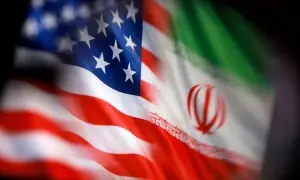
 IN the short term, the worst-case scenario in the context of nuclear brinkmanship between Iran and the West could unfold thus. The war of words between the two sides escalates. The United States and Europe agree on reporting Tehran to the United Nations Security Council. Mahmoud Ahmadinejad carries out his threat to end cooperation with the International Atomic Energy Agency. The Security Council asks Iran to reconsider its stance. Iran shows no signs of doing so.
There is talk of sanctions. Iran threatens to cut off oil supplies to all those who vote against it. Russia and China try to stall the inevitable.
Then Ariel Sharon’s heirs in Israel unilaterally conclude that the diplomatic options have been exhausted. Iran, they decide with a wink and a nod from Uncle Sam, deserves a dose of the Iraq medicine. Not the invasion of 2003 but the Osirak raid of 1981, in which Israeli F-15s and F-16s bombed a French-built nuclear plant near Baghdad, claiming that it potentially posed an existential threat to Israel.
Iraq at the time was engaged in hostilities with Iran and, despite clearly being the aggressor, wasn’t in the West’s bad books. It was French prime minister Jacques Chirac who led western criticism of the Israeli raid, but spokespeople for the Reagan regime also joined in. In the case of Iran, any condemnations will be even more of a formality.
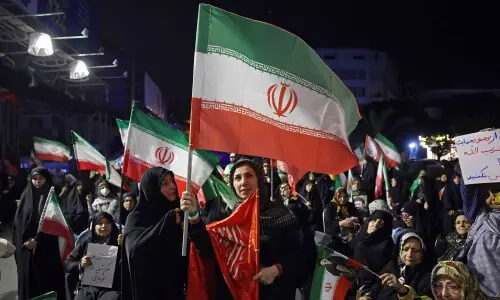
There are at least two good reasons for the US to dissuade its chief Middle Eastern ally from seeking to replicate its Osirak achievement by attacking Iranian nuclear sites, actual or suspected. For one, any such action may well serve to consolidate Ahmadinejad’s rule. There is already some evidence of reputed moderates rallying round the regime amid the rhetorical tirades of recent days.
Writing in The Guardian last Thursday, Timothy Garton Ash described Iranian society as “probably the most pro-western society in the Middle East outside Israel”. However, he also pointed out that a recent visit to that country convinced him of two things: “First, that there is a large reservoir of anti-regime and mildly pro-western feeling in Iran; and, second, that this reservoir could be drained overnight if we bombed.”
It would probably make very little difference if the bombing was carried out by Israeli, rather than American and British, planes. “At the moment,” says Garton Ash, “the extremist Ahmadinejad is playing into the hands of neoconservative extremists in the West; but at that point, the extremists in the West would have played into the hands of Ahmadinejad.” That seems like a plausible assessment. And the second reason the US ought to be wary of getting too belligerent with Iran is that in the case of hostilities in any shape or form, it could lose whatever influence it enjoys among the leading Shia factions in Iraq. Hard as it may be to believe, the mess in that occupied country could sharply deteriorate.
So far, much of the West’s rhetoric has been relatively restrained. Iran has been threatened chiefly with sanctions. The US has already had sanctions in place for decades, so Tehran mainly has to worry about Europe — and Ahmadinejad appears to assume that a broader sanctions regime would be a small price to pay for strengthening his position at home.
The Iranian president’s regular outbursts have not been restrained, although it is widely assumed that they are primarily intended for domestic consumption. This includes his despicable comments about wiping Israel off the map — echoing Saddam Hussein, who 15 years ago threatened to “incinerate half of Israel”. Ahmadinejad apparently wishes to go even further, but it is probably not a coincidence that he launched into his Holocaust-denying tirades late last year, during a power struggle of sorts.
Ahmadinejad was engaged at that point in elevating personal favourites to positions of importance in the government hierarchy, evidently amid moderate resistance even from the clergy, so he deemed it opportune to launch verbal attacks against western music and Israel. The anti-music campaign was a safe bet: although it is hardly likely to have endeared him to the Iranian middle-class, he didn’t expect their approbation in the first place — and there was little danger of, say, Eric Clapton taking up arms in defence of airplay for Layla on Iranian radio. The provocations against Israel, deliberately touching raw spots in the Jewish psyche, were a rather different kettle of fish.
Ahmadinejad couldn’t possibly have been unaware of the sort of reaction they would evoke from Israel and the West (there has, unfortunately, been no notable Muslim reaction), and it increasingly seems that his provocations have been calculated to produce exactly that result. The latest among these is a proposed conference on the “scientific effects” and “repercussions” of the Holocaust. The intent could only be to “prove” that the Nazis did not engage in genocide against European Jews.
The proceedings of any such conference are hard to imagine — will it produce “evidence” that Auschwitz and Treblinka were no more than benign rest houses on the road to Jerusalem? — but not its likely consequences. One of the problems with such absurdist approaches to history is that they make it that much easier for Zionists to dismiss any political critique as grounded in anti-Semitism. There can be little doubt that Ahmadinejad’s solitary valid point — that Palestinians had nothing to do with the European judeocide, therefore there could be no justification in them being made to pay for it — will pretty much go unnoticed amid the furore over his ridiculous wish that Israel be wiped off the map, or transferred to Europe or North America.
The fate of the Palestinians clearly did not greatly trouble the great powers when they agreed to endorse the creation of Israel in the aftermath of the Second World War. That was a travesty. Almost equally appalling was the fact that many of the Jews who subsequently settled in the Promised Land found it so easy to transform themselves from victims into oppressors. Such aspects of the past should not be overlooked, any more than the fact that millions of Jews perished in Europe during the 1930s and the 1940s. However, nothing in the past or present should be allowed to interfere with the idea that lasting peace in the region requires an unequivocal end to occupation of the West Bank and, on that basis, accommodation between Israel and its neighbours, including the Palestinians.
Exercises in Holocaust-denial are no more likely to facilitate that objective than Zionist over-reliance on what some Jewish scholars have designated the “Holocaust industry”. And if Ahmadinejad is determined to convene an international conference, it isn’t too hard to suggest more pertinent topics. How about a scientific appraisal of just how many Iranians — writers, intellectuals, liberals, nonconformists, communists, even rival Islamists — have perished at the hands of the authorities or their proxies since 1979? Or a scientific comparison between the levels of repression under the Shah on the one hand and his theocratic successors on the other?
As far as Iran’s nuclear ambitions are concerned, as a sovereign nation it clearly has the right, under international law, to pursue such power for civilian use. Broadly speaking, nuclear power is not such a grand idea; there are safer alternatives to fossil fuels that could, and should, be pursued. But that onus does not rest on Iran’s shoulders. Teheran is not thus far, at least on the face of it, in serious breach of any of its obligations under the nuclear Non- Proliferation Treaty (NPT).
However, the US, Israel and several other western countries appear to be convinced that Iran’s ultimate aim is the production of nuclear weapons. This is not a particularly far-fetched idea: a certain amount of circumstantial evidence points in that direction, including contacts with North Korea and transactions with Pakistan’s Khan Laboratories.
No one in their right mind would want to see any mullah’s finger poised over a nuclear trigger, and this impression has only been reinforced by Ahmadinejad’s recent rhetoric. At the same time, it would be disingenuous to look upon Iran’s potential acquisition of nuclear weaponry in isolation. The NPT, after all, was never intended exclusively as a means of preventing nations from going nuclear: those with existing arsenals were obliged to whittle them down. The ultimate aim was a nuclear weapons-free world, even as the NPT encouraged the production of nuclear power as a source of energy. That has not been happening for more than two decades. The US, in fact, has lately been keen on developing relatively small nuclear devices that can be deployed in the battlefield. Besides, in Iran’s neighbourhood, India and Pakistan have openly gone nuclear during the past decade, while Israel has had a stockpile for considerably longer. South Africa was another surreptitious nuclear power until the end of apartheid. North Korea’s capabilities are a mystery. And Iraq was overrun not because it had nuclear weapons, but because it didn’t.
The only coherent context for nuclear restraint and non-proliferation is the steady and demonstrable disarmament of all nuclear powers, rather than a free-for-all. The nature of Iran’s regime provides cause for alarm (as do the proclivities of the Bush administration), but not an excuse for double standards. Precipitate military action by the US or Israel would prove disastrous in a variety of ways, both immediately and in the longer term. It would therefore be prudent to stick with the sort of diplomacy that cannot be mistaken for bullying.
E-mail: mahirali1@gmail.com