Indo-US nuclear alliance
DURING his recent visit to New Delhi, the US under-secretary of state, Nicholas Burns, assured his hosts that the US was fully committed to implementing the nuclear deal with India. Addressing a joint press conference with the Indian foreign secretary, Shyam Saran, on October 21, Mr Burns stressed that the United States saw India as a “great power” which would work with it in promoting “peace and stability” in the world.
Acknowledging that the implementation of the nuclear deal was a complicated matter, the Indian foreign secretary affirmed that both countries were committed to completing the task before US President George Bush’s visit early next year.
Before examining the significance of the Indo-US nuclear handshake, it will be worthwhile to briefly look at the real objective of Mr Burns’s mission to India. The purpose of his recent visit was to assess how far India had delivered on some of its commitments under the July 18 nuclear deal with the United States and discuss the modalities of implementing the agreement. During his meetings with Indian officials, clarifications were sought by both sides which would be “reflected upon” and another meeting would be held on the issue “very soon”.
Interestingly, the US under-secretary of state warned Iran on Indian soil that if it did not come back to the negotiating table, there would be another vote against it at the November 24 IAEA meeting. Media reports say many US Congressmen would like to wait and see how India will vote at the November IAEA meeting before approving the Indo-US nuclear deal.
The July 18 nuclear deal represents an astonishing reversal of American proliferation policies towards India. After abandoning its age-old insistence on New Delhi capping or reversing its nuclear weapons programme, Washington, all of a sudden, has expressed its willingness for a nuclear handshake with a country whose growing strategic importance it is keen on harnessing. According to neo-conservatives in the Bush administration, India’s nuclear arsenal does not pose any threat to US power; on the contrary, it can help in the larger game of containing China and foiling any effort to keep the US out of any Asian security architecture.
However, India had to pay a political price for the Indo-US nuclear handshake. To begin with, it had to support the European-US resolution against Iran at the IAEA board meeting last month. But there are straws in the wind indicating that the much-flaunted Indian plans of looking at Iran as a land and energy bridge to reach Central Asia and Afghanistan are now reported to be on hold and will perhaps peter out. Despite New Delhi’s disclaimers, the odds are that the same fate awaits the Iran-India gas pipeline.
In the short span of seven years, US foreign policy towards Asia, particularly South Asia, has undergone a sea change. In 1998, during his China visit, US President Bill Clinton publicly conceded that Beijing had “legitimate interests” in South Asia. With the Clinton visit to India in 2000 began a thaw that led to a softer American policy towards India’s nuclear ambitions, including plutonium production and the development of the Agni missile. It also resulted in the de-hyphenation of India and Pakistan and the adoption of separate American policies for the South Asian rivals.
The pro-India policy that began in the last years of the Clinton administration got a further boost with the coming of the Bush administration. The most important change in the American thinking with regard to India, which has since been the motivating force behind Washington’s South Asian policy, occurred in the second Bush term when the administration came to recognize India’s centrality to the balance of power in Asia.
According to the knowledgeable Indian strategic thinker and writer K. Subrahmanyam, “these views of the US, developed and matured during George Bush’s second term, were communicated to India only in March, 2005”. Consequently, an India-US summit was fixed for July 18 to give final approval to the new US policy. Subrahmanyam also says that the US offer to revise its nuclear policy to enable India to have access to international civil nuclear technology came as a surprise to New Delhi, the reason being that when Mr Vajpayee was prime minister, India’s attempt was restricted to getting fuel for Tarapur in exchange for placing some Indian reactors under safeguards.
The most significant gain for India is to get rid of technology denial of various kinds. As a result of the Indo-US nuclear handshake, Russia and Britain have already lifted nuclear sanctions previously imposed on India. The US has already removed India’s reactors from the list of banned entities and New Delhi can now obtain civil nuclear technology from Russia, the UK and France.
The nuclear handshake is only the beginning for India of a highly productive engagement with the United States. President Bush’s visit to India early next year will provide an excellent opportunity for New Delhi to expand and enhance bilateral relationship at various levels. Most experts and analysts agree that the Indo-US nuclear deal has put India in the big league.
US Secretary of State Condoleezza Rice has explained the linkage between long term US economic interests and the interaction of these with India as a rising economic power. Until recently, US businessmen were seeing a great potential in India, especially in the services sectors. But now they are seeing India as a base for manufacturing.
Last year, US merchandise exports to India rose by 22.6 per cent over 2003, and imports by 18.4 per cent. More than 50 per cent of the top 500 American companies now outsource some of their information technology needs to Indian firms.
With Sino-US relations deteriorating “fairly rapidly”, having an economic alternative in India gives the US leverage with China on a host of issues. But foreign direct investments in India are still nowhere near China’s, which gets 13 times what India gets. But unlike India, China’s banking sector is in deep crisis which, according to experts, is “technically insolvent”.
When US Secretary of State Condoleezza Rice says India is a counterweighing force against China, she or anyone else in his senses does not mean that the US wants to use India in military terms against China. Washington has neither the capability nor the intention to deal with Beijing in military terms.
To some extent, the Indo-US economic relationship is beginning to look a little like the one between US and China and it is in the economic arena that India can prove to be a counterweight to China in the years to come. The raison d’etre of the Indo-US strategic partnership is based on three points: the US focus on India’s rapid economic growth, New Delhi’s role as an important player in the Asian balance of power, and India’s contribution to American economic pre-eminence.
The US strategy with regard to China is of engagement and building an Asian balance of power wherein India will be an important factor. Unlike the Europeans, the Asian nations, particularly those in South Asia, continue to be pre-occupied by their relations with each other and the emergence of one of them as a ‘great power’ is bound to instil fears and misgivings in the smaller and weaker neighbours. Conditions in Asia are radically different from those in Europe where the emergence of Germany and France as great powers from the ruins of the second World War was welcomed by their smaller neighbours who regard the former as their protectors rather than as predators.
Since gaining independence, India’s ambition has been to acquire the status of a world power and play an increasing international role. Its goals are analogous to those of Britain east of Suez in the 19th century : it will seek to prevent the emergence of a major power in the Indian Ocean and, with American backing, even in Southeast Asia which China regards as part of its sphere of influence. Under the new Indo-US deal, India’s geopolitical interests may impel it to assume some of the security functions now being exercised by the United States.
It is more than a coincidence that India does not enjoy really friendly and close relations — even tension-free relations — with any of its smaller neighbours, let alone Pakistan. If the history of the past 50 years is of any relevance, it shows that the South Asian giant is seen by its smaller neighbours as a threat rather than as a protector against other predators. Whenever New Delhi adds a new device to its military muscle, its smaller neighbours watch with a high degree of nervousness as most of them have experienced, in one way or another, India’s regional hegemonic aspirations. It is unfortunate that the rise of India as a great power, with American backing, is likely to have a disturbing effect not only upon its neighbours but also the littoral states of the Indian Ocean.
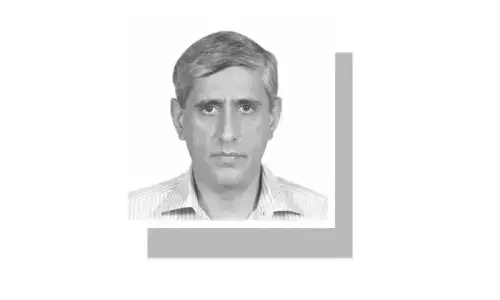
The writer is a former ambassador.
A signal pullback
PRESIDENT Bush didn’t come out and say he made a mistake, but that was the clear message of his announcement yesterday that he was accepting Harriet Miers’s decision to withdraw as a nominee for the Supreme Court.
And for a stubborn president whose greatest weakness has been a reluctance to admit and correct mistakes, the Miers pullback is a signal event.
Bush’s retreat tells us what is obvious on so many fronts: This is an embattled White House that must now conserve its ammunition. With indictments possibly looming for one or more top White House aides, Bush simply could not afford a diversionary fight over Miers. He needed to shore up his conservative base, but even more he needed to avoid a losing fight. In that sense perhaps the president has finally overcome his fondness for Pyrrhic victories — battles that leave him and the country weaker even if he wins.
Bush covered his retreat on Miers by arguing that he was defending the confidentiality of her White House records, which senators had demanded to see. But that shouldn’t fool anyone: Bush was facing a rebellion by GOP conservatives and the growing likelihood that Miers’s nomination would be rejected. This time he chose to fold a losing hand rather than persist.
Bush did the right thing, but I worry that it was for the wrong reason. The problem with Miers wasn’t that she was insufficiently conservative — who knew, in the jumble of her record, what her real legal views were? — but that she obviously lacked the qualifications to sit on the nation’s highest court. The judicial questionnaire she submitted was so weak that the Senate Judiciary Committee asked her to redo it; her personal visits with senators created so much confusion that aides suggested they be curtailed; her published writings were so vacuous they undermined her solid record as a corporate lawyer in Texas.
Yet, even a few days ago, Bush had seemed determined to push ahead with Miers. He repeated over and over what he had said in nominating her on Oct. 3: that she was a woman of strong character and sound legal philosophy who would make a fine justice. Even as the buzz of conservative dissent became a roar, Bush kept repeating his mantra about how she would be confirmed and how the country would come to know and appreciate her as Bush did. It was the judicial version of “stay the course.”
I wish Bush had pulled back on other controversial issues. The nation would be better served, for example, if John Bolton were not our ambassador at the United Nations now. America needs a strong, effective advocate to shape Security Council debate, as in the wrangling over a resolution on Syria. But Bolton was so badly damaged by his confirmation hearings that it’s clearly hard for him to play that role.
The biggest danger for Bush now is that he will circle the wagons even more tightly at the White House — compounding his problem of political isolation. The polls show that Bush has been popular when he has found ways to communicate with the country as a whole, rather than just to the right wing of his own party. He has more than three years left as president; if he spends his time trying to please William Kristol and other right-wing critics, he will squander his opportunity to be an effective president. A nation at war cannot afford to be governed from the fringe.
Bush’s problems will get much worse before they get better. As the Plame leak investigation runs its course, he may lose the advice of the two sharpest strategists in the White House, Karl Rove and Lewis “Scooter” Libby. —Dawn/ Washington Post Service
Gujarat Muslims await justice
ONE more court case failed this week at Baroda, Gujarat, to award punishment to rioters. Once again the judge questioned the role of the police and indicted them for failing to prevent the violence. Lack of evidence has been the cause for the failure of cases in Gujarat where the BJP-led government had instigated the killing and looting of Muslim residents as a reprisal to the Godhara train burning incident.
Roughly 45,000 cases were filed nearly three years ago after the carnage. Half of them were closed within days of filing owing to lack of evidence. Many have been dismissed since like the one in Baroda. In fact, only 75 cases are being pursued vigorously. There are no funds or volunteers to take them up. Hindu lawyers are reluctant while most Muslim lawyers charge hefty fees. It is, therefore, difficult to imagine that the guilty in the Gujarat carnage will get the punishment they deserve. It may well be a repeat of the 1984 anti-Sikh riots where a couple of persons had been convicted after 21 years.
There is, however, one glaring difference: the Sikh victims have been given Rs 300,000 per family for rehabilitation but the Muslims have not received even a penny from the government. In the first case, the New Delhi government took no time to pay. In the case of Gujarat, the state government refuses to pay anything at all. Muslim victims await the generosity of individuals or non-governmental organizations. Both are fewer than before.
As a matter of fact, no aid is coming to Muslim victims. The government is hostile and the local population biased. The international agencies wound up their last office some months ago. The 200,000 Muslims, ousted nearly three years ago from their homes during the carnage, blink on nobody’s radar. A saffronized state administration has turned its back on them.
Over 100,000 people have migrated to other places. But the rest live in Ahmedabad on a strip of land, along the road, stretching into graveyards. They want to return to their places of residence but cannot do so. One of them, Ibrahim, went back to his village Marghi, near Anand. He even fulfilled the conditions laid down and withdrew the FIR and other statements. Still, the youth there made his life so miserable that he had to quit. They did not want a Muslim in their midst.
Hundreds of villages in the state proudly display a board: Hindu village in the Hindu Rashtra. There is hardly any protest against it. The social and economic boycott of Muslims continues. No Gujarati hires them. Bureaucrats are tainted, the police one-sided and liberals indifferent.
The worst is that the intelligentsia has no time to debate the communal segregation. It does not even talk about Muslims, as if they don’t exist. It appears as if Chief Minister Narendra Modi has changed the people. This has happened in dictatorships but he has done it in a democratic system. “We have to get on with life,” is the rationale given. The fact is that nobody wants to recall the carnage because it probably weighs on the conscience one way or the other. Abnormal economic growth in Gujarat should give a message of peace. But the reality is different.
Muslims have been written off. It is growth for the Hindus and by the Hindus. Since the rest of India measures success on the scales of economics, it believes that things are alright.
That the Modi government is hostile is understandable. But the centre’s ambivalence is beyond comprehension. The Atal Behari Vajpayee government had its political compulsions because Gujarat was ruled by the BJP. But why has the Congress government led by Manmohan Singh remained distant? True, law and order is a state subject. But the relief and rehabilitation of Indian citizens is New Delhi’s responsibility.
Since the Gujarat government has refused to pay anything for rehabilitation, the centre has to bear the burden. Either it should bring a law to force the state to accept the responsibility of rehabilitation or it should foot the bill.
Anger against the Congress is the reason why the Muslims have voted for the BJP in the civic polls, not because they have turned towards the party as BJP chief L.K. Advani has claimed in a public statement. The Congress put up those candidates who had led Muslims at the time of the carnage. The Muslims’ reasoning was that a known communalist was far better than a secularist who was a communalist at heart.
The biggest disappointment for Muslims in Gujarat is that secular forces have caved in. They recall how even the tallest among them did not stand up to defend them. The founder of the Amul Cooperative movement, Verghese Kurien, issued orders to his employees not to take part in the rehabilitation work. One senior employee, a Muslim, who had toiled for Amul for years, resigned in protest.
A leading social activist and chairperson of the voluntary organization SEWA, Ila Bhat, did not raise a finger to help the carnage victims. In fact, she accepted the chairmanship of the Modi-constituted rehabilitation committee which is now in the midst of controversy. True, she has resigned now but she has hurt Muslim sensitivities beyond redemption.
What do the Muslims of Gujarat do? To whom do they turn? Fear stalks the land. An average Gujarati wants reconciliation and feels sorry for the wrongs done to the Muslim community. But he is afraid to speak because of the “repercussions.” Leaders of civil society, the RSS and the BJP followers continue to preach separation as if Gujarat is a laboratory that will help them experiment with methods which they can apply elsewhere in the country.
The left and its trade unions are conspicuous by their silence. The Gandhians who were initially afraid have come in the field. But they are only a handful and have very few resources to disburse. However, a ray of hope has emerged in an otherwise sombre environment. A few people, mostly Hindus, have constituted themselves into a group. Harish Mandir, a former IAS, is one of them. They have drafted a one-year plan to help Muslims regain their confidence, if not property.
Unfortunately, the Muslims in the state are entrapped in a situation from which they see no escape. The 1984 anti-Sikh riots have not faded into oblivion despite the efforts of the Congress. India is a secular country. This is the reason why people defeated the BJP in the last general election and returned the Congress to power. They have pinned their hopes on the party to rescue the nation from the creeping shadows of communalism. The failure of the Congress will be the biggest betrayal.
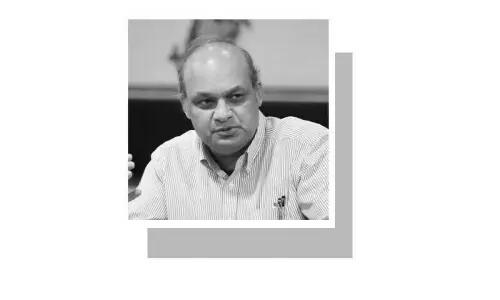
The writer is a leading columnist based in New Delhi.
| © DAWN Group of Newspapers, 2005 |