WASHINGTON, Oct 4: The US had made it obvious to India, while negotiating the July 18 nuclear deal, that it will have to vote against Iran’s nuclear programme if it wants atomic reactors from Washington.
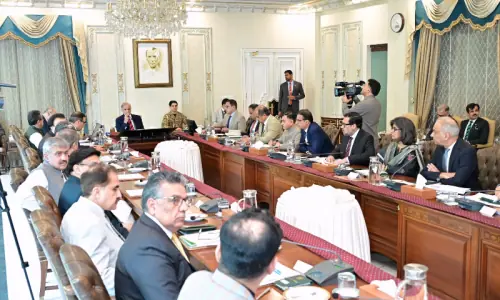
The detailed transcripts of two recent hearings of the US House International Relations Committee show that by Sept 8, 11 days before India voted against Iran at the International Atomic Energy Agency’s meeting in Vienna, officials in Washington knew that New Delhi would support the US position on this issue.
The recently released transcripts show that on Sept 8, US Undersecretary of State for Political Affairs Nicolas Burns assured the committee that India did not want Iran to become a nuclear weapons state and that the Indian government had gone on record to say that.
Briefing the lawmakers on the negotiations that led to the signing of the July 18 deal for allowing India to acquire civilian nuclear reactors from the US, Mr Burns said the nuclear agreement was signed only after India gave, among other things, a reciprocal assurance of its support at the IAEA on the Iran issue.
“We negotiated for four days prior to Prime Minister Manmohan Singh’s arrival (in Washington) with the expectation that the barriers between us for an eventual agreement were ... high ... until the very last moment, it was not clear to us that we would be able to reach an agreement,” Mr Burns told the House Committee.
Mr Burns’s further remarks indicate that despite an initial assurance from New Delhi, the US continued to put pressure on the Indian government in the run-up to the IAEA meeting to vote favourably on the referral of the Iran case to the Security Council.
“We have had, over the last several weeks, and specifically the last few days, a series of conversations with the Indian government about the best way to achieve that... this is an issue where we intend to have further discussions with them next week at the UN General Assembly in New York. I know that Secretary Rice will be raising this with the Indian foreign minister, I will be doing so with the Indian foreign secretary,” said Mr Burns.
On Sept. 24 India supported the US resolution on referring Iran to the UN Security Council for punitive action and on Sept 30 President George W. Bush telephoned Prime Minister Singh and, according to a White House briefing, ‘reviewed the implementation of the July 18 Indo-US joint statement’ about nuclear cooperation with India.
Tom Lantos, the US legislator who led the charge against India’s relations with Iran at Congressional hearings on the Indo-US nuclear deal last month, has described the Manmohan Singh government’s decision finally to side with Washington at the IAEA on Sept 24 as ‘an abject lesson’ for New Delhi.
Detailed script of the Oct 1 hearing of House International Relations Committee quotes Mr Lantos as telling other lawmakers that India had been forced to make a choice.
“There was a tremendous hop-up in the Indian media, and the government reacted strongly (to the criticisms made during the 8 September hearings of India’s friendship with Iran). But last Saturday, India voted with us in Vienna because it decided that it is more important to maintain its relationship with us than accommodate the Ayatollahs in Tehran,” he said.
Mr Lantos and other lawmakers had threatened not to back the July 18 nuclear deal unless India sided with the US against Iran. These latest remarks echo the statement issued by Mr Lantos soon after India voted against Iran in the IAEA meeting, where he not only took credit for New Delhi’s turnaround but also put the Indian government on notice for the next IAEA meeting in November.