WASHINGTON, Sept 22: The IMF has predicted that growth rate in Pakistan will remain strong in 2005, underpinned by robust agricultural and manufacturing growth, and supportive macroeconomic policies.
The International Monetary Fund (IMF) observes that Pakistan’s fiscal policy needs to be managed tightly for reducing burden on monetary policy to contain demand pressures.
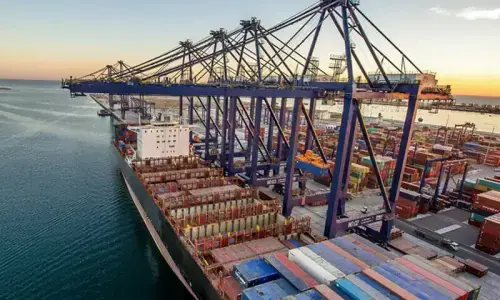
It says strong growth in the exports of cotton manufactures in early 2005 suggests that Pakistan’s investments in the textile sector in anticipation of the expiry of quotas are paying off.
The IMF World Economic Outlook report, released in Washington on Thursday, projects a robust growth rate of 4.3 per cent for the international economy during the last quarter of 2005 and in 2006.
“But a number of developments concern us,” warned Raghuram Rajan, IMF’s economic counsellor and research director. These include the excessive dependence of global demand on consumption, especially in the United States, the elevated level of asset prices, particularly housing, and the high and volatile price of oil.
These factors have “increased downside risks to our forecasts”.
“The downside risks to our forecasts have thus increased,” Mr Rajan added.
Reviewing Pakistan’s economic prospects for 2005-06, the report warns that an important challenge facing the country is to deal decisively with the overheating of the economy, and advises authorities in Islamabad to “stand ready to take additional monetary policy tightening measures”.
The report also urges Pakistan to give priority to energy sector reforms.
The chapter on India’s “booming but relatively closed economy” says that New Delhi can have a profound impact on the world economy at large if progress in boosting regional and global trade links continues fast.
Revising up India’s 2005 growth forecast by half a percentage point to 7.1 per cent, the IMF report notes that an opening Indian economy with a young population and rapid growth rates could become a key engine of world growth over the next decade.
“If India continues to embrace globalization and reform, Indian imports could increasingly operate as a driver of global growth as it is one of a handful of economies forecast to have a growing working-age population over the next 10 years.”
Some 75-110 million will enter India’s labour force over the next decade. In addition, government efforts to boost international trade links will bear fruit, the report says.
India’s exports, although coming from a relatively low level, are forecast to more than double by 2010 while imports will nearly triple. Imports are growing at about 33 per cent in 2003-04, four times as fast as the 1990-2002 period.
The IMF also notes that China’s economic expansion continues unabated, with growth of 9 per cent for 2005, and a moderate easing to 8.2 per cent for 2006. While China has to increase consumption, it also needs to improve the quality of its investment. Provinces, state-owned corporations, and banks need to face a realistic cost of capital so that they invest more carefully.