0
0

India: a world power?
MANY of India’s spokesmen assert that it is, or that it is on the way to becoming, a major world power. A discussion of this proposition will profit from an understanding of what a major power does. Considering that power means one’s capacity to have others do one’s will, we may say, first, that a state is a major power if it can influence the behaviour of other states according to its own preferences and, second, that it is able to resist the drives of others to influence its own behaviour.
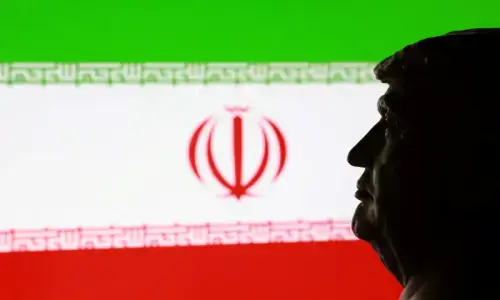
The two parts of this qualification do not always go together. Iran has defied America for the last 25 years. India, too, has been able to resist external pressures all along. But the ability to resist external pressure, by itself, does not make a country a major power. It is the first part of the formula, the ability to direct others, that qualifies a state to be designated as a major power.
We may now ask how India performs in terms of this criterion. At the present time its “sphere of influence” does not extend much beyond Bhutan; Nepal and Sri Lanka have been moving towards its edge. It does not include Bangladesh, given the periodic border clashes between the two countries. The same holds for Burma. India has never been able to pressure Pakistan to comply with its wishes. Now that Pakistan possesses nuclear weapons, it tends to claim, perhaps without good reason, equality of status with India.
India has mutually advantageous relations with countries in its neighbourhood (Southeast Asia and, to the west, the Middle East, Iran, and the Central Asian republics). But in none of these places — not to speak of Europe and the Americas — is it able to compel compliance with its wishes. It would then seem to follow that at the present time India is not a major world power in the sense in which we understand this term.
But what about the future? President Bush and his officials have been saying that the United States will aid India to become a major world power in the 21st century. Towards that end, it will share nuclear technology with India, offer cooperation in economic affairs, missile defence and energy production, and sell it a variety of high performance weapons. American manufacturers of combat aircraft are now free to sell to India whatever it wants to buy.
It is generally understood that the present American administration wants to enable India to counter “radical Islam” and China, whose growing military and economic capability it sees as a potential threat to its interests.
One cannot be certain that Mr Bush’s successors will be of the same mind; nor can one be sure that Prime Minister Manmohan Singh’s successors will agree to act as America’s agent in an enterprise of “containing” China.
In any case, the 21st century still has 95 years to go before it yields to the 22nd. Will India be a major world power as the year 2060 dawns upon our succeeding generations? Perhaps. But will it have attained that status by 2020? Not likely. Note that military force alone will no longer suffice to secure compliance from other nations.
Building influence abroad has cost the United States hundreds of billion of dollars over the last 50 years. Even the Soviet Union, after Stalin, had to dispense aid to countries it wanted to influence, especially those beyond its sphere of control in Eastern Europe. To a lesser extent, Britain, France, Germany and Japan, all of which are surely to be ranked as major powers, do the same. Will India be in a position, 15 or even 20 years from now, to offer substantial funds in foreign assistance to advance its foreign policy goals? I doubt it.
A state’s ability to influence others derives partly from its domestic economic, technological, educational, and political capabilities. The last of these includes the quality of governance, levels of efficiency, social cohesion, and the ability of the political system to mobilize the country’s human resources in support of its developmental objectives. Let us see how India is currently placed in these respects.
A country’s per capita GDP (gross domestic product) is a reasonably accurate indicator of its economic capability. Low GDP implies deprivation on the part of a large number of its people. The government concerned must then scramble for resources to meet their basic needs if it is to avoid social unrest. It is more likely to be looking for foreign donors than avenues for building influence abroad. In 2002, India’s GDP approximated $2,540 (in terms of purchasing power parity), while China’s GDP stood at $4,600 and that of Brazil (a middle-ranking power) at $7,600. It follows that India has a long way to go before it can wield its economic and political power abroad.
The UN Human Development Index (HDI) provides another means of evaluating a country’s socio-economic status. It is composed of four elements, namely, GDP, school enrolment, adult literacy, and life expectancy at birth. Out of 162 countries for which data was available in 2002, India ranked 115.
India’s annual GDP growth rate since 1992-93 has been fairly good (around 5.8 per cent) but that is little consolation for the country’s poor: its annual poverty alleviation rate has been only slightly higher than one per cent. Growth has taken place largely in the regions that were already doing well; the poorer areas have remained poor. Moreover, growth has occurred mostly in the services sector, which does little for the bulk of the population that lives in villages. Between 25 and 30 per cent of the people in India live below the poverty line.
India’s institutes of technology produce world-class scientists and engineers who run its own and foreign technological establishments, especially those in the fields information, space, and biotechnology. But schooling in rural areas, where 60 per cent of the population lives, is poor. As a result of inadequate education in public schools, much of India’s workforce is said to lack the basic knowledge and skills required for one to be effective in modern industrial and service sectors.
The aggregate of governmental budget deficits in India amounts to about 10 per cent of its GDP. Debt servicing and defence spending together claim a large proportion of the available public funds. The government is not left with much to allocate to health, education, and other means of improving its human resource.
International trade can also be an instrument for building influence abroad if a nation has things to sell that others need. A favourable balance of payments adds to national income. One may say also that there is a positive correlation between a country’s share of world trade and its power potential. There is not much going for India in this arena, for its share of world trade does not amount to more than one per cent.
Deficiencies in the areas of social cohesion and governmental effectiveness will also detract from a nation’s power potential. Indian society is infinitely diverse and highly stratified. Ideological, religious, caste, and regional divisions, and the resulting tensions, make it difficult for its government to formulate objectives that the generality of its people will accept, and pay higher taxes and give their full energy and creativity to achieve.
In a democracy conflicts of interest between diverse groups tend to reduce acceptable policy objectives to the lowest common denominator. The goal of each of these groups is to grab the maximum possible proportion of government jobs and other resources. Dissatisfaction of deprived or alienated groups will force the state to divert additional resources to the maintenance of peace and order in society. Consider in this connection the insurrections in India’s northeast and Kashmir.
The above survey would seem to suggest that India’s resources do not suffice for it to attain the status of a major world power within the foreseeable future or, let us say, the next 20 years. Nor is Mr Bush’s professed objective of “enabling” India to become a major world power any more realistic. For one thing, Congressional leaders in the years to come may not accept his reading of world politics, and the needed amount of “enabling” may not be forthcoming.
Second, India is not likely to share in full measure America’s purposes in this exercise. It will take whatever America puts on its plate, but it will not be pushed into becoming an American instrument in countering “radical Islam” and China. Unlike Pakistan, Saudi Arabia, and Egypt, India is much too large and clever to act as a satellite or client of the United States.
Its relations with China have been on the mend during the last several years and during the recent exchange of visits by their heads of government they have agreed to expand their trade and cooperation in other areas. True that India and China are potentially rivals for influence in Asia. But we need not assume that this potential must of necessity translate into actual conflict between them. Neither of them can expect to gain from it.
India’s relations with most of the Muslim countries, other than Pakistan, have been cordial all along. Indeed, at times its relations with several of them have been more cordial than those of Pakistan with them. The way America is dealing with “radical Islam” is alienating a great many people in the Muslim world from it. India may not want to jeopardize its mutually advantageous relations with Muslim nations. Consider also that some 150 million persons in its own population are Muslim. It is, therefore, unlikely that it will follow the American way to counter Islamic radicalism.
In my view, then, India’s objective of entering the league of major world powers and America’s policy of enabling it to join that club are both unviable.
(The figures in this presentation have been taken from the writing of Mr George Perkovich, a vice-president at the Carnegie Endowment for International Peace in Washington, DC published in a recent issue of The Washington Quarterly.)
The writer is professor emeritus of political science at the University of Massachusetts, Amherst, US. E-Mail: anwarsyed@cox.net
LB polls: non-party but political
THE pillars on which General Musharraf had raised his self-designed edifice of real democracy, good governance and enlightened moderation have crumbled down one by one. The last and the sturdiest of these pillars — the local government — came crashing down during the just-concluded elections.
While a considered judgment must wait until the bombast and polemics die down, a safe observation is that the conduct of the polls and the campaigns preceding it have not, as expected, reduced the political divisions and have, in fact, deepened them. This bodes ill for the national elections two years hence. The intervening period, it seems, will be characterized more by greater political fragmentation and horse-trading rather than by the consolidation of political programmes and the merger of numerous like-minded factions into fewer national parties.
The amorphous and wavering mass on the border lines will continue to distract both the government and the opposition from their respective roles at the expense of the public weal and exchequer. Imagine a secularist and leftist ANP coalescing with the religious and rightist Jamaat-e-Islami in the Frontier! It shows an opportunism without frontiers.
The district governments and the lower councils in Musharraf’s devolution plan were envisaged to be developmental civic institutions standing above party politics in the service of the people. In their very first four-year-term, they became political. In their second term, that now begins, let there be no doubt, that the councils will turn out to be more political in their behaviour and priorities than even the provincial and national assemblies, because the manpower and resources needed to win the elections to the assemblies would be at their command.
If local government was the first, checks and balances was the second most important component of Musharraf’s governance caboodle. In actual practice there are many checks on every institution and individual but none at all on Musharraf’s powers or range of activities. (Only terrorists check his physical movements adding to the misery of the people and expense of the government when he moves around). he conducts domestic politics as well as national foreign policy and commands all three armed services. Mercifully, he leaves the economy alone but that i more for lack of understanding than the urge to play a part.
Denied a constitutional status (the only act that redeems the politics of the MMA religious alliance), the National Security Council which was intended to ensure stability, or to buttress military rule, has turned out to be a damp squib. With the opposition boycotting it, the council has been reduced to a forum for the president’s consultation with his political supporters and military commanders which, in any case, goes on all the time. The only impact of winding up the NSC would be on the exchequer and that would be benign.
The move closest to Musharraf’s heart and the first to be implemented by him in controlling the levers of power was to abolish the country’s administrative services and instead make the civil servants and police accountable to an hierarchy of independent public commissions. These commissions were never established nor do the provincial governments let the district governments or other councils have any say in the police affairs or in the administration of law and order. As a result, the police and other law enforcement agencies have passed completely under the control of the army commanders and the politicians.
Now that the district governments have also become political the line that separated politics from administration has vanished altogether. Whether it is a minister or a nazim, he is a political being and represents a political party. Law, Order and works are subject to their wishes. In the clash of interest between the two, public welfare and equity have come to suffer even more.
Non-party elections for the local councils was General Musharraf’s idea. When the crunch came he was the first to own and publicize (at public expense of course) the panel of candidates sponsored by the coalition that supports him. Likewise, every political party or faction of a party had its own candidates.
Had the polls been held on a party basis, every district government would have been of a party. The interest of the community at large, whether it is the paving of streets or ensuring law and order, thus would be subject to party interest. How the hard realities of politics overtake the woolly theories of governance will always remain an interesting study for the chroniclers of the Musharraf era.
General Musharraf’s “enlightened moderation” appears a mockery. Nothing has changed for the weak, one women and the minority communities. Their pain and sense of doom in the times of an enlightened Musharraf are no less than they were in the times of a fundamentalist Ziaul Haq era. The only difference is Zia armed the Taliban, Musharraf is hunting them down.
When it comes to the poll itself, the losing opposition has described it as the worst in history and utterly fraudulent. The winners and the government have declared them peaceful (despite the death of a number of people) and fair. The chief election commissioner went along with the government even before the voting closed. No less divergent were the estimates of voter turnout — as low as 12 per cent and as high as 60 per cent — both unprecedented, hence unlikely. Again the CEC endorsed the highest mark even before the votes were counted.
Electoral fairness and turnout at the polls will be debated for long and the truth must one day, and soon, show up in the reaction of the public if not in the proceedings of the arbitration tribunals which are invariably interminable. But what is patently obvious is that the nation’s search for an election commission which is independent as well as effective and respected must continue.
Perhaps we should amend the Constitution which restricts the selection of the chief election commissioner and members of the commission to the judges. also, perhaps, we should study how India with its politicians and political processes no less corrupt and fractious than our own, has been able to hold elections which even the losers conceded were free.
India’s election commission comprises down-to-earth civil servants and not exalted judges. As in judicial trials so in elections, justice not only should be done but also seen to be done. That, woefully, has not been the case in the elections just concluded.
After the pullout
ISRAEL has completed its evacuation of Jewish settlers from the Gaza Strip and northern West Bank far more quickly and easily than virtually anyone — including the government of Ariel Sharon — expected. There were wrenching moments as Israeli soldiers forced families from their homes, and tense ones as they dislodged militant protesters who congregated in synagogues.
But no lives were lost, and the removal was completed in one-third the time expected. For that outcome, Israelis and Palestinians can thank the professionalism of the Israeli army; the Palestinian Authority should also be credited for helping to prevent what could have been ruinous attacks by militants. Above all the withdrawal is a tribute to Israeli democracy: proof that the majority can adopt and implement painful decisions and not be stopped by extremists.
The Gaza example will be vital as Israelis consider the future of their state, which sooner or later will have to contemplate a similar pullback from the West Bank. Jewish settlers there — particularly those who live beyond the border-like system of fences and walls Israel is constructing — are subject to the same logic that Mr. Sharon courageously articulated about Gaza: Their dream of holding the land forever is unattainable.
As in Gaza, a withdrawal from the West Bank eventually will have to occur whether or not Israel receives any concessions from the Palestinians in return. But Palestinians, too, should have learned something: Israel is capable of making the pragmatic and painful sacrifices necessary for a lasting peace settlement. Palestinians have yet to convincingly demonstrate — in deeds, as opposed to words — that they can do the same.
That’s why the first response to the question of what comes after Gaza must be: Gaza. The Palestinian Authority must prove that it is capable of setting up and leading a civilized democratic state. That means disarming Islamic extremist movements even while giving those groups the opportunity to compete peacefully in elections; channelling development aid quickly into labour-intensive development projects; and using force without hesitation against any attempt to use Gaza as a base for attacks against Israel. As President Bush suggested this week, without progress in these areas it will be impossible to move toward a final settlement.
That shouldn’t mean Mr. Sharon has no further obligations. The success of Palestinian moderates depends heavily on their ability to deliver improvements on the ground that require Israel’s collaboration. Though the settlers are gone, Palestinians in Gaza still have no freedom to travel from the strip or to export products efficiently; agreements with Israel on these points are long overdue.
Mr Sharon pledged months ago to withdraw Israeli forces from Palestinian West Bank towns and remove roadblocks that make daily life there miserable. He also promised the Bush administration that dozens of West Bank settlement outposts his own government defines as illegal would be dismantled. The Gaza operation shows that if he is serious about these commitments, he can deliver on them.
—The Washington Post
| © DAWN Group of Newspapers, 2005 |