SULAIMANIYA: Ahmed Jassem, a Shia from Iraq’s holy city of Kerbala, sticks knives into the bodies of his mostly Sunni followers. They say they feel no pain, standing silently as the blades pierce their skin.
While sectarian strife threatens to tear Iraq apart, mystical Sufi orders like the Kasnazani still manage to bring Sunni and Shias, as well as Arabs and Kurds, together.
Sunni insurgents are fighting a relentless battle against the Shia-led government which came to power after the US invasion of 2003, but within the confines of Sufi gatherings the Islamic sects mutilate each other to get close to God.
“God said the most blessed among you is the most pious, being close to God has nothing to do with your background,” said Jassem at a weekly meeting of the Kasnazani order in Sulaimaniya in northern Iraq.
“The Kasnazani order makes no difference between Sunni and Shia, Arab and Kurd, or Iranian,” said the man whose job is to mortify the flesh of other Muslims.
His Sunni followers proudly display their wounds. One man has three large kitchen knives lodged into his scalp. Another has a skewer entering one cheek and exiting from the other. All around people sway in a hypnotic daze to the Sufi music.
Sufism — a mystical form of Islam that is more liberal than the more demanding Sunni Wahhabism of Saudi Arabia — appeals to Shias because of its veneration of members of the Prophet Muhammad’s (pbuh) family.
The founders of many Sufi orders trace a bloodline that goes back to the holy Prophet. Followers try to get closer to the divine through dance, music and other physical rituals.
The Kasnazani is Iraq’s largest Sufi order and is a branch of the Qadiriyya order which spreads across the Muslim world.
“Body piercing with knives, skewers, drinking poison, eating glass and taking electricity — these are all signs of being blessed by God,” Jassem said, listing Kasnazani practices.
“When the knife comes out, the dervish is healed straight away. This is the blessing of God and power of the order.”
Each apprentice, or dervish, goes through spiritual and physical training in order to learn how to endure what would otherwise be considered forms of torture.
Qusay Abdel-Latif, a doctor from Basra in south Iraq, said this divine intervention has tempered his belief in science.
“Once they wrapped an electric wire around my body and ran electricity through it, but I didn’t feel anything. I got closer to God through this,” he said.
“I can only explain it through the divine power that prevented the pain from the electricity, which as we know should mean death or serious consequences,” he said.
The Kasnazani order has been forced to take a low profile in recent years. Its leader, Sheikh Mohammed al-Kasnazani, left Baghdad for Iraqi Kurdistan in 1999 after military dictator Saddam Hussein’s government became suspicious of his popularity. Kasnazani’s sons are active in politics, running a political party and a national newspaper which tries to walk a fine line through the country’s sectarian minefield.
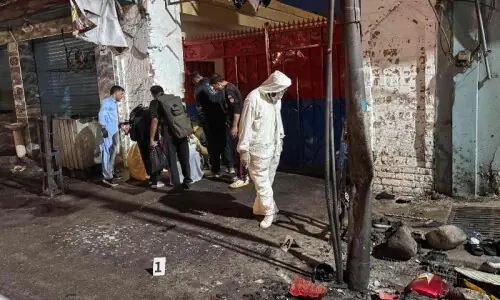
Islamist radicals among the insurgency frown on Sufism as emotional superstition. While deadly attacks on the order have been rare, 10 people died in a suicide attack on a Kasnazani gathering in Balad, north of Baghdad, in June.
“The Islamist extremists like Al Qaeda, Ansar al-Sunna and the Wahhabis are against Sufism, and since Kasnazani is the main order they are against us,” said Abdel-Salam al-Hadithi, spokesman of the Central Council for Sufi Orders in Baghdad.—Reuters