0
0

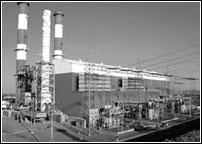 THE Indian government this month finally hammered out a solution to what appeared to be an intractable problem relating to the largest foreign investment in a power project in the country.
The controversy surrounding the Dabhol Power Corporation (DPC), the $2.9 billion mega power project promoted by America’s Enron Corporation, has finally been laid to rest, and in its place has arisen a new entity which promises to start on a clean slate, and also meet the burgeoning energy requirements of the western state of Maharashtra.
Thanks to some pragmatic decisions by the United Progressive Alliance government led by Prime Minister Manmohan Singh, the vexatious issue has finally been resolved. Backed by state-owned Indian financial institutions, the Maharashtra Power Development Corporation, the Maharashtra government-owned utility (which controls a 14 per cent stake in DPC) has paid the two American co-owners – Bechtel and General Electric - $305 million for their 86 per cent stake in the company. The $160 million settlement with Bechtel took place last week, while GE was paid $145 million a few weeks earlier.
Both companies had invested 10 per cent each in DPC, but after the collapse of Enron, acquired an additional 66 per cent stake in the venture.
A new special purpose vehicle (SPV) has now been set up – the Ratnagiri Gas and Power Company – promoted by domestic, state-owned energy giants National Thermal Power Corporation (NTPC) and Gas Authority of India Ltd (GAIL), and some financial institutions.
The resolution of the four-year-old dispute between the Maharashtra government and the two American promoters of DPC will bring to an end the complex litigations filed in several courts, including the International Court of Arbitration in London.
According to Dilip Valse-Patil, Maharashtra’s energy minister, the 2,184 MW project would be commissioned in stages between July and December next year. The new company will sell power to Maharashtra at reasonable rates, he says. The state government has sought a uniform rate of Rs.2.30 per unit for the next five years. The dispute between the state government and DPC grew out of the ‘exorbitant’ power tariffs charged by the latter.
But the state-owned utility agreed to clear off its dues amounting to nearly Rs. 5 billion as part of the settlement with Bechtel and GE. Of course, there are other debtors to be paid off. They include a consortium of foreign lenders – the Export Credit Agency – who are owed $380 million, and a couple of suppliers of liquefied natural gas (LNG), who have claims of $1.3 billion.
The foreign lenders dues’ are expected to be settled over the next few months, though the dispute with the LNG suppliers is likely to drag on for quite some time. When DPC was promoted in the 1990s, it was the single largest foreign direct investment proposal in India.
But the project got embroiled in controversies, with allegations of bribes being paid to politicians. The first phase took off after much delay, but the project went to seed after the state utility refused to pay for the power it had bought from the producer.
Power consumers in Maharashtra were the worst sufferers, as the state experienced a massive energy crisis. International power producers were also reluctant to invest in projects in India, unsure whether governments would stick to their commitments.
FOR a group that had its origins in a dusty town in the heart of Maharashtra, Videocon is indeed making waves internationally. The Rs. 60 billion group has been in the news in recent days following its high-profile acquisition of the colour picture-tube business of France’s Thomson SA, and the acquisition this month of the Indian operations of Swedish white goods giant Electrolux AB.
There are also rumours, denied by the group, that it is in talks with Sharp Corporation of Japan, for the acquisition of its unit in India. Sharp, which produces consumer electronic products at its plant here, has not been faring well. Though the Japanese major acquired a controlling stake from its Indian partner – the Kalyani group – it has come out with a disappointing performance, losing market share to Korean giants including LG and Samsung.
Venugopal Dhoot, the chairman and managing director of the group, claims he is a truly Indian multinational, with nearly a dozen manufacturing units around the world. Videocon is a major player in consumer electronics, white goods, and domestic appliances, and has also forayed into the energy sector.
The recent acquisitions from Thomson and Electrolux reflect the group’s growing ambitions to emerge as a major player globally. Videocon is a low-cost producer of TVs, VCRs, washing machines, refrigerators and air-conditioners, and has a strong presence in the export market, especially in the Middle East and Africa.
But the two Korean majors – who are also offering a similar range of products – have been gradually eating into Videocon’s share of business. Unlike the Japanese manufacturers, the Koreans are able to lower their prices, and match Videocon’s range. In recent years, the Koreans have overtaken Videocon even in the lower-price segment, and have captured a large chunk of the market.
THE Dhoots’ acquisition of the Electrolux India operations has also not been smooth. Employees, fearing retrenchment, have filed cases in courts against the management. And a minority stakeholder in the company – the owner of Maharaja Appliances – is also likely to challenge the acquisition by Videocon.
Dhoot, however, is confident that the new acquisitions will help him lower costs further. The buying of the Thomson unit will enhance the research and development capabilities of the group, he believes. Videocon has four R&D centres across the globe, including in Shanghai, Seoul and Tokyo, and one in Aurangabad in Maharashtra.
Dhoot wants to focus on the R&D centre in his hometown Aurangabad, as the cost of developing new products here would be a fraction of that in the other R&D centres. He also wants to appoint more professionals in the group, to spruce up the Videocon image.
REAL estate developers in India have for years been constrained by lack of access to funds. As banks and financial institutions were reluctant to lend money to developers, many had to depend on individual investors and speculators to finance their projects.
But with the industry getting more professional – and also with the entry of large corporations and even foreign players – there is a new source of funding that will be available to developers.
Recent days have seen the launch of two new real estate funds in India. HDFC Ltd, the country’s leading housing finance company, together with state-owned State Bank of India, the largest commercial bank, have launched the HDFC India Real Estate Fund (Hi-Ref), while AnandRathi Real Estate Opportunities Fund has been launched by the eponymous securities firm.
Another leading financial group, Kotak Mahindra, is also toying with the idea of launching a real estate fund.
The new funds are not listed like mutual funds, and are more in the nature of venture funds. Hi-Ref, with an initial corpus of Rs. 10 billion, will invest in companies executing commercial and residential projects. According to Renu Karnad, executive director, HDFC, nearly a third of the funds would be allocated to developers putting up projects related to the IT and IT enabled services sector.
Returns from real estate funds are expected in the range of 15 to 20 per cent annually. India’s real estate industry is growing at over 30 per cent annually. The $15 billion industry is expected to cross the $50 billion mark in another five years time.
The Indian government recently allowed 100 per cent foreign direct investment in the sector, allowing international investors to promote townships. However, the response has been lukewarm, as there are several issues relating to transparency in land deals, delays in getting civic clearances, and the high stamp duties, that need to be resolved.