0
0

Menace of fake degrees
FIRST of all, let me congratulate Ms Zubeida Mustafa on her article “Menace of fake degrees” (April 20). She has exposed the racket operating for the fake degrees awarded by the public-sector universities, and their repercussions on the credibility of our country abroad. Ms Mustafa aptly points out that it is not only politicians seeking bachelor’s or master’s degrees, but other members of the public requiring degrees who also go in for fraudulent degrees and get them.
Since PhD has been made a requirement for appointments in Grade-19 and onwards, many of our so-called “academics and scholars” working in the public-sector universities are helping themselves with locally-awarded PhD degrees.
There are several cases in which PhD theses are written by “ghost scholars”, who can be supervisors of the “research scholar”. When a “ghost scholar” completes his part of the mission, then, if the research scholar is influential enough at the departmental level, a secret task force is established which gives the proper shape to a thesis, improves its style, notes, bibliography, chapter-division and the conclusion, etc.
At next stage, the “research scholar” gives a series of “research seminars including a “final” or “public seminar”, usually presided over by the vice-chancellor of the university concerned. There are more friends than knowledgeable participants in these seminars who raise hands in favour of their friends.
At the next and crucial stage, the panel of examiners is appointed in a preplanned manner. Some unscrupulous examiners assess the thesis, formally orally examine the “scholar” and declare him/her successful. This is how in many cases PhDs are awarded.
For improving the standards of PhDs, the Higher Education Commission has imposed the condition of appointing foreign examiners. After that, the practice of awarding fraudulent degrees has also become sophisticated. Now in many cases, the examiners of Pakistani origin, working in the third rate foreign universities, report on these PhDs. Their reports are certainly positive, and are given in less than three months. Thus the business of the award of fraudulent PhDs continues.
If anybody raises a voice against this practice, he is severely punished. When Dr Issa Daoudpota, a well-known scholar, exposed the award of a dubious PhD to a vice-chancellor, he was sacked.
Dr Daoudpota is not the only one, there are many others who are waiting in the queue. When three friends of mine, and I , wrote an open letter, addressed to civil society, explaining the causes of the rapidly declining standards of Sindh University, including the credibility of its PhD degrees, we have been charge-sheeted for “defaming the university”.
We might be sacked for speaking the truth, but the continuation of the practice of awarding fake degrees will play havoc with the image of our country.
DR MEHTAB ALI SHAH
Sindh University
Jamshoro
Biotechnology
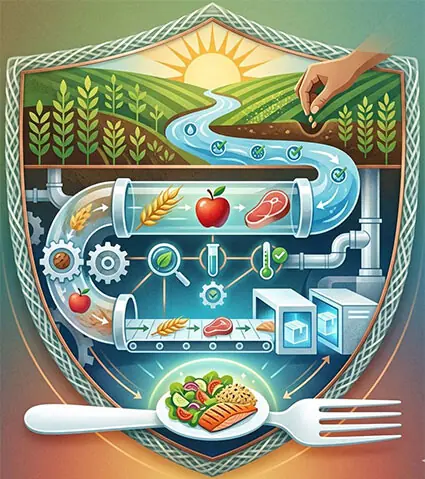
GENETIC Engineering (GE) or biotechnology makes it possible to break through the species barrier and to transfer gene (information) between unrelated species — for example, transfer of anti-freeze gene from fish (flounder) into tomatoes or strawberries, or an insect-killing toxin gene from bacteria into maize, cotton or rapeseed (canola). However, it was found that genes for the colour red placed into petunia not only changed the colour of the petals but also decreased fertility and altered the growth of the roots and leaves. Salmon (fish) genetically engineered with a growth hormone gene not only grew too big too fast but also turned green. These unpredictable side-effects are scientifically known as the pleiotropic effect.
Then how do we know that a genetically engineered food plant will not produce new toxins and allergens? What would be the nutritional value? And what would be the effects on the environment and wildlife?
Recently, summarizing the final report of Britain’s 10-million-dollar study — the Farm Scale Evaluation (FSE) trials, the world’s largest attempt to look at the impacts of GE/GM (genetically-modified) crops on biodiversity — Stephen Leahy (Dawn, March 29) reports: “After completing the world’s biggest study on the potential impacts of genetically-engineered crops, British scientists have concluded that the technology harms wildlife.” The study, therefore, answers the second part of our third question. This may be a reason that “Monsanto stopped promoting its GE products in 2003 and Bayer withdrew its GM maize last year” (Stephen Leahy). The British study thus supports the conclusions of Dr Ricarda Steinbrecher (Synthesis/ Regeneration: A magazine of Green Social Thoughts, Vol. 18, p9-12, Winter 1999) that genetic engineering is a testtube science and is prematurely applied in food production. He further remarks that “Biotechnology married to corporations tends to ignore the precautionary principles but it also ignores some basic scientific principles”.
Aijaz Nizamani (Dawn, April 17) has pointed out that “last year nearly 15 million bales of cotton were produced due to planting of GM cotton, which to the ministry of agriculture is illegal”. We have already caused an irreparable damage to our wildlife (useful insects) due to uncontrolled and indiscriminate use of pesticides/ insecticides. It is high time that we avoided repeating the mistake by allowing illegal spread of GM/GE crops in our agricultural system. The ministry of food and agriculture needs to urgently step in to stop the cultivation of GM/GE crops in Pakistan before it is too late.
DR S. S. M. NAQVI
Islamabad
Strike as a political weapon
MR Anwar Syed’s well-researched article “Strike as a political weapon” (April 17) has very candidly traced the origin of strike and its use as a political weapon in the post-industrialization era. In western societies this time-honoured tool of political agitation is still being applied by the aggrieved parties to get their grievances listened to.
The most successful use of such strike has been witnessed in the recent general election of Ukraine, although the final outcome did not bring any change in the results.
In the history of the subcontinent, this weapon was mainly used during the freedom movement, as rightly pointed out by Mr Syed. But unfortunately hooliganism as part of a strike is a south-east Asian phenomenon.
It was during the freedom movement that the Indian National Congress started the civil disobedience movement which created a psyche of not only disobedience but also disregard to public property.
The leaders failed to realize that in the eyes of the public, respect for law takes centuries to build, but its destruction can be done within no time. This is what has happened in the subcontinent.
The civil disobedience movement unleashed forces that even after the passage of more than half a century public and private property suffers in every strike.
Public property is treated as belonging to an alien government as in the days of colonial rule and in the same manner political opponents are treated as enemies.
This erroneous perception has done colossal damage to the social order of our country. That is why strike calls do not get popular support, and the recent strike of the MMA was a case in point.
It is well-established that only those societies can prosper materially and spiritually where the laws are honoured and cherished
MANZOOR H. KURESHI
Karachi
Radio Pakistan’s Hindi service
RADIO Pakistan has an external language wing which broadcasts programmes in 15 foreign languages including Arabic, Bangla, Chinese, Dari, Gujrati, Hindi, Russian, Nepali, Persian, Sinhali, Tamil, Turki, Turkish, Hazargi and English. Due to a deterioration in the programme content and obsolete transmitters, the listenership has declined over the years.
The Hindi service transmission is beamed towards Northern India on short wave 31 and 25 meter bands for one hour and 30 minutes daily. Obsolete transmitters of only 100 KW are being used for the broadcast.
Transmission is so noisy that most of the time it becomes impossible to hear anything .The programme content is also poor — just a three-minute news bulletin and a three-minute news commentary and very few informative programmes. Most of the time is consumed in playing film songs.
Some 10 years back, Radio Pakistan’s Hindi service had considerable listenership in India. But with the deterioration of theprogramme content and noisy transmitters very few listeners are now tuning in. Persistent requests by the listeners to introduce informative programmes and replace transmitters seem to have fallen on deaf ears.
Radio Pakistan should have at least two new transmitters of 500 KW each for external broadcasts and revamp the programme content.
ASLAM JAVAID KHAN
Lahore
Crossing without traffic signals
ONE of the ways to avoid road accidents is the streamlining of traffic. Proper marking on the roads, construction of roundabouts and islands, and installation of traffic signals ensure a smooth and a trouble-free flow of traffic.
A picture of haphazard traffic planning is the crossing point at the F-7 Commercial Area in front of the Federal Government College for Women in F-7/2, Islamabad. On reaching this crossing, one confronts traffic coming from four different roads — from the Raana Market, from the F.G. College for Women, from Street No. 22 F-7/2 and the from College Road. There is no roundabout or any traffic signals at the crossing, and one often sees traffic jams and accidents every other day.
In order to regulate traffic in the F-7 Commercial Area, the authorities concerned are requested to install traffic lights at this crossing at the earliest.
RAFAT MAHMOOD ANSARI
Islamabad
Cricket environment
I WATCHED the most absorbing five days of Test cricket in Bangalore between the two Asian giants and while a lot has been written on cricket by the experts, I’d like to share my views on the environment. When I went to Bangalore in 1996 to watch the quarter-final between Pakistan and India, our group couldn’t dream of disclosing our identity; it was heart-breaking not to cheer the excellent opening partnership between Saeed Anwar and Aamir Sohail. After Pakistan lost, we were scorned and told to move out of the stadium and later we were taunted at our hotel and told to “merge with India”.
This time round, however, people in Bangalore displayed their warmth as they clapped for Inzamam’s and Younis’s centuries and gave a standing ovation. They chatted with us at lunch and were very cordial although there were some who couldn’t take the defeat in their stride and shouted anti-Pakistan slogans. While the police and security staff stood by, there was a gentleman who stood up and told the group to “shut up”, a gesture we appreciated as everyone wanted to enjoy the game. After winning an incredible match, my Pakistani friends and I walked the one kilometre stretch back to the hotel, with our flags up in the air, with no fear and were met with smiles from passersby. This was clearly a marked departure from what we experienced in 1996.
The one-day match in Delhi was chaotic from the moment tickets were put on sale. At the last moment, our party managed to get the most expensive tickets, officially priced at Rs11,000. Unlike the PCB, which put its tickets up on the Internet, India’s BCCI mismanaged the sale of tickets. While we had paid to watch the game in an “expensive enclosure”, no provisions were made for water and we had no choice but to bake in the sun from noon onwards. The lunch- box that was part of the ticket was a disgrace. However, we were touched by the gesture of an Indian couple who volunteered to get us our lunch-boxes, a kind act of friendship.
We sat with people who were friendly and even congratulated us on our victory but sadly there were elements, even within this “elite” enclosure, who shouted anti-Pakistan slogans. Much to our relief, this time round, the police intervened.
Barring these two instances the atmosphere was friendly but it cannot compare to the hospitality Pakistan showed to the Indians, especially in Lahore.
ASHRAF KHAN
Karachi
MMA flag
I WAS shocked to see the MMA party flag by the side of the NWFP chief minister during a cabinet meeting. It is not the flag of Pakistan and should be removed; it does not represent the people of the NWFP either. One doesn’t see flags of the PML-Q flying at any cabinet meeting of the federal or provincial governments.
Only the Pakistani flag and the official seal of the respected person (i.e., official seal of the president or the chief minister) should be allowed at any government event.
FAWWAD SHAFI
Lahore
KBCA chief’s plea
I have read the letter by Brig (retd) A. S. Nasir (April 20), chief of the Karachi Building Control Authority, where he defends the charges against him made in a column by Mr Ardeshir Cowasjee (April 17).
I can tell from personal experience that the KBCA is riddled with wrongdoing. I had to spent Rs40,000 for an NOC which I should have gotten free. The KBCA is notorious for the way it operates and this is no secret. Anyone who does not believe what I say can simply go to the Civic Centre and verify for himself these claims. Ask any agent or any official and they will tell you what rate is charged by the KBCA — five per cent of the value for each file approved.
Comparisons are often made by people between the cities of Lahore and Karachi and why Lahore is so well maintained while Karachi resembles an oversized slum. The answer lies in the functioning of organizations like the KBCA which should be demolishing illegal construction and buildings instead of allowing them to be built so that they can be regularized at a later date with an exchange of money.
But I don’t just blame the KBCA. I also blame our political machinery as well as the bureaucracy (including those in khaki) for tolerating such transgressions in the first place.
SATTAR JAVED
Karachi
Apartment schools
THE importance of schooling cannot be underestimated. It is the foundation on which children build their future. The first three or four years play an important role in a child’s life.
We have some people around who are playing with our future.
We have thousands of schools with poor standards. They do not have proper buildings or healthy environment and not even skilled or qualified staff. It has become a trend that if you have a five-room apartment, you can easily start an educational institution.
This is a very profitable and fast-growing business. Unfortunately, such apartment schools are often registered and recognized by the education department, thus encouraging rather than discouraging this business.
SIDRA HUSSAIN
Karachi
Contaminated water
I LIVE in Nazimabad, Karachi, and a problem we have to face repeatedly is the supply of contaminated water. This issue comes under the purview of the Karachi Water and Sewerage Board but this department never tries to overcome this problem.
Nowadays the residents of the area are drinking contaminated water. Sometimes we are supplied dirty pungent water which is due to the mixing of sewage lines with water lines.
UROOJ KANWAL
Karachi
‘Knee-jerk reaction?’
I fully endorse your views in your editorial, “Knee-jerk reaction?” (April 17). It is all a game of our leaders and rulers, a coterie of top bureaucrats and a bunch of sycophants who play with the inflated egos of rulers who consider themselves to be infallible, indispensable and possibly immortal.
How else can one explain the tomfoolery of the products of enlightened moderation indulging in the childish game of making a mountain out of a molehill.
Now the great sages are pouring out the sagacious statement that Mr Asif Zardari did not get even 10 per cent of the propagated welcome response. Then why did they deploy a big crowd of 5,000 policemen at the airport by shifting them from their primary duty of maintaining law and order and then stormed the plane, maltreating the entourage of Mr Zardari, including media people, and making the chief minister apologize for it?
M SALEEM CHAUDHRY
Karachi
A teacher remembered
MS Farida’s academics and other achievements are enviable and fully justify her being remembered by Dr Sabiha Mansoor (April 17). A teacher like her should be a part of the textbooks of schools / colleges for the younger generation to be proud of. The Punjab University has done well to name the ELT section of its library to perpetuate the memory of Ms Farida.
This reminds me of Dr Har Dayal, perhaps the first Indian to secure 100 per cent marks in the M.A. (English) examination of the Punjab University during the British days. He was a fiery speaker and took to politics. I hope one of your readers would be able to tell us more about Dr Har Dayal.
M. SHAFIQUE AHMED
Karachi
Tailor-made troubles
I LIVE in a part of PECHS Block ‘2’, Karachi, which seems to have a tailoring shop in every lane. It seems the tailors are quite popular as every other car or even taxis and rickshaws stop to pay a visit to these shops thereby creating trouble for us. Many a time, when residents of the area return, they have to park their cars elsewhere as their gates are occupied by cars left by some hoity-toity begum.
At the time of Eid, the shops are open till midnight. Workers play records at full volume and at awkward times, which annoying for those who are unwell or asleep. Moreover, ‘cuttings’ and bits and pieces of cloth are not disposed of properly and they are blown into our houses with the wind.
WAJIHA ZEHRA MIR
Karachi
Iraq’s Kurds
FOLLOWING the Iraq elections, the appointment of a Kurd as president of Iraq has ended almost eight centuries of isolation of the Kurds, following the crusade that also gave birth to the famous hero, Sultan Salahuddin Ayubi.
It is very satisfying to see the historical clock take a positive turn.
KHANZADA EMRAN
Karachi